Alaska Expedition Cruises Compared: UnCruise vs Lindblad vs HX vs Seabourn
When people think of Alaska, they usually think cruise. A large ship sails the Inside Passage, stops in places such as Juneau, Ketchikan and Skagway, and you choose shore excursions at each port.
An Alaska expedition cruise works differently. The ships are smaller, the schedule is built around wildlife and access rather than a string of cruise terminals, and much more of the day happens off the ship. You may leave by Zodiac in the morning, hike through temperate rainforest before lunch, kayak in the afternoon and change course because whales have appeared nearby.
For travelers who want to spend more time in Alaska rather than simply sailing past it, the expedition model deserves a close look.
Four operators stand out to me for very different reasons: UnCruise Adventures, National Geographic-Lindblad Expeditions, HX Expeditions and Seabourn. The important thing to understand is that these are not four versions of the same trip. They range from tiny adventure vessels carrying a few dozen guests to a 600-passenger ultra-luxury ship that adds expedition experiences to a conventional luxury cruise.
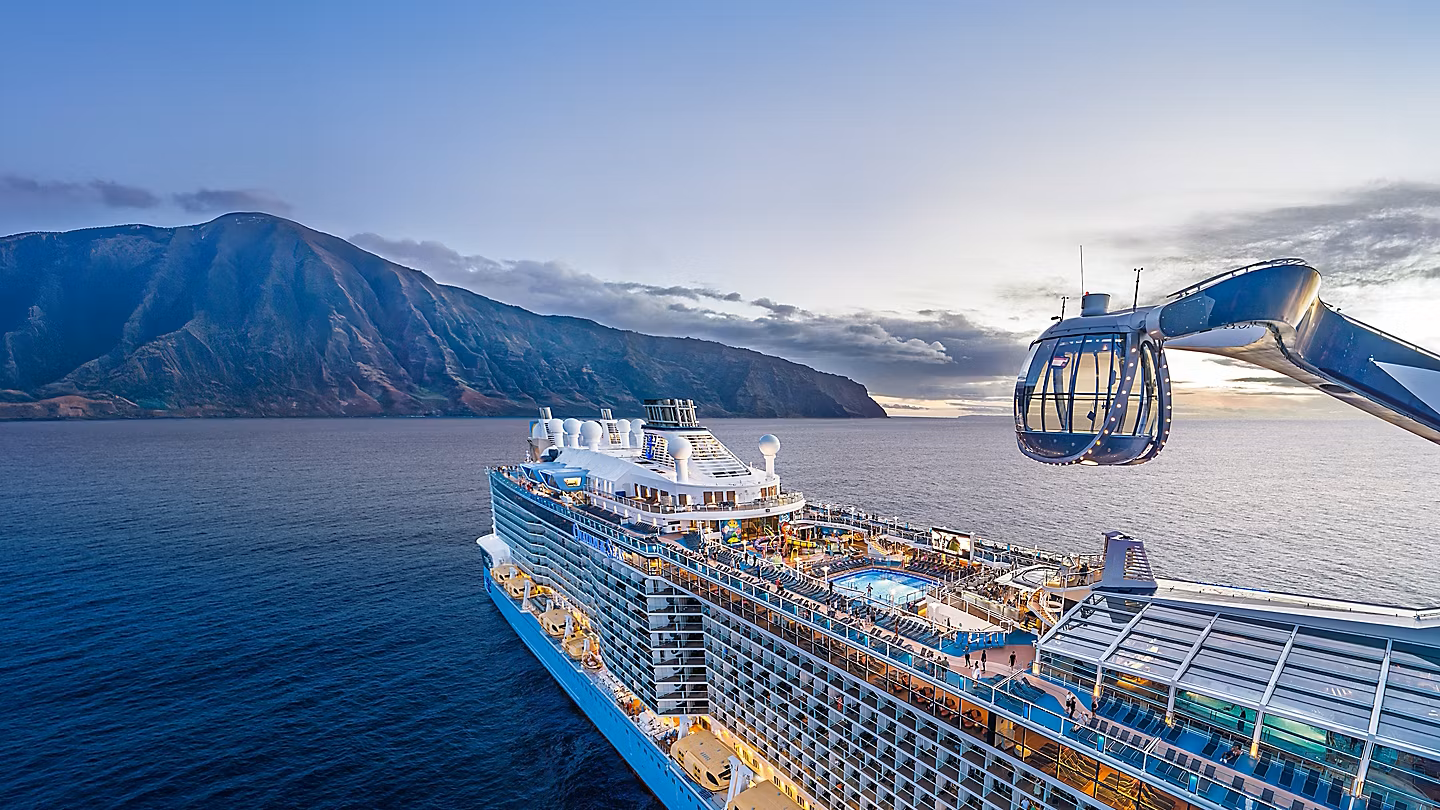
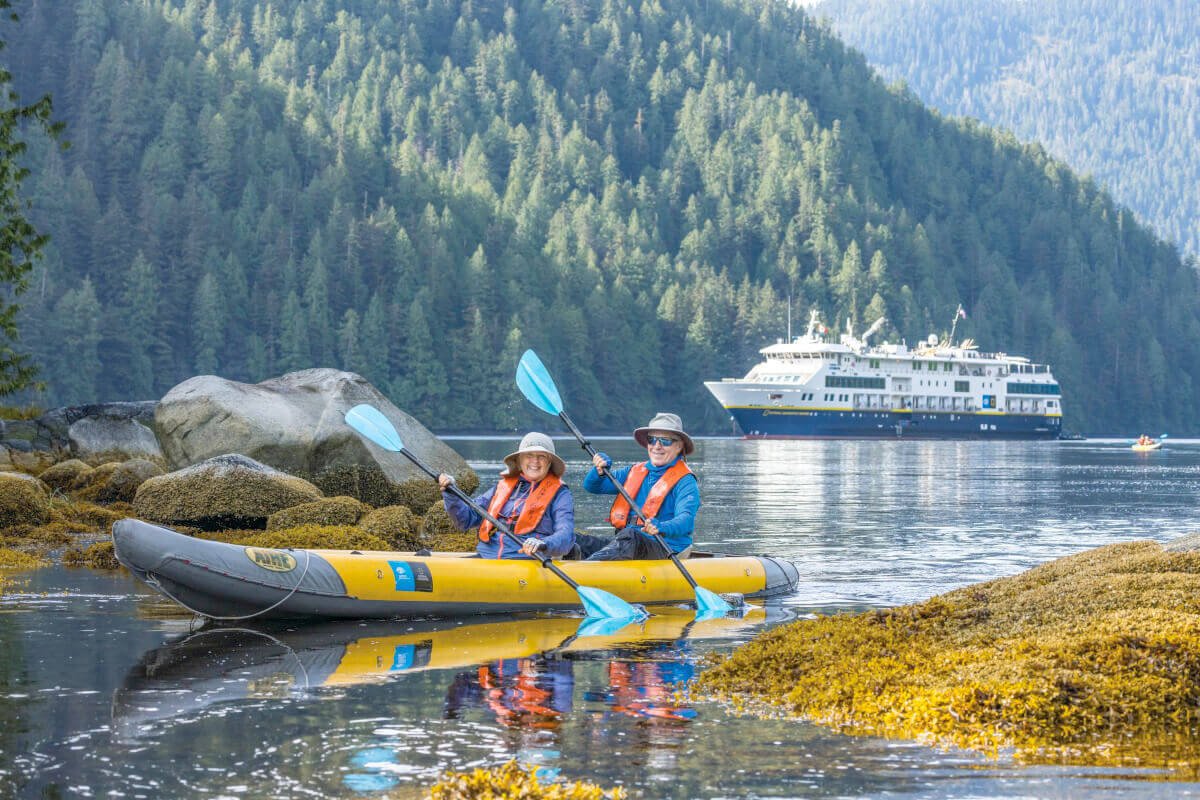
Alaska Cruise vs Alaska Expedition Cruise
A traditional Alaska cruise and an expedition cruise can visit some of the same region, but the way you spend your time is quite different.
On a conventional cruise, ports are a major part of the itinerary. You arrive in town, choose from a menu of shore excursions and return to the ship before sailing to the next destination. The ship itself also matters considerably, with multiple restaurants, entertainment, pools, spas and other facilities competing for your time.
On an expedition cruise, the daily exploration program is a much larger part of the product itself. Ships can anchor in coves or enter narrower waterways, and guests head out in small boats, kayaks or on foot with an expedition team. Wildlife sightings and conditions can influence what happens that day.
| Typical Alaska Cruise | Alaska Expedition Cruise | |
|---|---|---|
| Ship size | Often several thousand passengers | Usually much smaller; the operators in this guide range from a few dozen guests to about 600 |
| What you explore | Established cruise ports such as Juneau, Ketchikan and Skagway | Remote coves, fjords, islands and wildlife areas, with some community stops |
| How you explore | Choose shore excursions at each port | Zodiacs, expedition boats, kayaking, hiking and naturalist-led exploration are central to the trip |
| Wildlife | Often seen on dedicated shore excursions or from the ship | Expedition teams actively watch for wildlife throughout the voyage |
| Schedule | More port-driven and fixed | More responsive to weather, wildlife and local conditions |
| Onboard focus | Restaurants, entertainment, pools, shows and ship amenities | Naturalist talks, expedition recaps, observation areas and preparing for the next outing |
| Pricing | Lower headline fares may be available, with many Alaska excursions purchased separately | Higher upfront fares, but more of the exploration program is generally included |
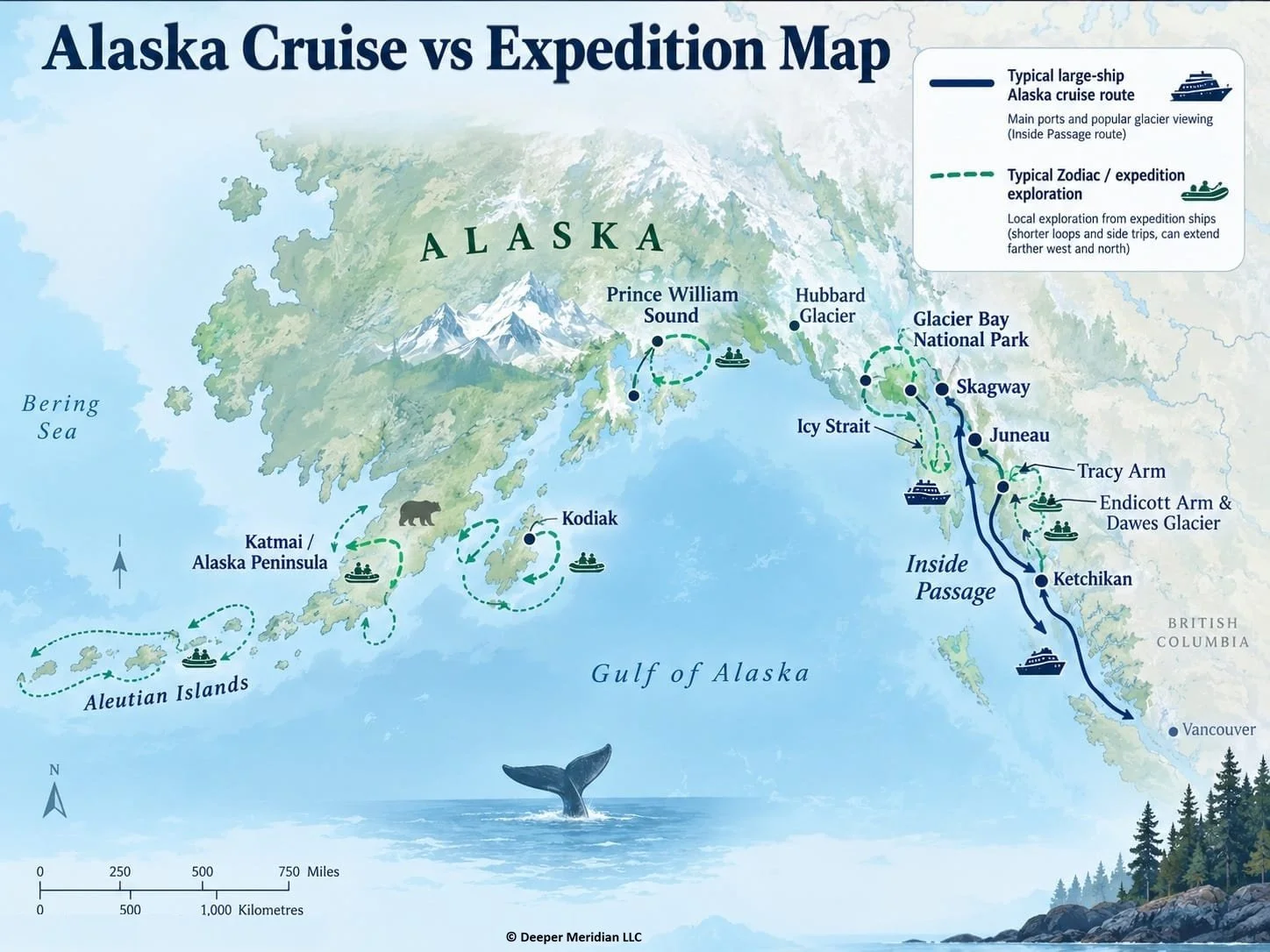
A simplified look at how a typical Alaska cruise route differs from a small-ship expedition route.
One of the clearest differences is simply scale. Even within expedition-style Alaska, however, ship size varies considerably. UnCruise operates some of the smallest vessels, Lindblad’s Quest and Venture carry about 100 guests, HX’s Roald Amundsen is much larger, and Seabourn Encore sits closer to the luxury-cruise end of the spectrum.
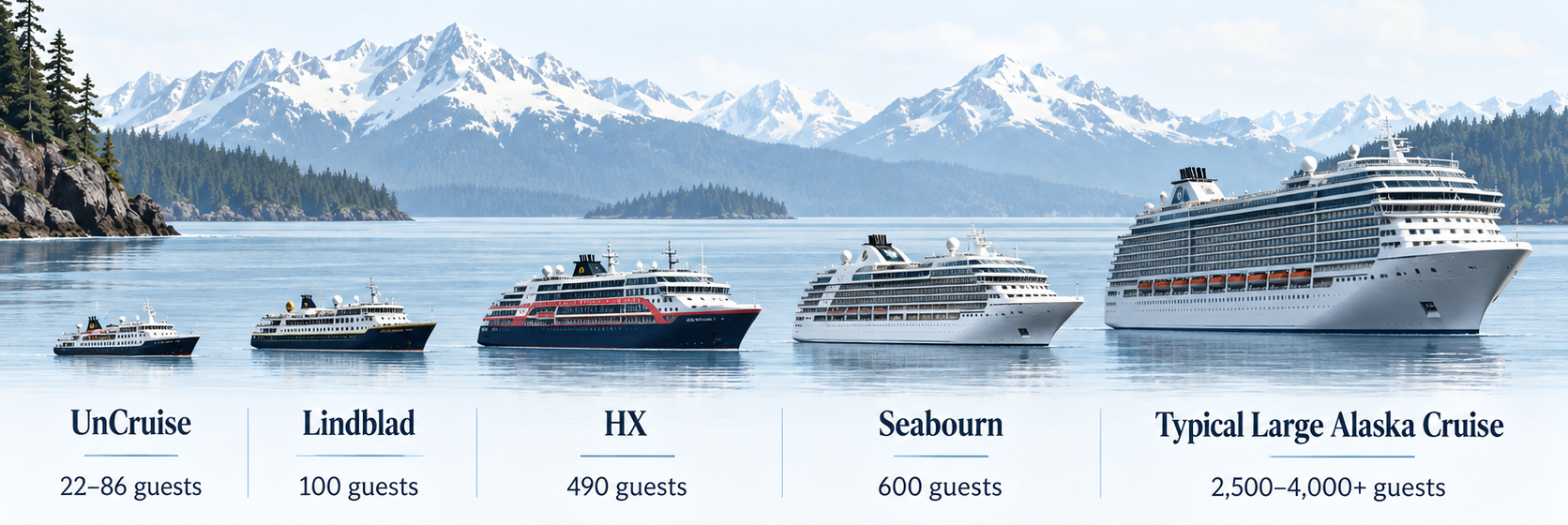
Representative guest capacity across Alaska cruise styles, from tiny expedition vessels to large mainstream cruise ships. Ship dimensions are illustrative, not to scale.
UnCruise Adventures
If you want Alaska to feel more like an outdoor adventure trip than a cruise, UnCruise pushes furthest in that direction.
Its Alaska fleet ranges from the 22-guest Safari Quest to ships such as the 60-guest Wilderness Adventurer, 74-guest Wilderness Explorer, 76-guest Wilderness Discoverer and 86-guest Wilderness Legacy. The emphasis is very clearly on what happens after you leave the ship. A typical day may offer guided kayaking, hiking, skiff exploration, paddleboarding or other activities in the morning and then another set of options in the afternoon. The ships are built around equipment and easy water access rather than elaborate public spaces.
The cabins are generally simple. I would not send someone to UnCruise because they want a large suite, room service or several restaurants to choose from every night. The reason to book it is that you want to spend as much time as possible outside.
That does not mean the onboard experience is an afterthought. Meals, snacks and premium alcoholic and non-alcoholic drinks are included, dining is casual and open-seating, and the ships have lounges, viewing decks and open bridges. From-the-vessel adventure activities and equipment are also included.
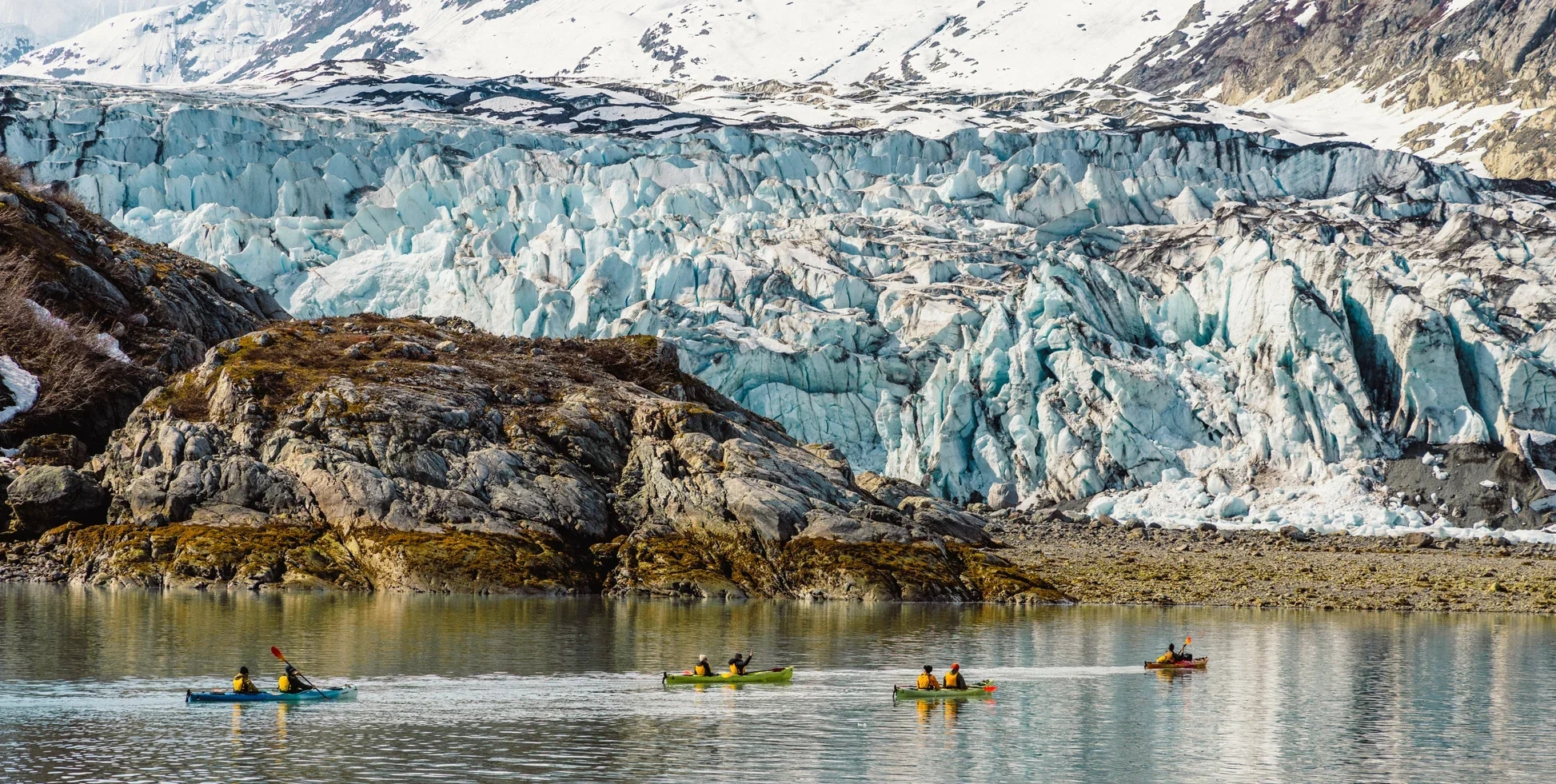
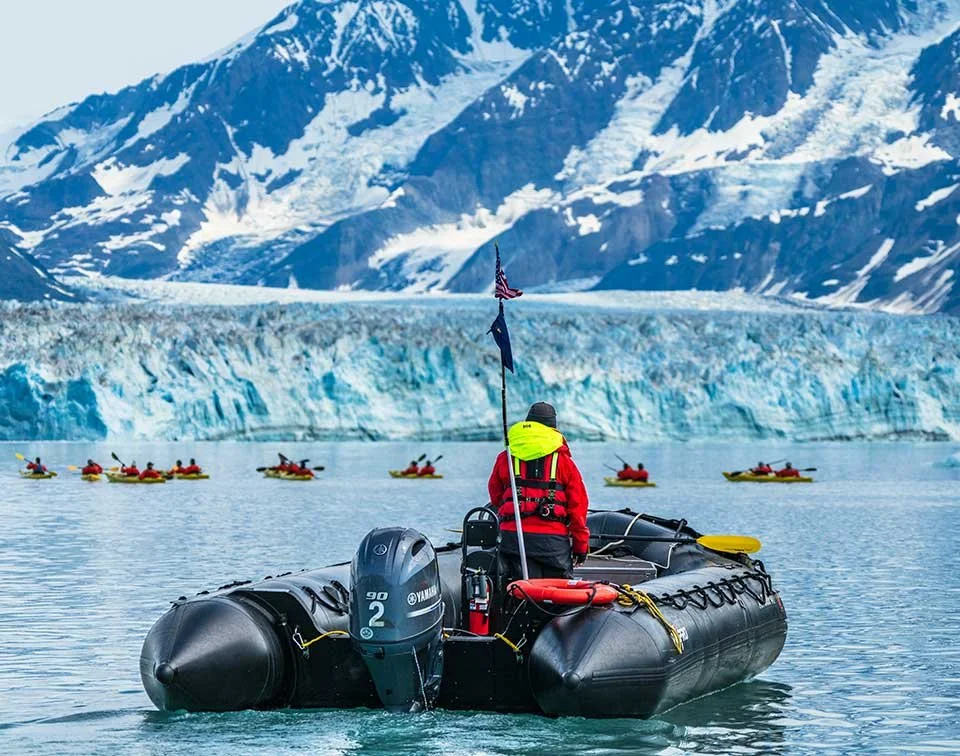
Kayakers enjoying Glacier Bay on Uncruise's unique Two day program
One itinerary feature I particularly like is UnCruise's two-day Glacier Bay program. Instead of treating Glacier Bay as a single scenic-cruising day, selected itineraries spend two full days inside the national park. UnCruise also offers dedicated Families in Nature departures, including 2027 sailings on Wilderness Discoverer and Wilderness Legacy.
For a family that likes kayaking, hiking, wildlife and being outside together, this can make a lot of sense. The ship is intentionally casual, and the experience is built around participation rather than onboard entertainment.
National Geographic-Lindblad Expeditions
Lindblad has been operating small expedition ships in Alaska for decades, and its current National Geographic Quest and National Geographic Venture each carry 100 guests. Both were purpose-built for coastal expedition cruising, with shallow drafts and twin Zodiac boarding platforms designed to get guests off the ship quickly. Their eight-day Alaska's Inside Passage itinerary includes a full day in Glacier Bay, Zodiac exploration, kayaking, hiking and wildlife-focused cruising.
For me, Lindblad's biggest strength is the depth of the expedition team. Naturalists may specialize in marine biology, birds, geology, photography, undersea exploration or other aspects of the environment. The result is not simply that someone guides your hike. You have specialists with you throughout the voyage, interpreting what you are seeing from the Zodiac, on the trail and back onboard.
That is something I experienced firsthand on my own Southeast Alaska expedition with Lindblad. Our naturalists were constantly pointing out whale behavior, kelp forests, plankton, birds, trees and intertidal ecosystems, and the evening lectures built on what we had seen during the day.
Lindblad is also particularly strong for families who want children involved in the destination rather than sent to a conventional kids club. Its National Geographic Explorers-in-Training program is integrated into Alaska sailings, with field learning and expedition activities designed for younger travelers.
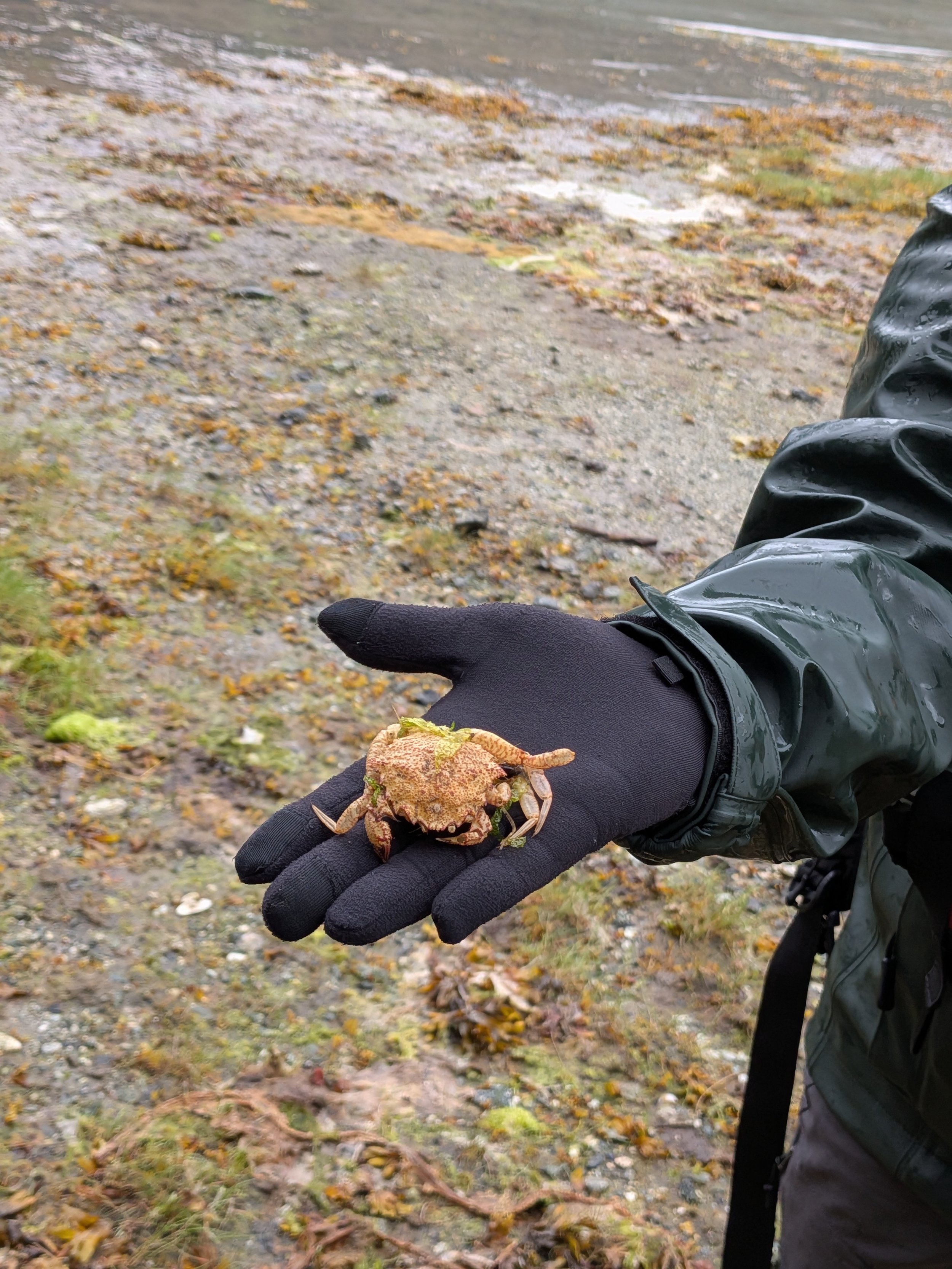
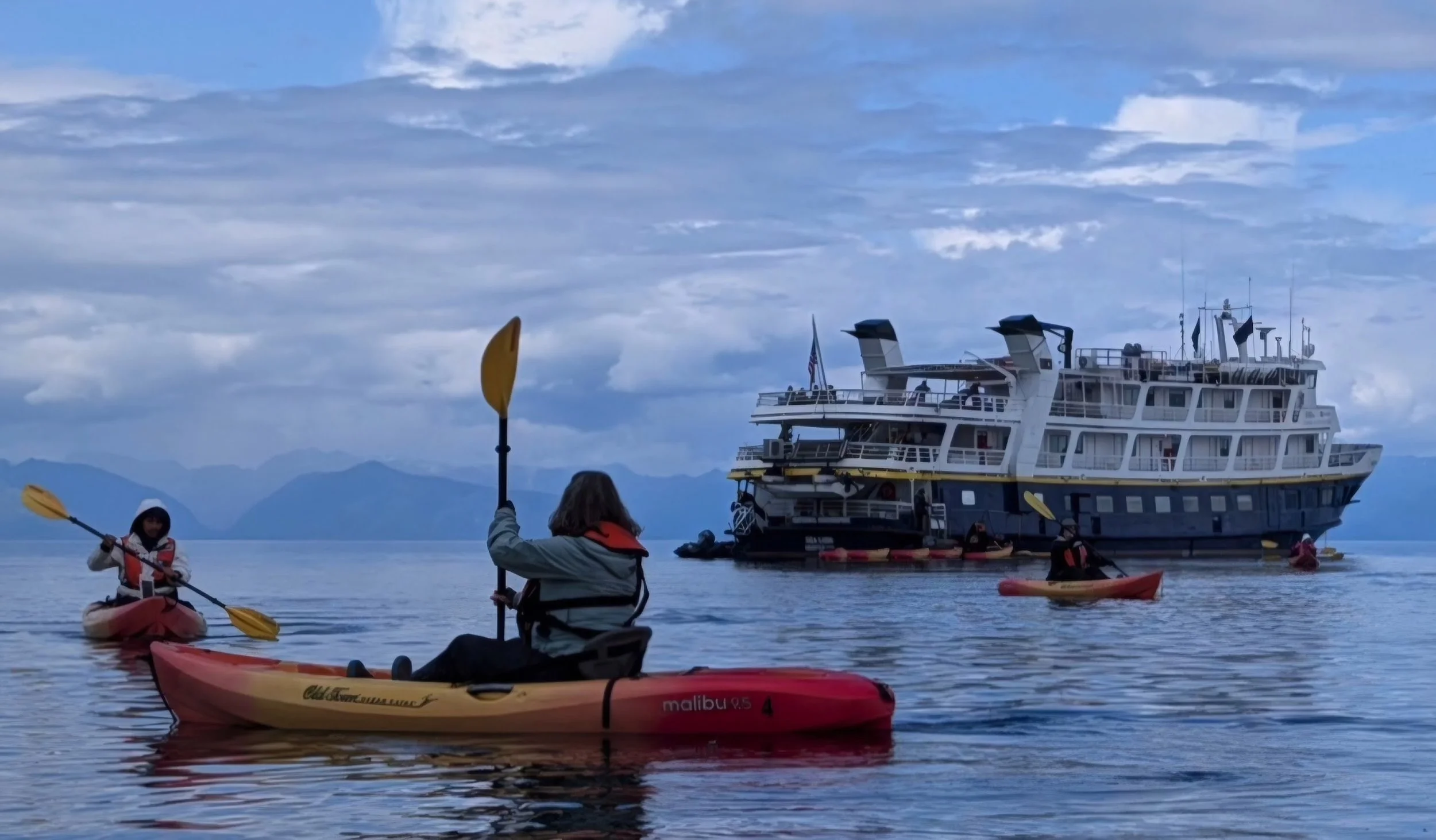
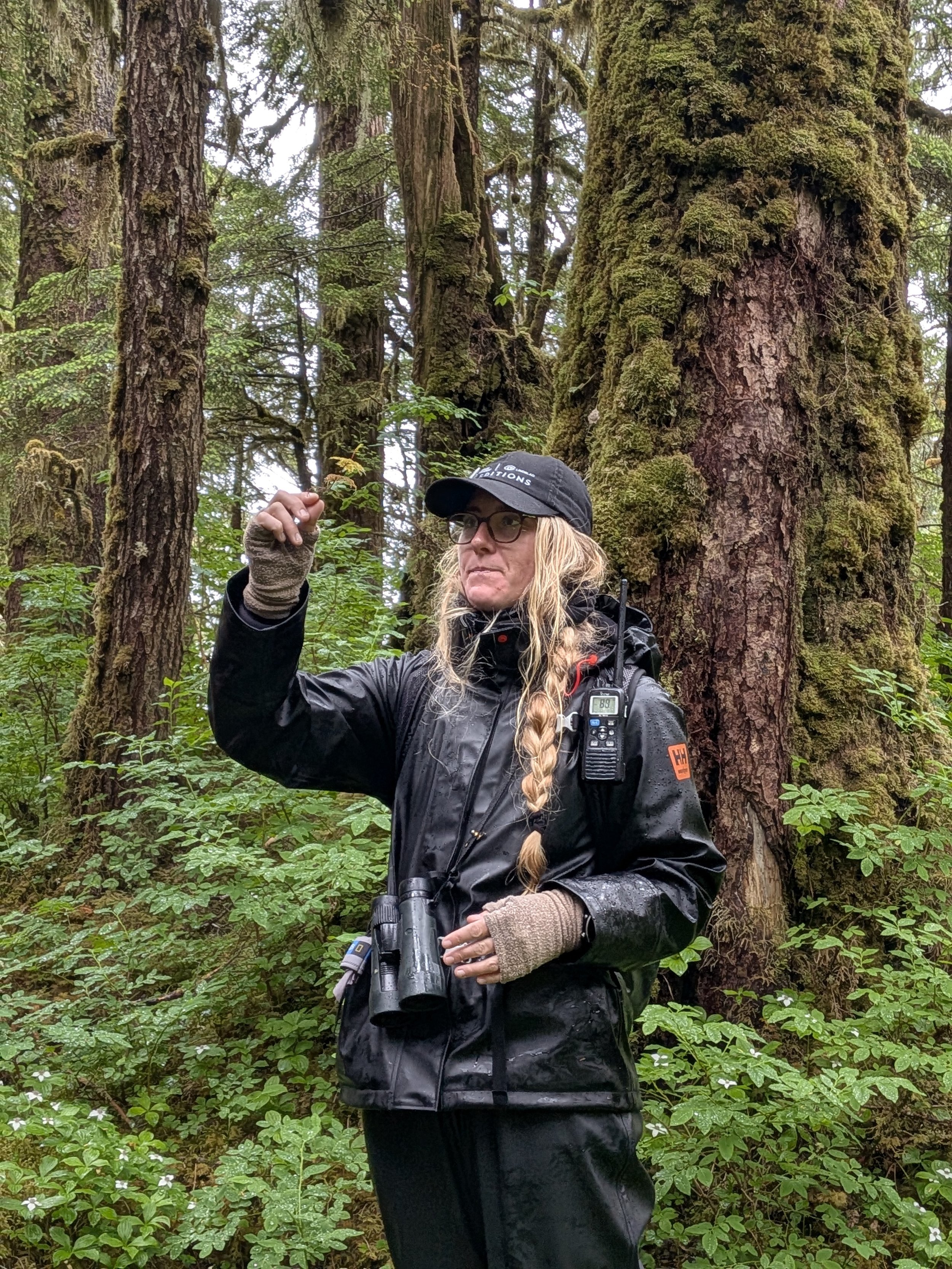
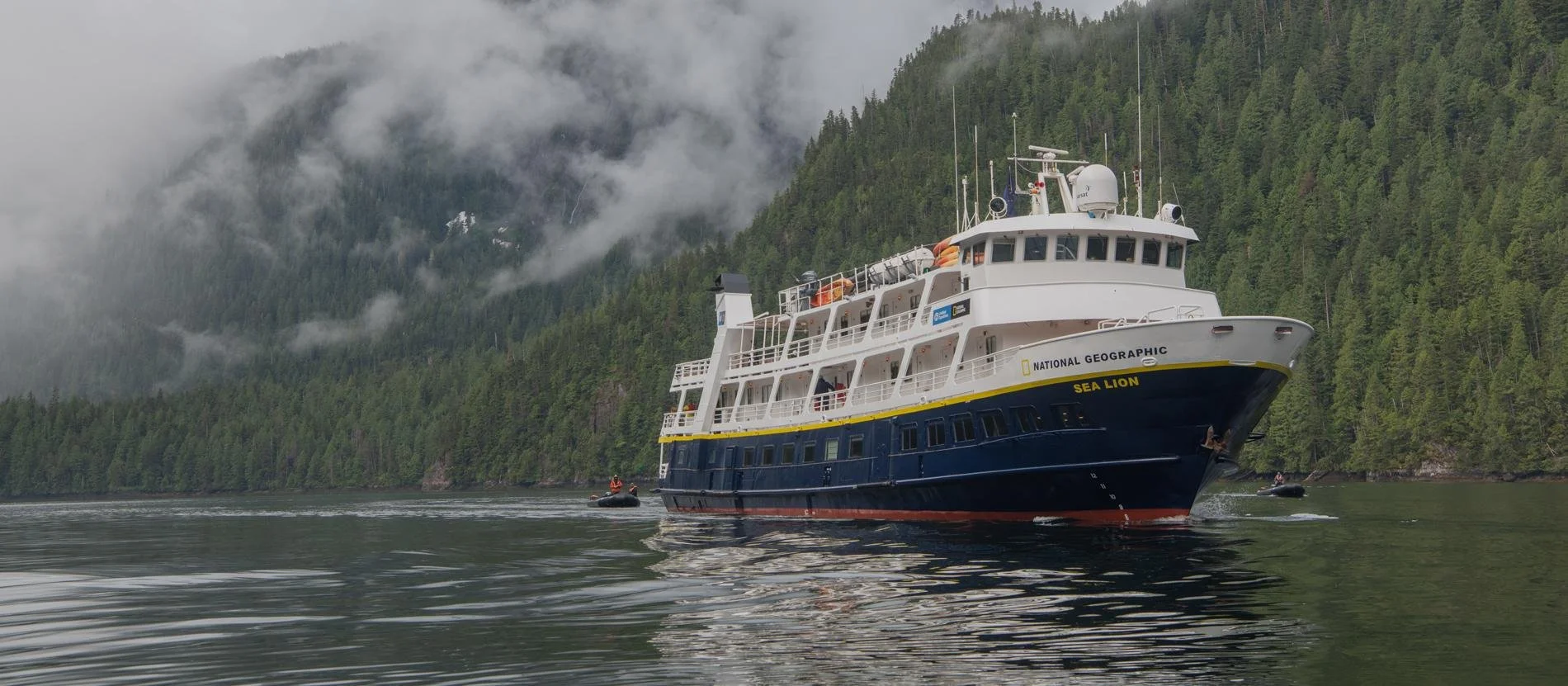
Learning and exploration at the center of Lindblad trips to Alaska
A New Ship for Lindblad Alaska: Greg Mortimer
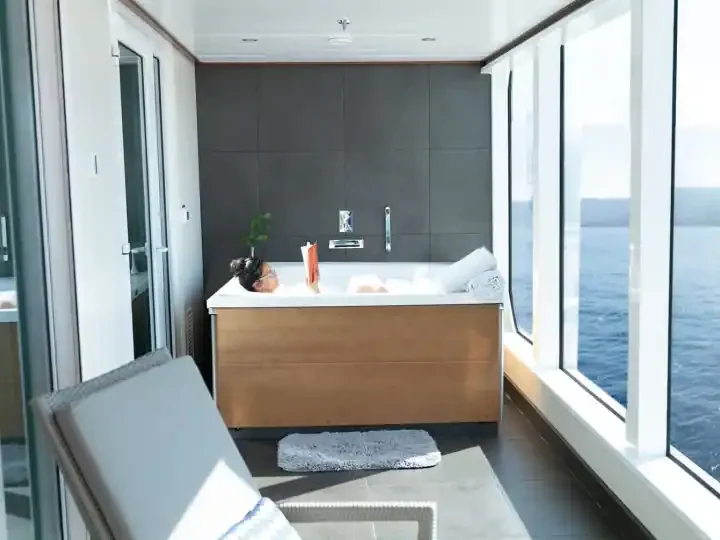
Beginning in 2027, Lindblad adds Greg Mortimer, a 154-guest polar expedition ship, to its Alaska program. It will operate two eight-day itineraries, including a route combining the Inside Passage with Hubbard Glacier. Compared with Quest and Venture, Greg Mortimer brings a newer, larger ship with amenities such as top-deck hot tubs while retaining a full expedition program.
There is an interesting detail here. Greg Mortimer actually belongs to Aurora Expeditions. Lindblad is chartering the ship for its Alaska seasons beginning in 2027, after which it returns to Aurora's own expedition program, including Southern Hemisphere operations. So if you have seen the same ship marketed under both Aurora and National Geographic-Lindblad, that is why.
HX Expeditions
HX sits in a very different part of the expedition spectrum.
Its main 2027 Alaska ship, MS Roald Amundsen, carries up to 490 guests. That is much larger than Lindblad's Quest and Venture and substantially larger than the UnCruise fleet, but this is still a true expedition program rather than a conventional Alaska cruise with a few adventure excursions added.
HX uses expedition boats for landings and small-boat exploration, and its current Alaska programs include hiking, wildlife scouting and an onboard science program. The Science Center is a central part of the ship, with spaces for lectures, biology, photography and hands-on learning.
The advantage of the larger ship is what you have when you come back onboard. Roald Amundsen has an infinity pool, hot tubs, sauna, spa, gym, larger lounges and a much broader range of cabins and suites than you would find on a tiny expedition vessel.
HX also becomes particularly interesting if you want to go well beyond Southeast Alaska. In addition to Inside Passage itineraries, it offers longer routes through areas such as Kodiak, Katmai, the Alaska Peninsula and the Aleutian Islands, with attempts to land at remote places such as St. Paul and St. Matthew Island.
Not everything ashore is automatically included. Core expedition activities and a number of excursions are included, while certain local tours and small-group activities are sold separately. On one current Alaska itinerary, for example, included small-boat cruising is supplemented by optional kayaking, hiking and local excursions.

A zodiac on HX expeditions gets up close with Brown bears at Katmai National Park (PC: HX)
Seabourn: The Luxury-Expedition Hybrid
Seabourn needs to be understood differently from the other three.
In Alaska, you are not sailing on Seabourn Venture or Seabourn Pursuit, the company's purpose-built expedition ships. The 2027 Alaska program is operated primarily aboard Seabourn Encore, a 600-guest all-suite luxury ship. Every suite has a veranda, and the onboard experience includes Seabourn's restaurants, bars, spa, pools, service and traditional luxury-cruise amenities.
What makes it relevant here is Ventures by Seabourn.
An expedition team of naturalists, scientists, glaciologists and wildlife specialists sails with the ship, and guests can purchase small-group Zodiac, kayaking and hiking experiences in places such as the Inian Islands, Endicott Arm, Hubbard Glacier, Misty Fjords and Wrangell. These experiences launch directly from the ship in many locations.
That makes Seabourn particularly interesting when two people want somewhat different vacations. One person may want Zodiac exploration and naturalists, while the other cares just as much about a spacious veranda suite, excellent dining and a much more substantial onboard experience.
The important distinction is that the expedition layer is optional. You can sail Seabourn Alaska without booking Ventures experiences. That is very different from Lindblad, UnCruise or HX, where the expedition program is much more central to the basic structure of the trip.
Not Sure Which Alaska Expedition Style Fits You?
I can compare the actual itineraries, ship size, activity level, cabin options and what's included across Lindblad, UnCruise, HX and Seabourn for your travel dates.
COMPARE ALASKA EXPEDITIONSAre Alaska Expeditions More Expensive Than Regular Cruises
Expedition cruises can look expensive when you compare nothing but the cruise fare.
But that comparison misses something important. On a conventional Alaska cruise, many of the experiences people most want to do, such as wildlife trips, glacier excursions, kayaking or small-boat exploration, are often purchased separately.
Multiply those excursions by three or four family members and the total can rise very quickly.
With an expedition operator, much more of the actual exploration is already built into the fare. You are not deciding every morning whether another activity is worth another few hundred dollars per person.
That does not mean expedition cruising is automatically cheaper. It means the useful number to compare is the total cost of the Alaska trip you actually intend to take, not simply the cabin price.
| Included / Extra | Lindblad | UnCruise | HX | Seabourn |
|---|---|---|---|---|
| Meals onboard | Included | Included | Included | Included |
| Standard beverages | Generally included | Included, including premium spirits, wine and beer | Included with current expedition fares | Included, including wines and spirits |
| Core Zodiac / small-boat exploration | Included | Included | Many expedition-boat activities included | Ventures experiences are generally additional |
| Guided hiking / landings | Included as part of the expedition program | Included | Many included; some optional activities cost extra | Usually booked as shore or Ventures experiences |
| Kayaking | Included where offered on the itinerary | Included where offered | May be an optional paid activity depending on departure | Optional Ventures experience |
| Local shore excursions | Core itinerary experiences generally included | Most exploration is operated directly from the ship | Some included; additional local tours may cost extra | Traditional shore excursions and Ventures experiences may cost extra |
| Gratuities | Varies by ship / fare | Additional | Check current departure inclusions | Included |
| Best way to think about the fare | Much of the expedition experience bundled in | Very inclusive of the daily adventure program | Strong expedition inclusions with optional upgrades | Luxury cruise fare included; expedition layer added separately |
Exact inclusions can vary by ship, itinerary and fare, so I always compare the specific departure rather than relying only on the cruise line's general inclusions.
Where Do These Alaska Expeditions Actually Go?
Lindblad, UnCruise, HX and Seabourn overlap in Southeast Alaska, but their itineraries begin to diverge once you look beyond the Inside Passage. Glacier Bay, Hubbard Glacier, Prince William Sound, Kodiak, the Alaska Peninsula and the Aleutian Islands are not covered equally by all four operators. If one of these regions is important to your trip, compare the route before you compare the ship.
| Itinerary / Region | Lindblad | UnCruise | HX | Seabourn |
|---|---|---|---|---|
| Inside Passage | Yes | Yes | Yes | Yes |
| Glacier Bay National Park | Yes, on selected itineraries | Yes, including some itineraries with two full days | Selected itineraries | Selected itineraries |
| Hubbard Glacier | Yes, including Greg Mortimer itineraries | Not a core focus | Yes, on selected itineraries | Yes, on selected itineraries |
| Endicott Arm / Dawes Glacier | Yes | Yes, depending on itinerary | Yes, on selected itineraries | Yes |
| Tracy Arm | Selected itineraries | Selected itineraries | Selected itineraries | Yes, on selected itineraries |
| Prince William Sound | Selected itineraries | Yes | Selected itineraries | Selected itineraries |
| Kodiak | Limited / selected longer itineraries | Limited | Yes | Limited |
| Katmai / Alaska Peninsula | Limited | Limited | Yes | Limited |
| Aleutian Islands | Limited / expedition-specific | Some itineraries | Yes | Not a core Alaska focus |
| British Columbia combinations | Yes | Yes | Yes | Yes |
The biggest itinerary differences show up once you move beyond the standard Inside Passage. Glacier Bay, Hubbard Glacier, Prince William Sound, Kodiak, the Alaska Peninsula and the Aleutians are not covered equally by all four operators.
The Best Fit for Different Alaska Travelers
I would use the type of trip you want to narrow this down before worrying about individual cabin categories.
| You want... | My starting point | Why |
|---|---|---|
| The smallest ship and maximum time outdoors | UnCruise | Tiny vessels with hiking, kayaking and skiff exploration at the center of the trip |
| Deep naturalist expertise and wildlife interpretation | Lindblad | Strong specialist expedition teams spanning marine biology, birds, photography and natural history |
| A strong expedition experience with children | Lindblad | National Geographic Explorers-in-Training integrates younger travelers into the expedition |
| A casual, active family wilderness trip | UnCruise | Small ships and family-focused departures built around shared outdoor activities |
| A modern expedition ship with a pool, hot tubs and more onboard space | HX | Roald Amundsen combines expedition operations with considerably more ship infrastructure |
| A longer expedition into Kodiak or the Aleutians | HX | Its Alaska program reaches farther west and north than most standard Inside Passage itineraries |
| A luxury suite, polished dining and selective adventure | Seabourn | You keep the luxury cruise experience and add Ventures by Seabourn where you want it |
| One traveler wants luxury and the other wants adventure | Seabourn | The expedition activities are optional rather than defining every day of the voyage |
For someone who wants the smallest possible ship and the most active wilderness program, I would begin with UnCruise. For deep naturalist expertise, photography, science and a particularly strong family-learning program, I would start with Lindblad.
HX is the one I would look at when someone wants a genuine expedition program but does not want a tiny or simple ship, especially if the itinerary extends toward Kodiak or the Aleutians. Seabourn is the clear choice in this group when the ship, suite, food and service matter just as much as having access to expedition-style experiences.
The final decision should then come down to the actual itinerary and departure date rather than choosing the brand first and forcing the trip around it.
My Take
The easiest question to ask yourself is how much ship do you want around your Alaska experience?
If you want the ship largely to function as your base for hiking, kayaking and wildlife, look closely at UnCruise. If you want small-ship expedition travel with unusually deep naturalist and educational programming, Lindblad is very strong. HX gives you considerably more onboard infrastructure without abandoning expedition-style exploration. Seabourn gives you the most luxurious ship experience of the four, with the ability to add expedition outings where you want them.
Once you know which of those styles sounds like your trip, compare the specific routes. In Alaska, the difference between a Glacier Bay itinerary, Hubbard Glacier, the Inside Passage and a longer Aleutian journey can matter more than a prettier cabin.
Planning an Alaska Expedition?
Tell me what you want most from Alaska, whether that's wildlife, hiking and kayaking, a tiny ship, a more comfortable expedition vessel or full luxury. I'll help narrow down the operator, itinerary and cabin that make sense for your trip.
START PLANNINGWriter Bio:
I’m a National Geographic-Lindblad Expeditions LEXpert and travel advisor specializing in expedition travel. I sailed Southeast Alaska with Lindblad myself and regularly compare expedition ships and itineraries for clients traveling to Alaska, Antarctica, the Arctic and Galápagos.