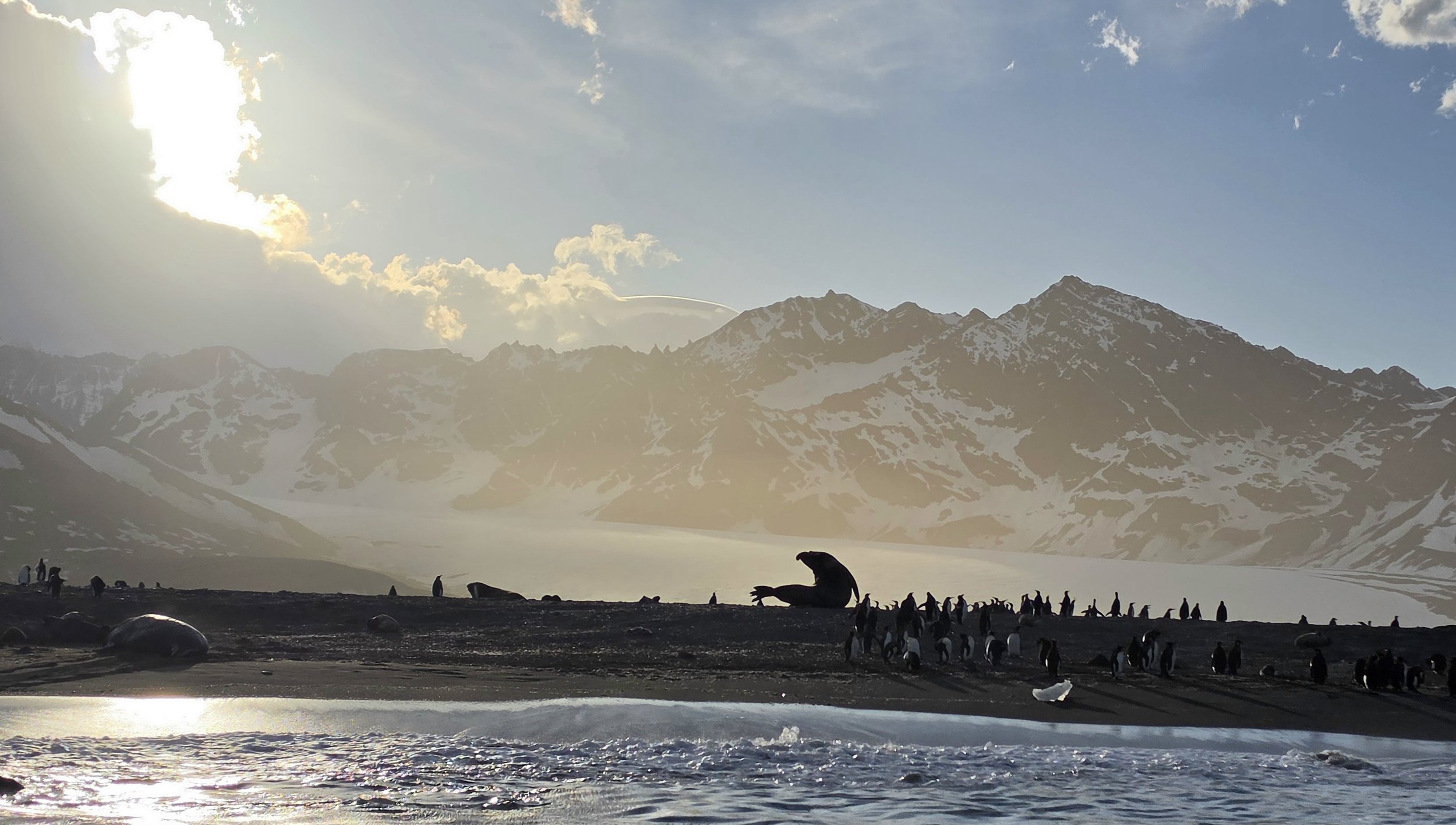
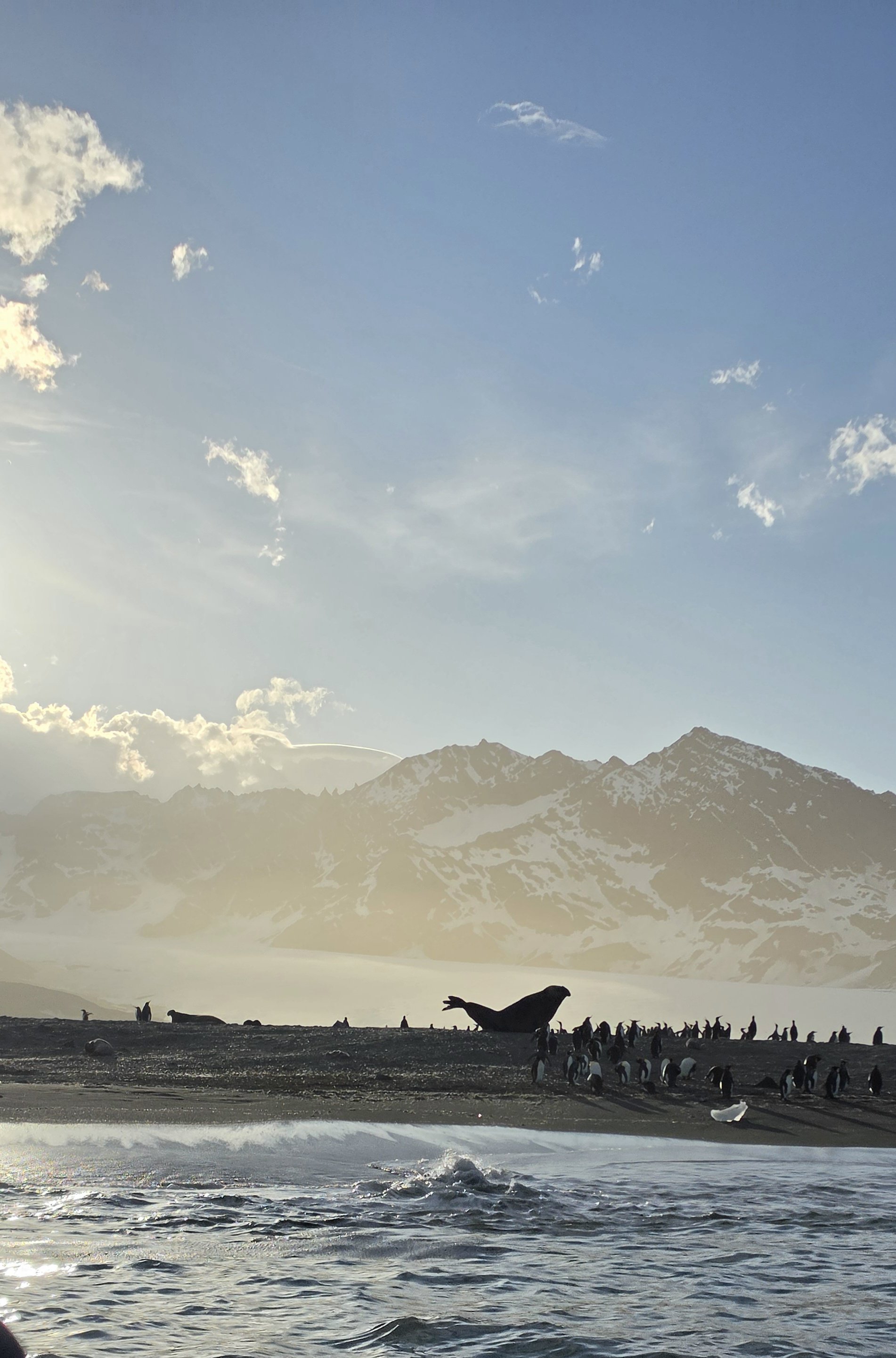
The sun is slipping behind the mountains at St Andrews Bay, South Georgia. I tell myself I’ve taken my last photograph. Then a seal twists in the shallows, a group of king penguins shuffles away from the commotion, and I reach for my camera again to capture that moment. We’re already on the Zodiac back to the ship, and nobody seems in much of a hurry to leave. It is just impossible to not feel overwhelmed and awestruck in a place as wildlife rich and beautiful as this!
This is what I came back south for. I’d already been to Antarctica, but this time I wanted to see what happens when you give the Falkland Islands and South Georgia time of their own. I sailed from Ushuaia aboard Aurora Expeditions’ Sylvia Earle in late October 2026. If you’re considering an Antarctica, South Georgia and Falkland Islands expedition, here’s a day-by-day look at what we saw and what it felt like to be there.
Before boarding | Ushuaia
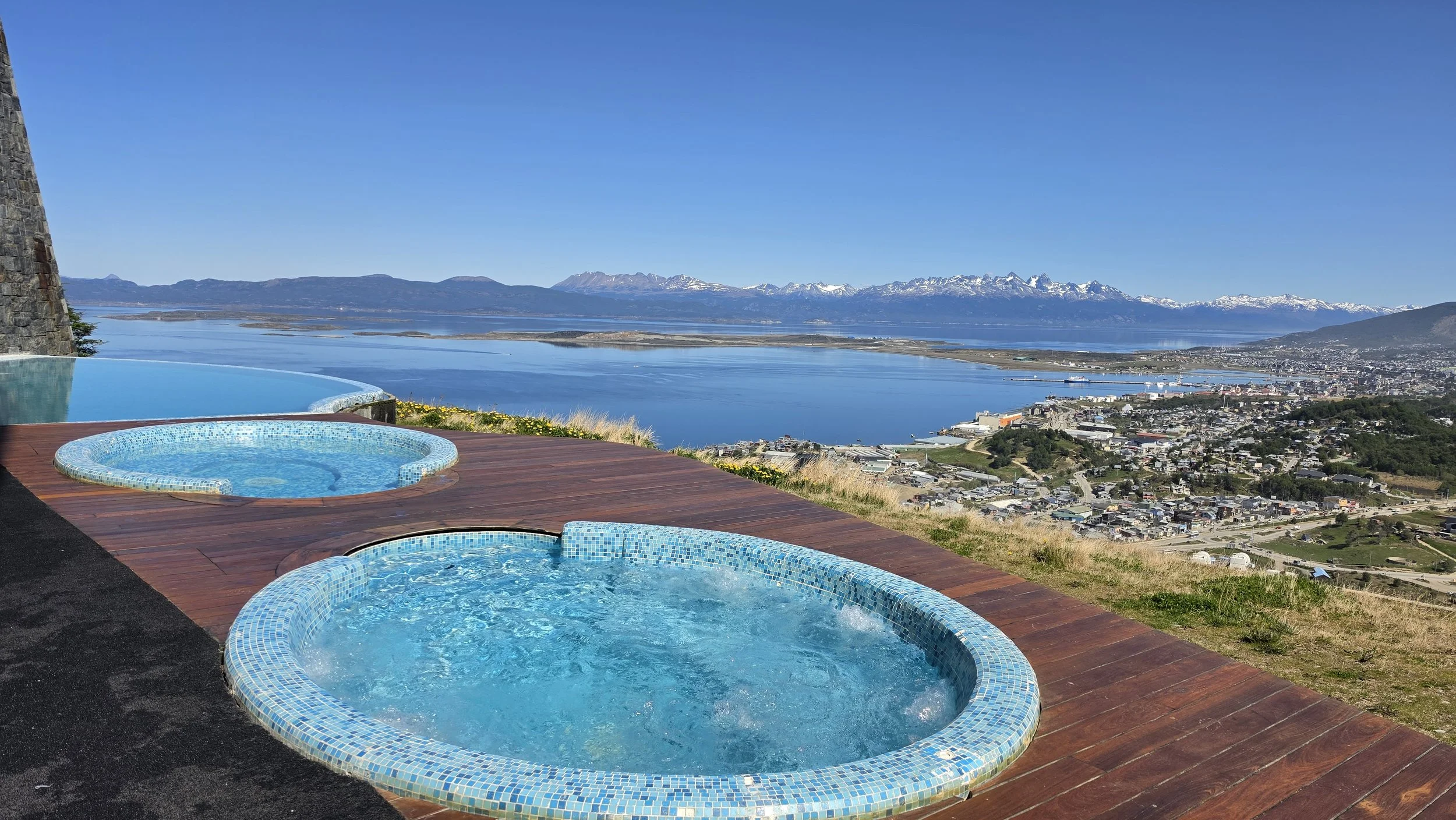
On October 24 I check into Arakur Resort & Spa, the expedition’s included hotel. Arakur sits within the Cerro Alarkén Nature Reserve, surrounded by native forest and overlooking Ushuaia and the Beagle Channel. The setting makes it a lovely place to slow down before an expedition. Its heated indoor and outdoor pools and hot tubs are a particular draw, letting you enjoy the scenery while staying warm. There’s also a sauna, massage treatments and a fitness centre. If you’d rather stretch your legs before boarding, walking trails into the nature reserve start right outside the hotel. Between the pools, the views and the surrounding wilderness, it’s worth leaving yourself some time to enjoy the property itself.
After the long journey from United States to Ushuaia, I’m happy to spend an evening here before getting on the ship. I spend the evening between the pool, hot tub, sauna and therapeutic showers. There are restaurants on site, and breakfast is included the next morning.
From Ushuaia to the Falkland Islands
Day 1 | October 25 | Lake Escondido and boarding Sylvia Earle
After breakfast at Arakur, we head out for a quick visit to Lake Escondido and an included local lunch. It’s a gentle start to a trip that will ask much more of us later. We also spend some time by the Beagle Channel when the land across the water stops being an unnamed stretch of coast. That’s Chile, close enough to point out from where we’re standing!
Then it’s time to board the Sylvia Earle!
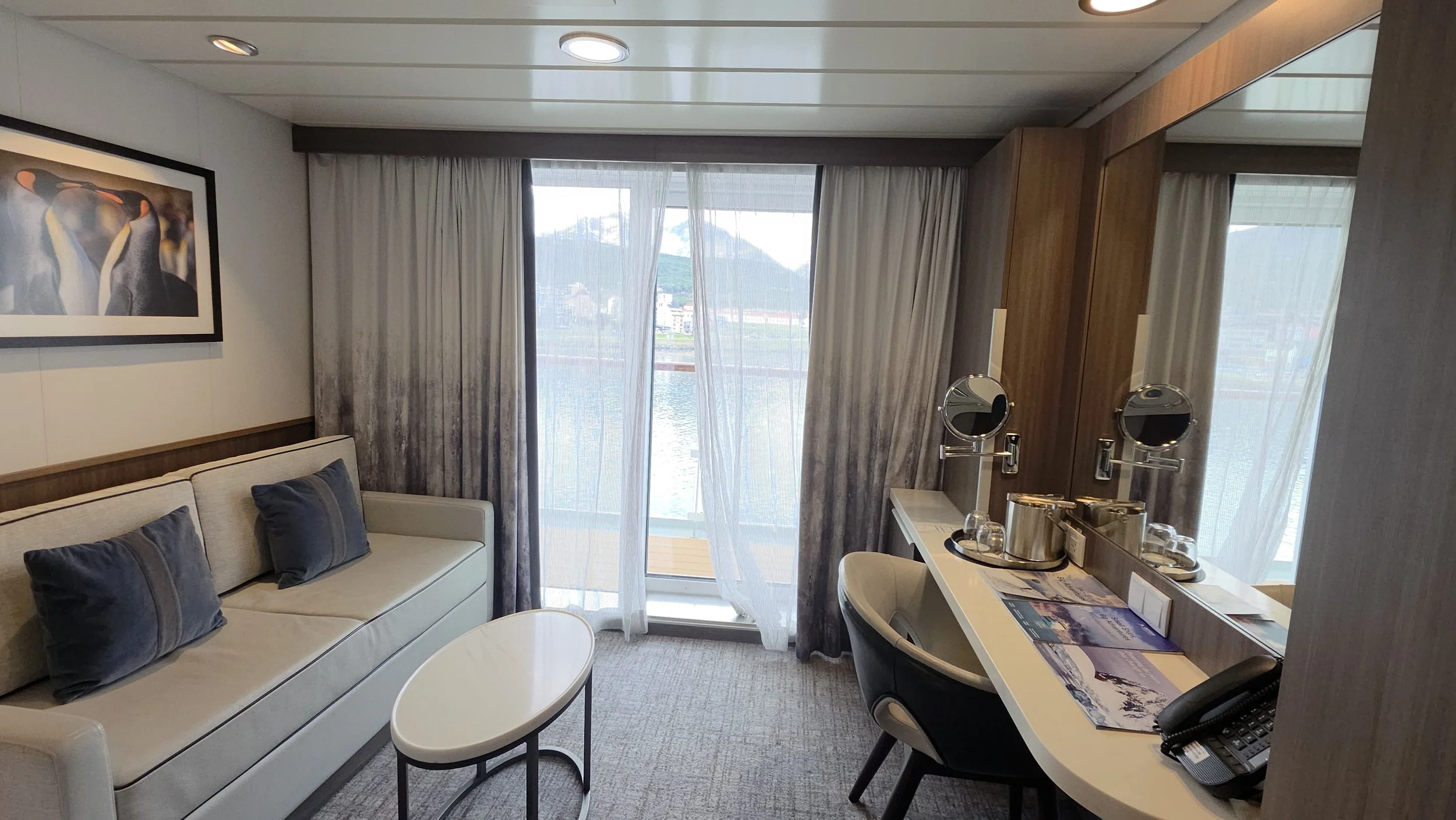
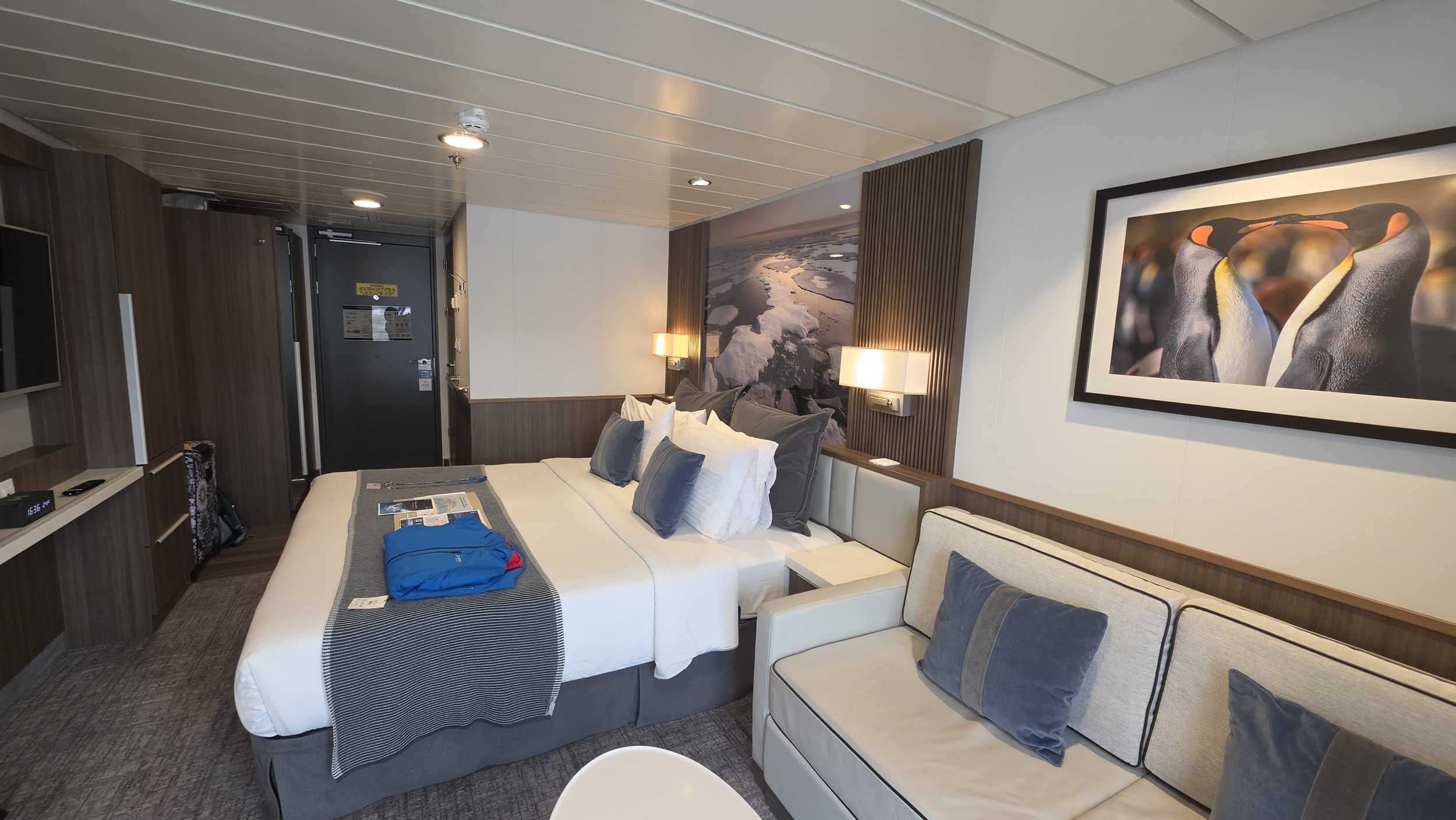
My balcony cabin is spacious and thoughtfully laid out. There’s a minibar, more storage than I expected and enough outlets for the things I’ve brought. Having the balcony means I can step outside for a quick look whenever the light changes, something I’ll especially appreciate when icebergs start to drift past. Inside, the cabin has room to unpack for a long voyage. I like having somewhere for everything, because most outings start with the same small scramble for gloves, sunglasses, hats - and ofcourse the right layers!
Soon we’re at the muster drill learning how to put on a life jacket and where to assemble. Then we meet the expedition team at the welcome briefing. By dinner I’ve already met several other solo travelers and have people to sit with.
Day 2 | October 26 | At sea and getting expedition ready
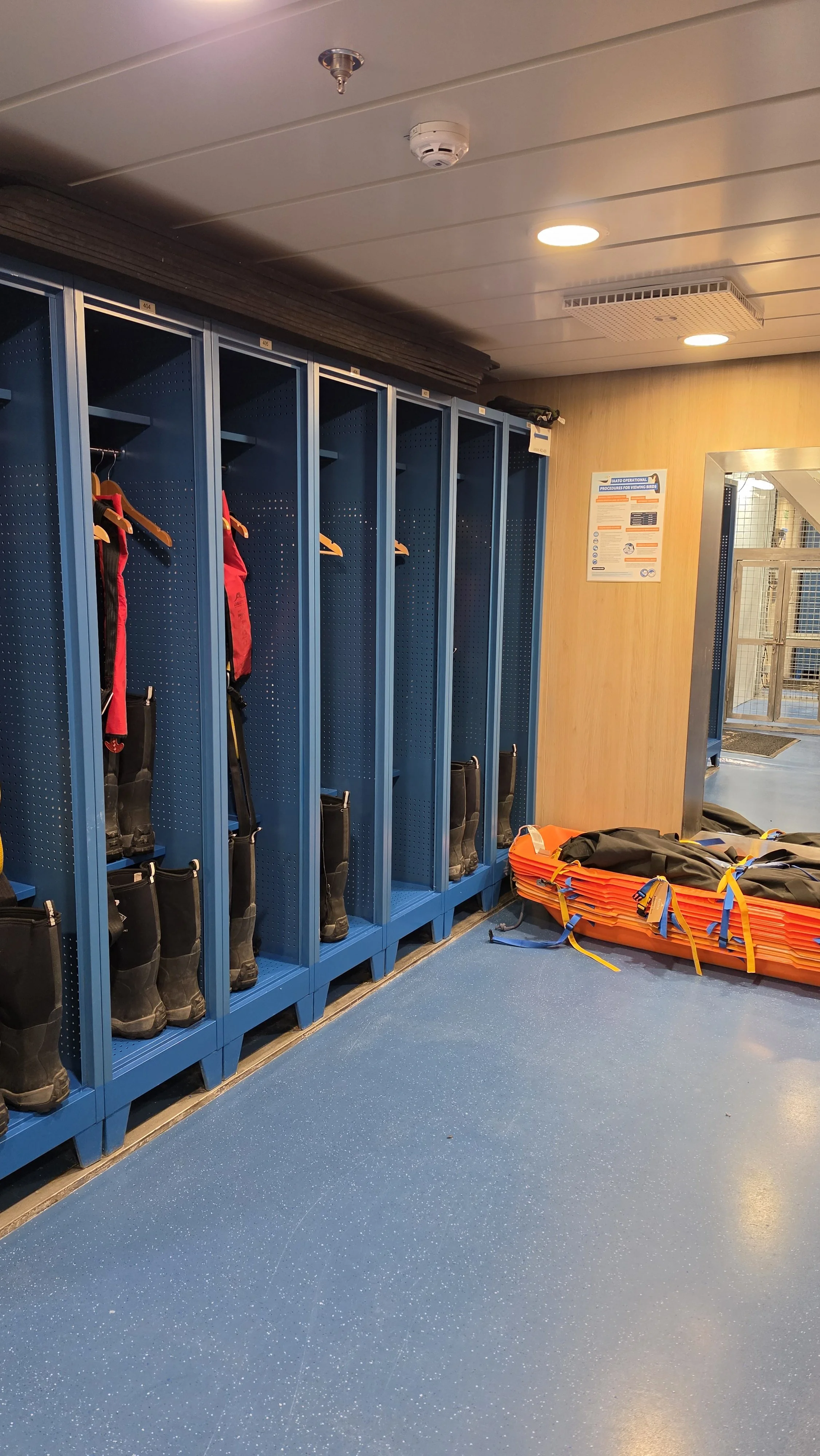
We start with a Falklands briefing, then clean our outer gear for biosecurity, try on the ship’s muck boots and find our individual spaces in the mudroom. There’s a fair amount of setup on this first sea day, and it makes sense once we start going out. The mudroom cubby is where I can leave the ship-provided boots and waterproof gear. The mudroom also holds equipment like walking poles and kayaking and camping gear. When we get back wet, there’s a place to put it all before heading upstairs.
After a free afternoon, the mandatory Zodiac briefing covers how to board, safety and how to clean our boots before and after landings. That cleaning helps limit what we carry from one site to another, a particular concern on this voyage because of avian flu.
The Zodiac briefing makes the procedure familiar before we need it. I know where to go, what to wear and what we’ll do with our boots when we come back. The team’s organized approach to Zodiac groups becomes one of the things I appreciate about the way Aurora runs the trip.
Day 3 | October 27 | Carcass Island and West Point Island
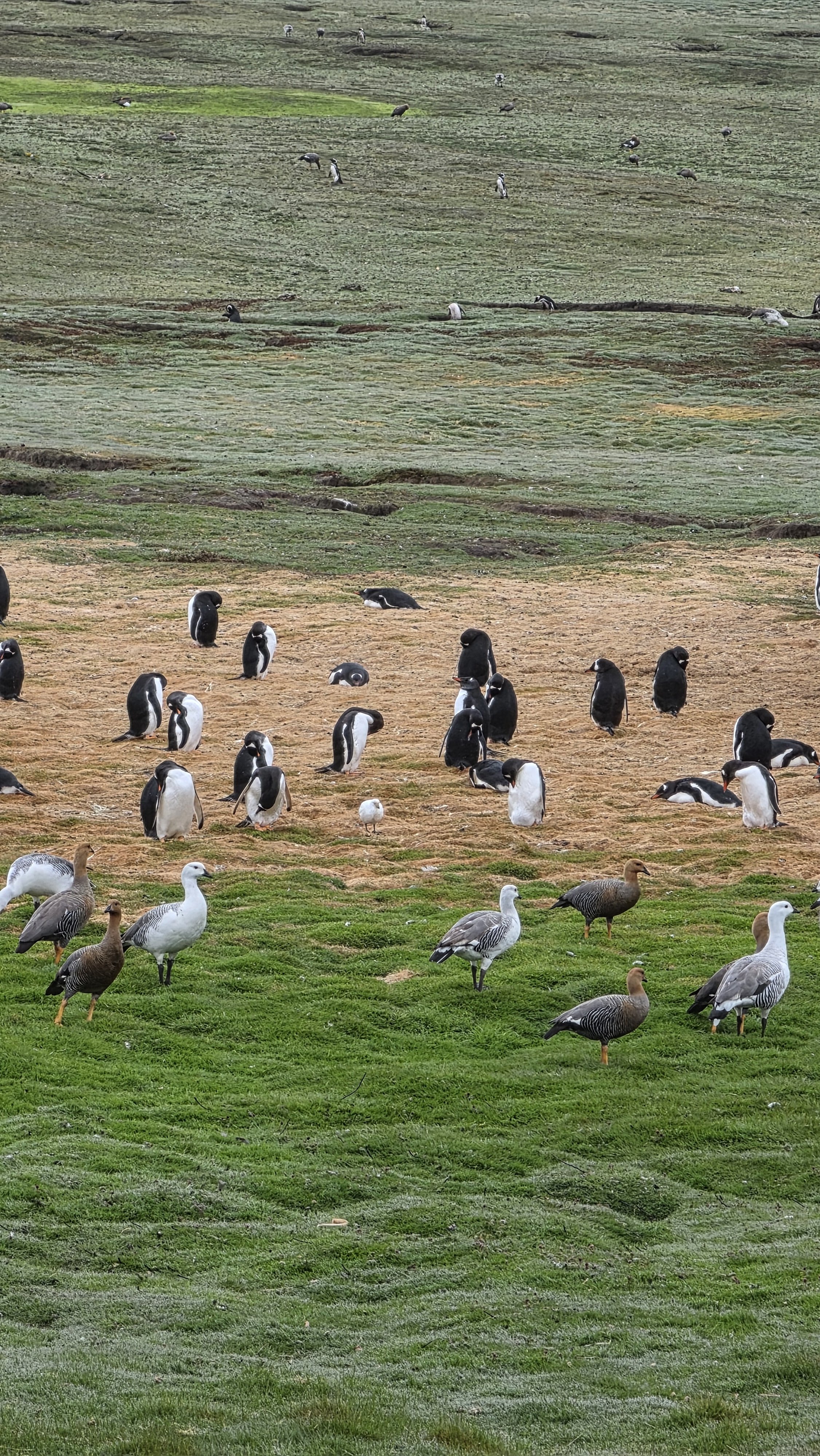
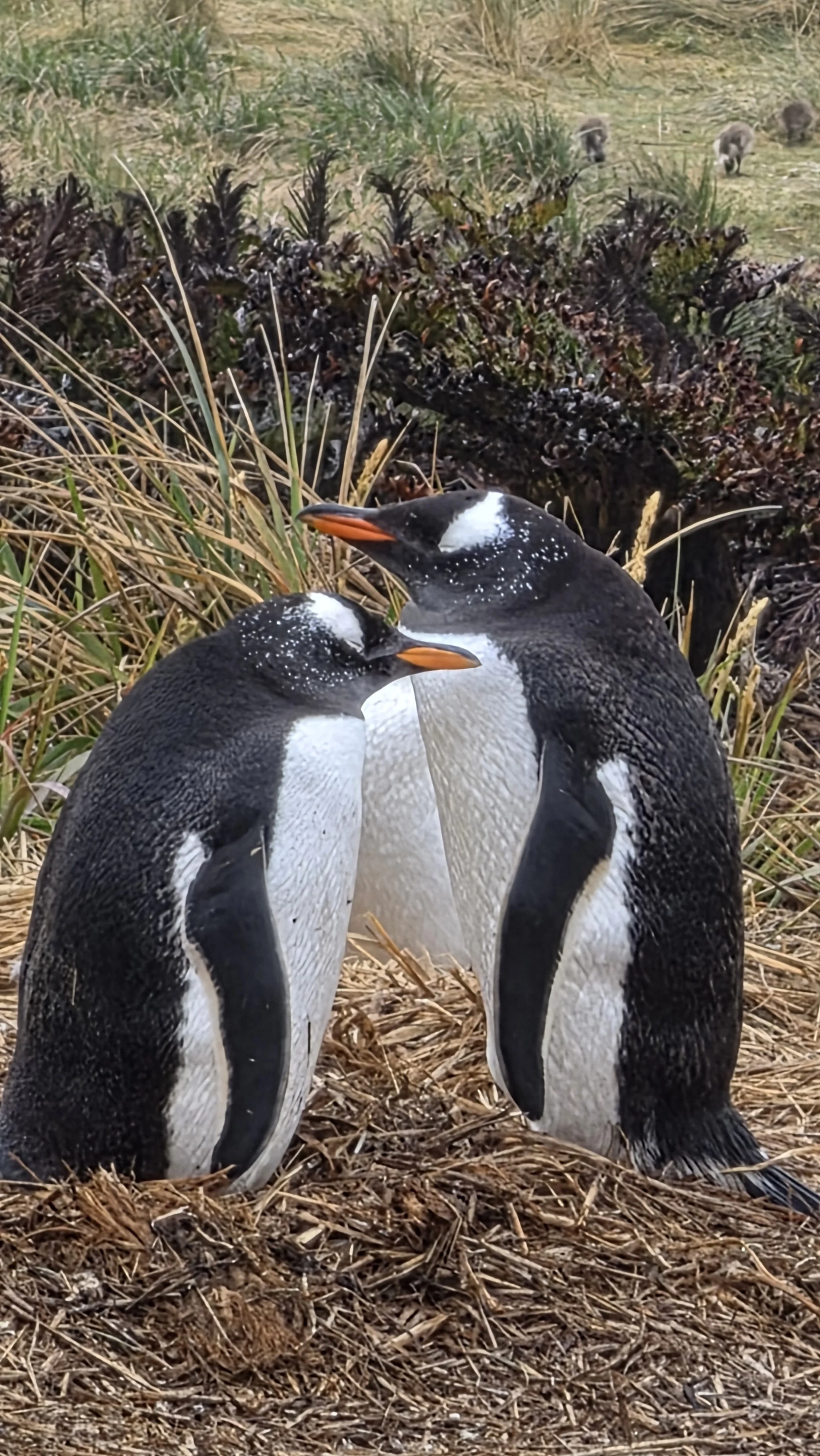
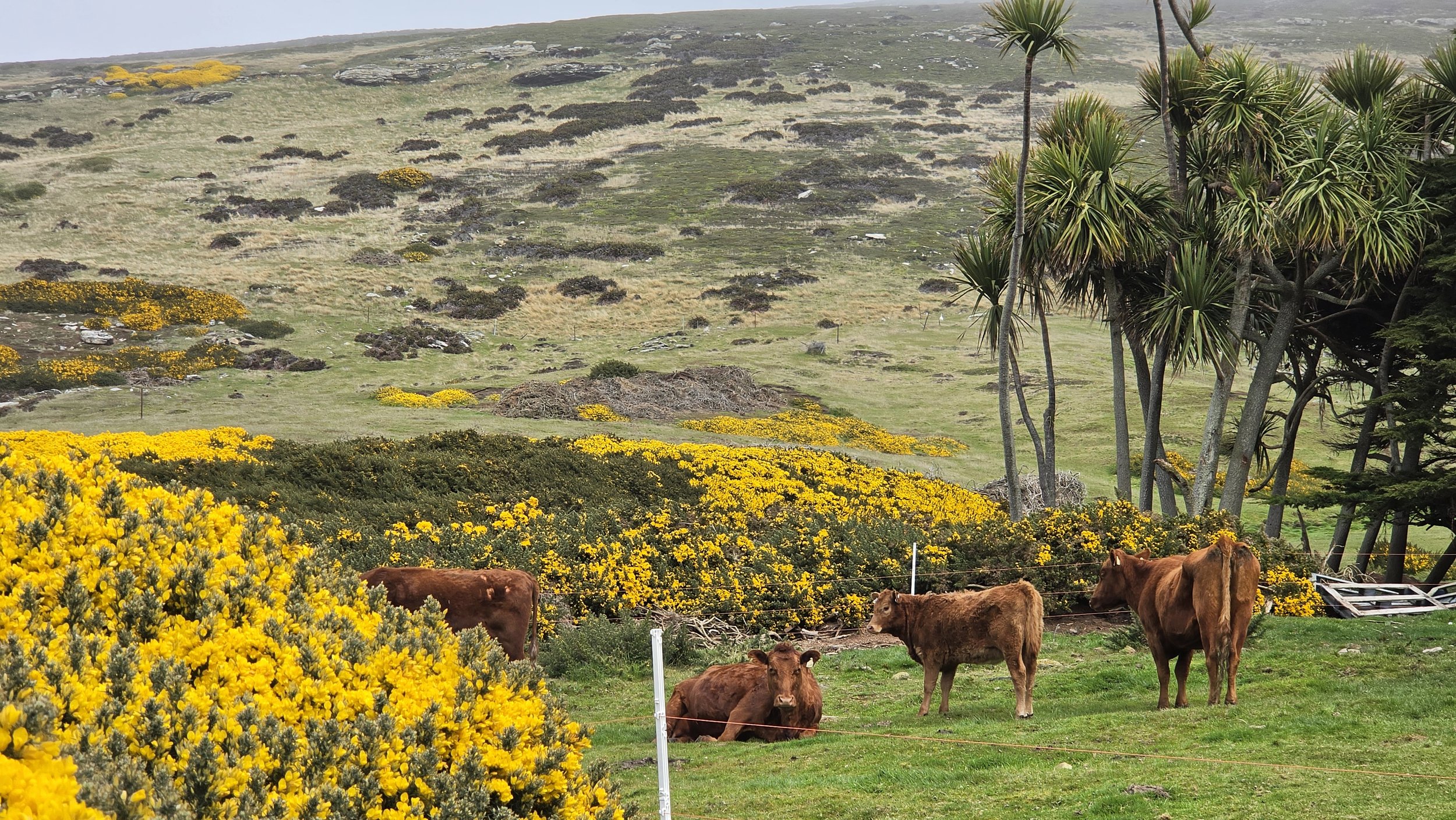
We wake up approaching the Falklands. On Carcass Island, our first landing, we take a long walk and see Magellanic and gentoo penguins, along with plenty of other birds.
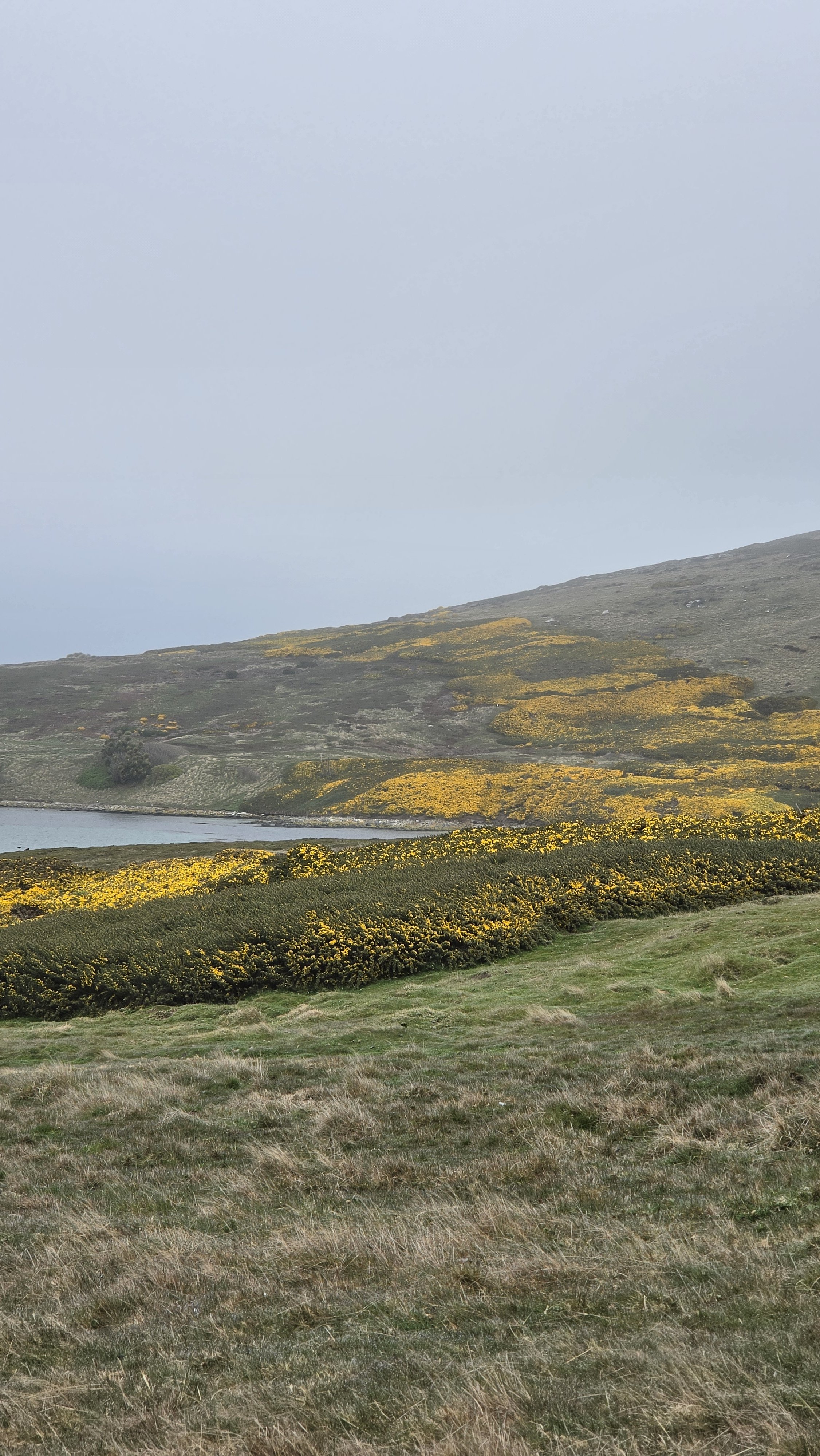
Carcass Island also gives us a first look at how much the Falklands offer beyond penguins. There’s a small farming settlement, and after days of thinking about ice and heavy layers, I’m walking along a green coast with birds everywhere. Seeing two penguin species on our first morning feels like a generous start. The island and the settlement are worth looking at separately from the colony, especially if, like me, you enjoy seeing how people live in isolated places.
We return for lunch while the ship repositions.
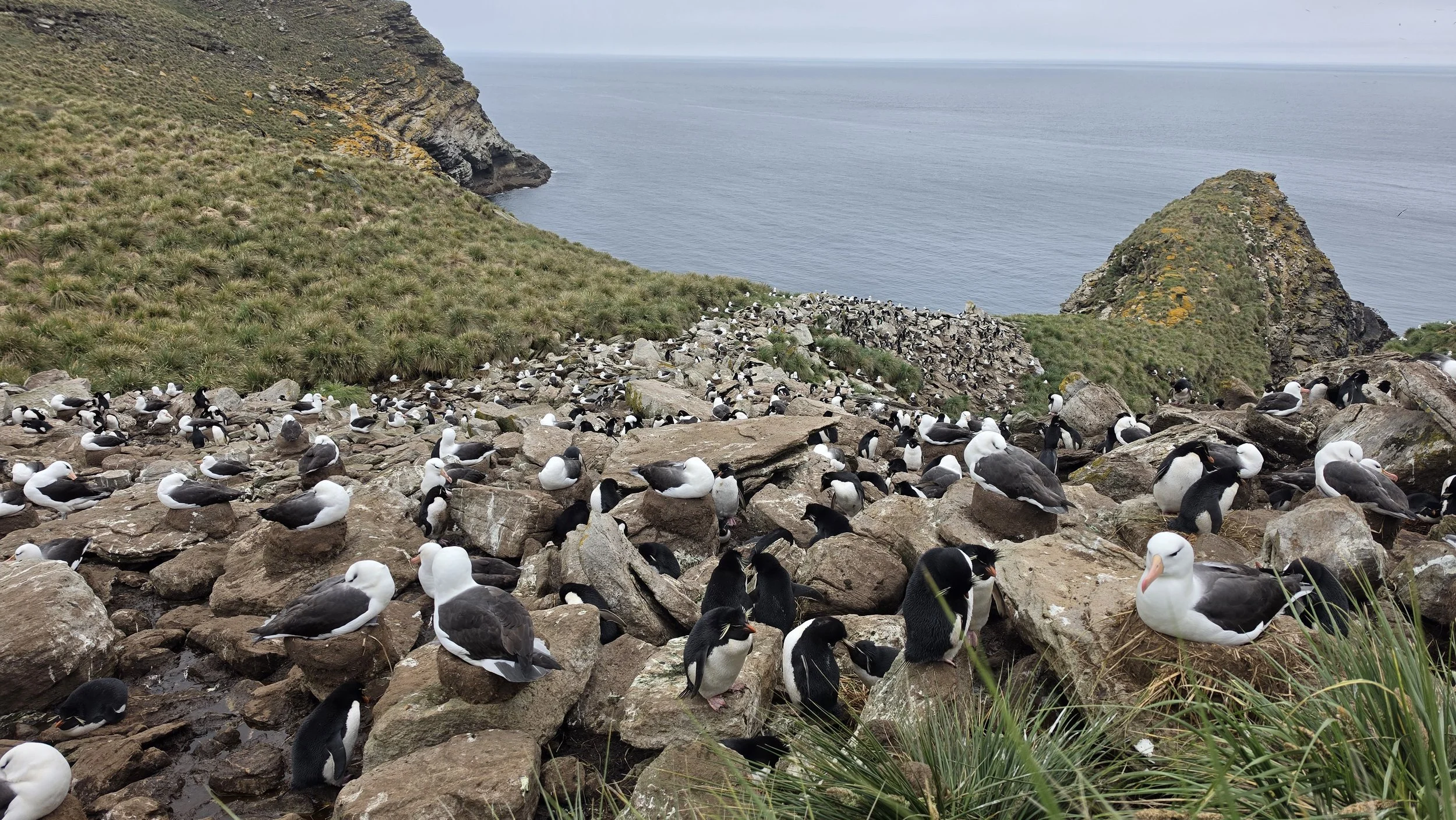
In the afternoon, we visit West Point Island, a privately owned island whose connection to the Napier family goes back to 1879. From the Zodiac beach, we walk roughly two miles across green fields with sheep, lambs and a few cows to cliffs where rockhopper penguins and black-browed albatrosses nest. The island used to be called Albatross Island, and looking at the sheer number of birds above the water, it’s easy to see why.
We have time to stay with individual birds for a while. I see one albatross sit on its nest while its partner leans in and gently nibbles around its beak. Then I look over at the rockhoppers and there’s the less graceful courtship attempt I’ll be laughing about long after the voyage.
Some walk back to the beach where we were dropped off, and some hitch a ride on the local caretaker’s Jeep. We stop at the caretaker’s house by the beach, where they have laid out tea and an entire table of baked treats. The tea is particularly welcome after the wait for our ride.
When we return to the ship, we keep the day going over dinner at Rockhopper restaurant, with time for the conversation to wander. Having a second restaurant to choose from makes a difference on a voyage this long.
Day 4 | October 28 | Stanley and Gypsy Cove
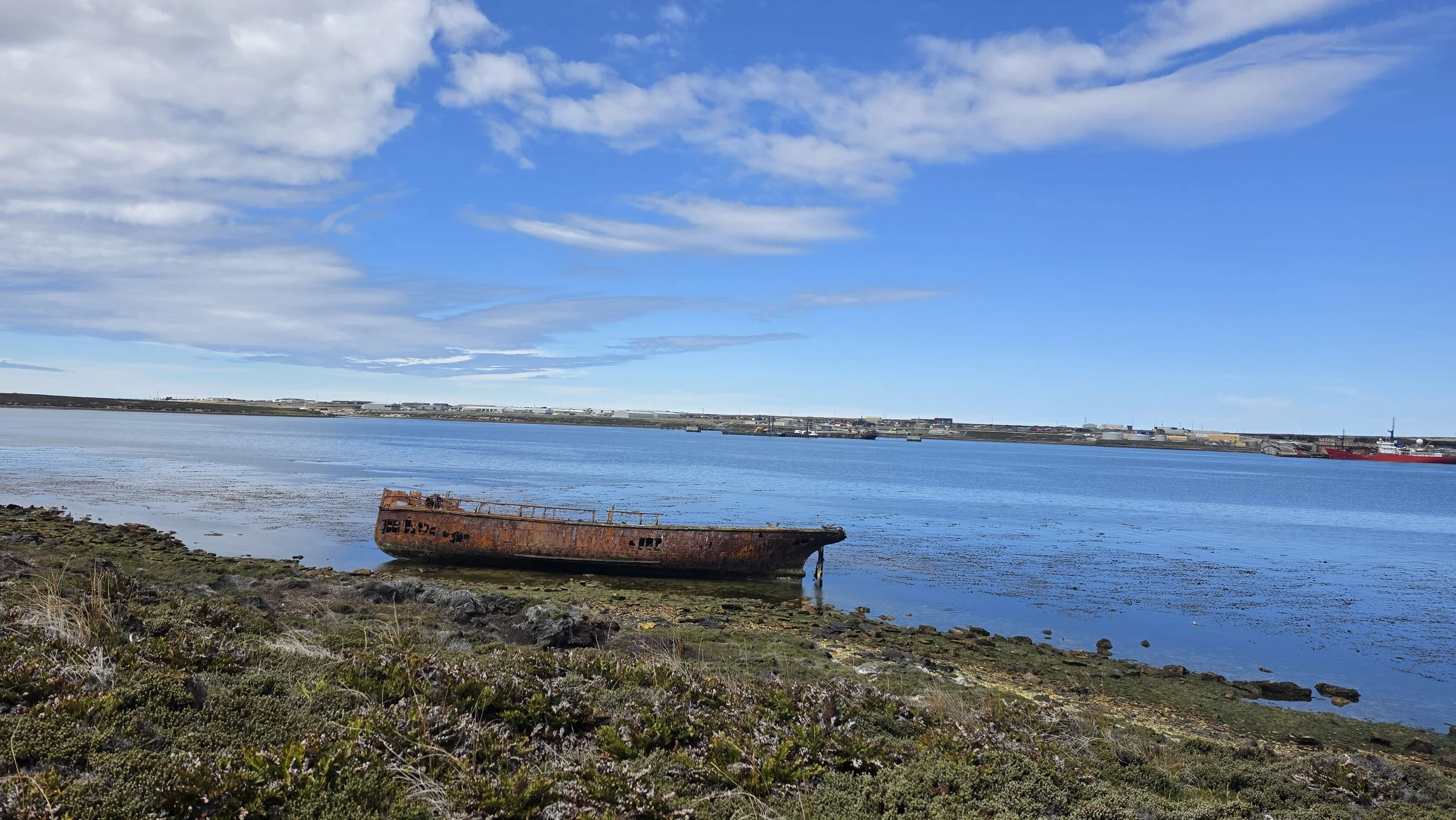
We move to East Falkland and visit Stanley, the capital. I take the long coastal walk to Gypsy Cove, roughly 15 kilometers by my recollection. We pass shipwrecks and see Magellanic penguins in their burrows. Some in the group spot dolphins. A quick lunch in town and we’re back aboard.
Gypsy Cove itself is a sheltered bay with a white sand beach. The contrast is what I remember most. We go from a working harbor with the remains of old ships to a cove where penguins disappear into holes in the ground.
Days 5 and 6 | October 29–30 | At sea toward South Georgia
I get a therapeutic massage for my sore legs after Stanley. We also spend time on deck doing bird and cloud surveys. Two women from the nonprofit Oceanites, are traveling with us. They are aboard to count penguins - talk about having a fun job! They talk to us about what they’re seeing in penguin populations and how their work helps track change.
The ship’s historian deserves a special mention. She tells Shackleton’s story with beautifully illustrated slides and the timing of someone who knows exactly when to pause. By the time we reach King Haakon Bay, I can picture the men arriving in their small boat. Our ornithologist is another standout. After hearing about South Georgia’s birds and spending time doing surveys on deck, I find myself paying closer attention to the seabirds around the ship. Talks on the island’s geology by the Geologis help round out the picture.
The crew gives our boots and outer gear another thorough clean before we arrive.
One group plans to leave the ship for a multi-day ski and camping crossing from King Haakon Bay to Stromness while the rest of us explore by sea. We also hear about an optional small-group citizen science Zodiac outing to investigate plankton using sampling equipment. It’s scheduled around the regular excursions when possible. I appreciate how Aurora gives us a way to participate. The bird and cloud surveys give me a reason to look more closely, and hearing from Oceanites helps me understand what researchers can learn by returning to the same penguin colonies over time.
This is also where the extra days at sea start to make sense to me. On deck we can take part in something as simple as looking for birds or recording cloud cover. Inside, the lectures give those observations context. Our ornithologist’s talk helps me pay attention to how the birds move around the ship, while the Oceanites team makes me think about what a penguin colony can tell you when you study it over several seasons.
The skiing group gives the Shackleton story a second life on board. Their plan is to travel overland from King Haakon Bay toward Stromness, camping along the way, while the rest of us move around the coast by ship. The crossing is planned for two to five days. It puts the distance into perspective to hear people on the ship talk about what it will take to cover it today.
Five days in South Georgia
Day 7 | October 31 | Cape Rosa, King Haakon Bay
Our first South Georgia landing is near Cape Rosa, where Shackleton and five companions found shelter at Cave Cove after their lifeboat journey from Elephant Island in 1916. They later moved farther into King Haakon Bay to Peggotty Bluff. From there, Shackleton, Frank Worsley and Tom Crean crossed the island on foot to Stromness to find help.
Cape Rosa is an uncommon expedition landing, and going ashore here feels like a privilege. It sits at the southern entrance to King Haakon Bay. Nearby Cave Cove was the first landfall of Shackleton’s boat party. The conditions on our own visit give us a sense of why this corner of South Georgia takes some luck to explore. We get ashore at Cape Rosa, but the weather closes the window for the next stop farther inside the bay.
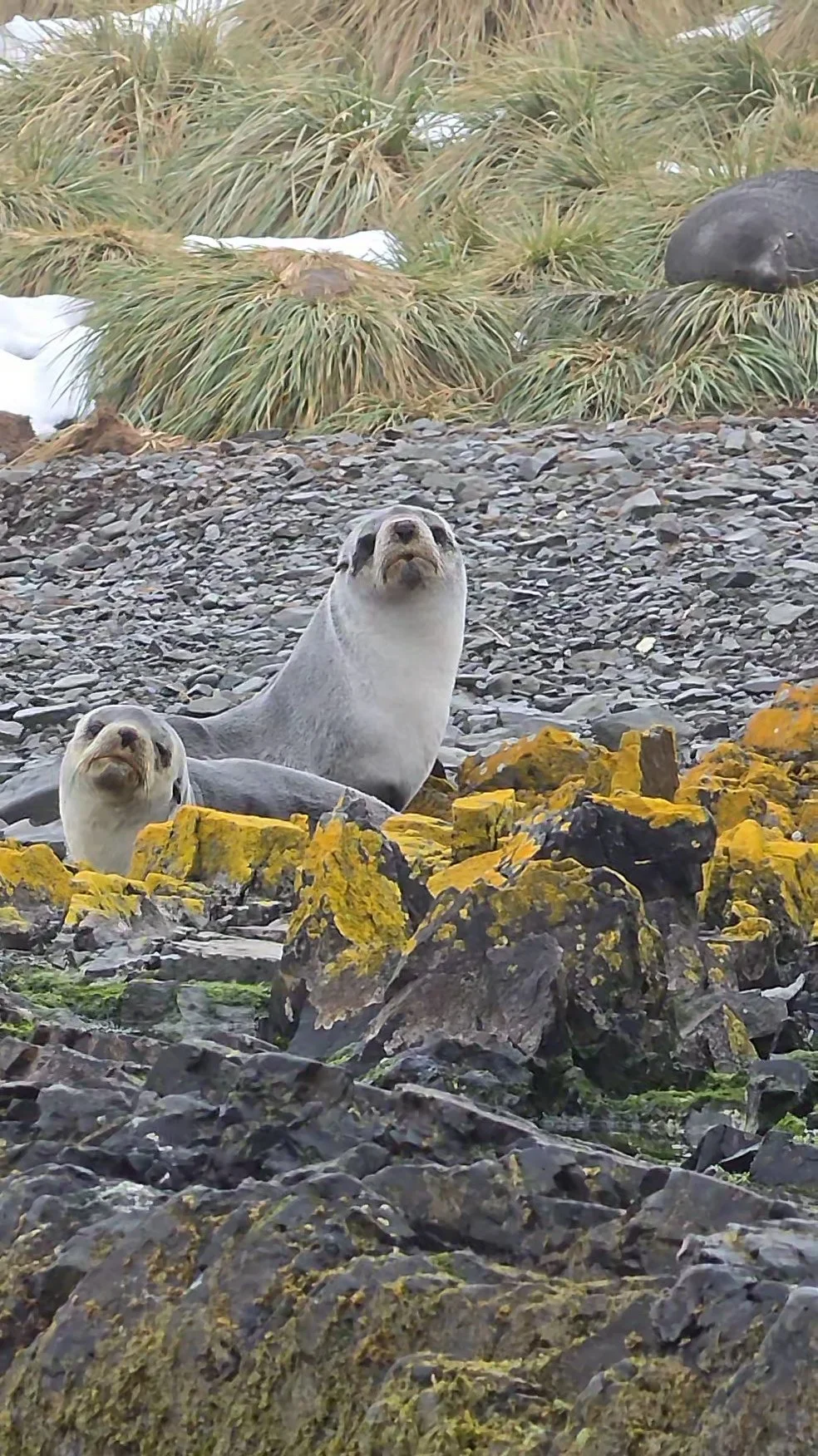
I’ve just heard the historian tell this story aboard the ship, and now I’m looking at the coast where six exhausted men found shelter after roughly seventeen days in a small boat. Away from that history, there are seals, slopes covered in tussock grass and little waterfalls.
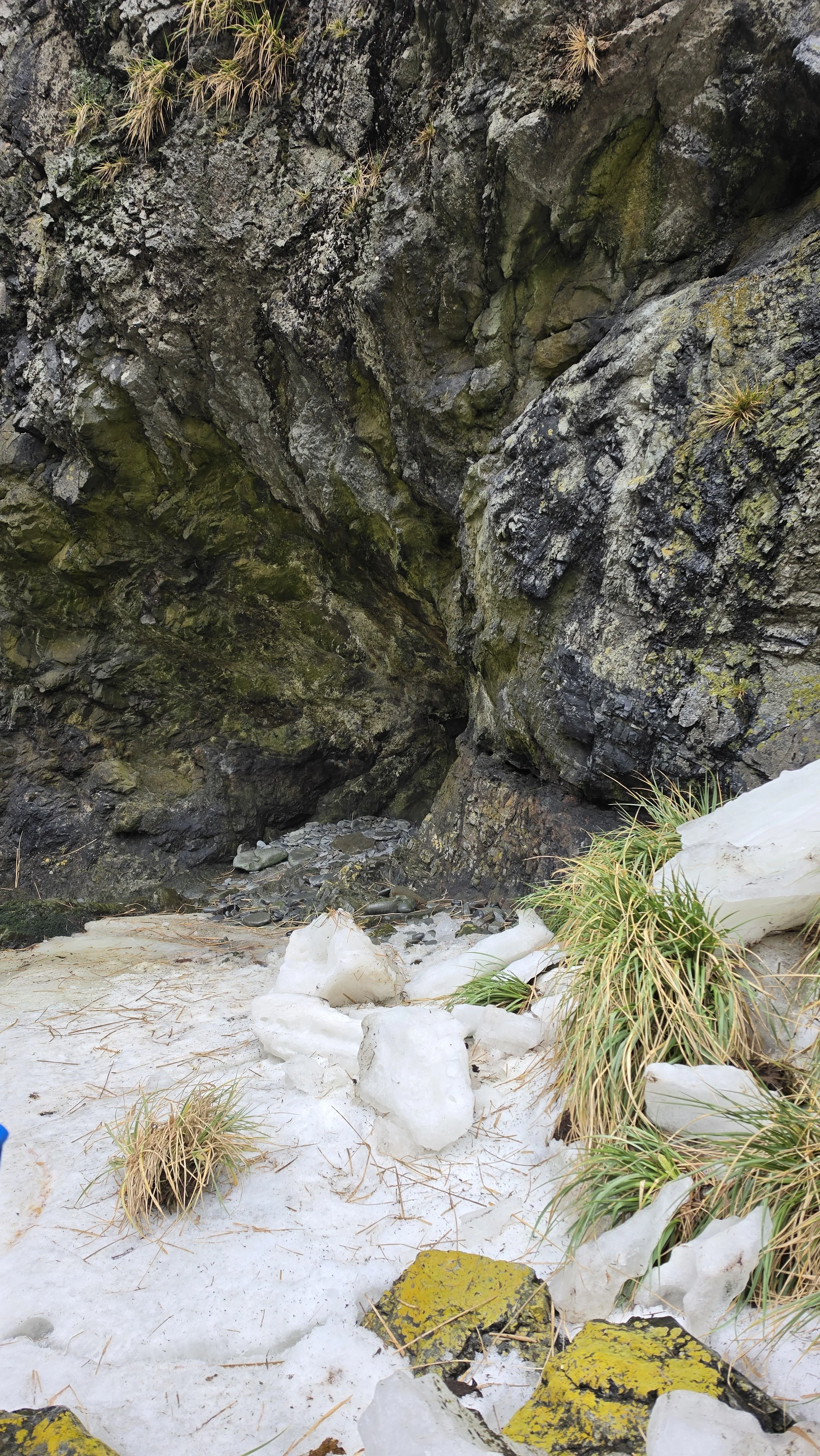
High winds cancel our planned afternoon visit to Peggotty Bluff. We hear a lecture on the history of whaling, and I spend some time in the ship’s sauna. The expedition team checks again after dinner for a possible Zodiac cruise, but the wind still has the final say.
Day 8 | November 1 | Salisbury Plain and Elephant Lagoon
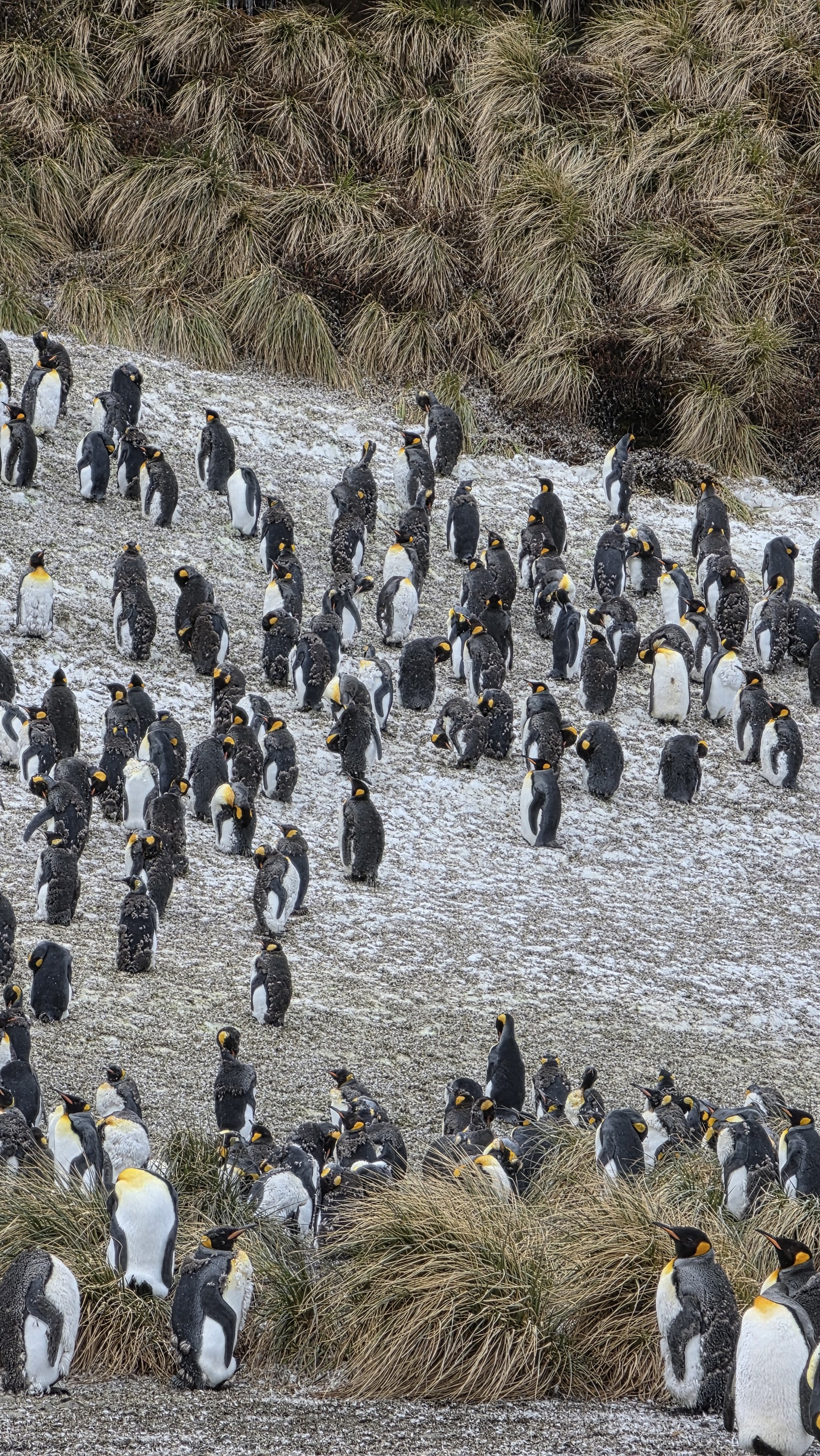
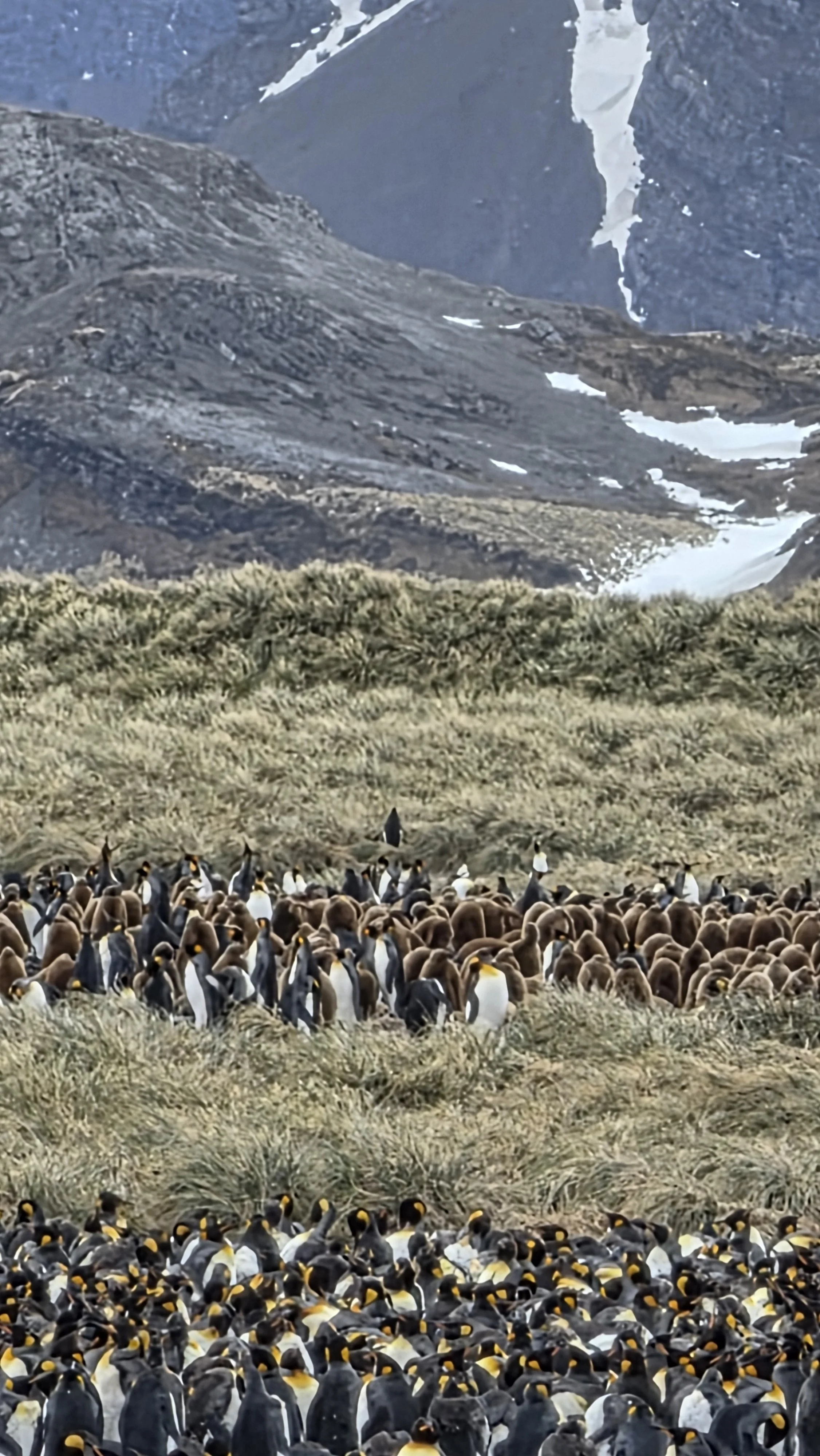
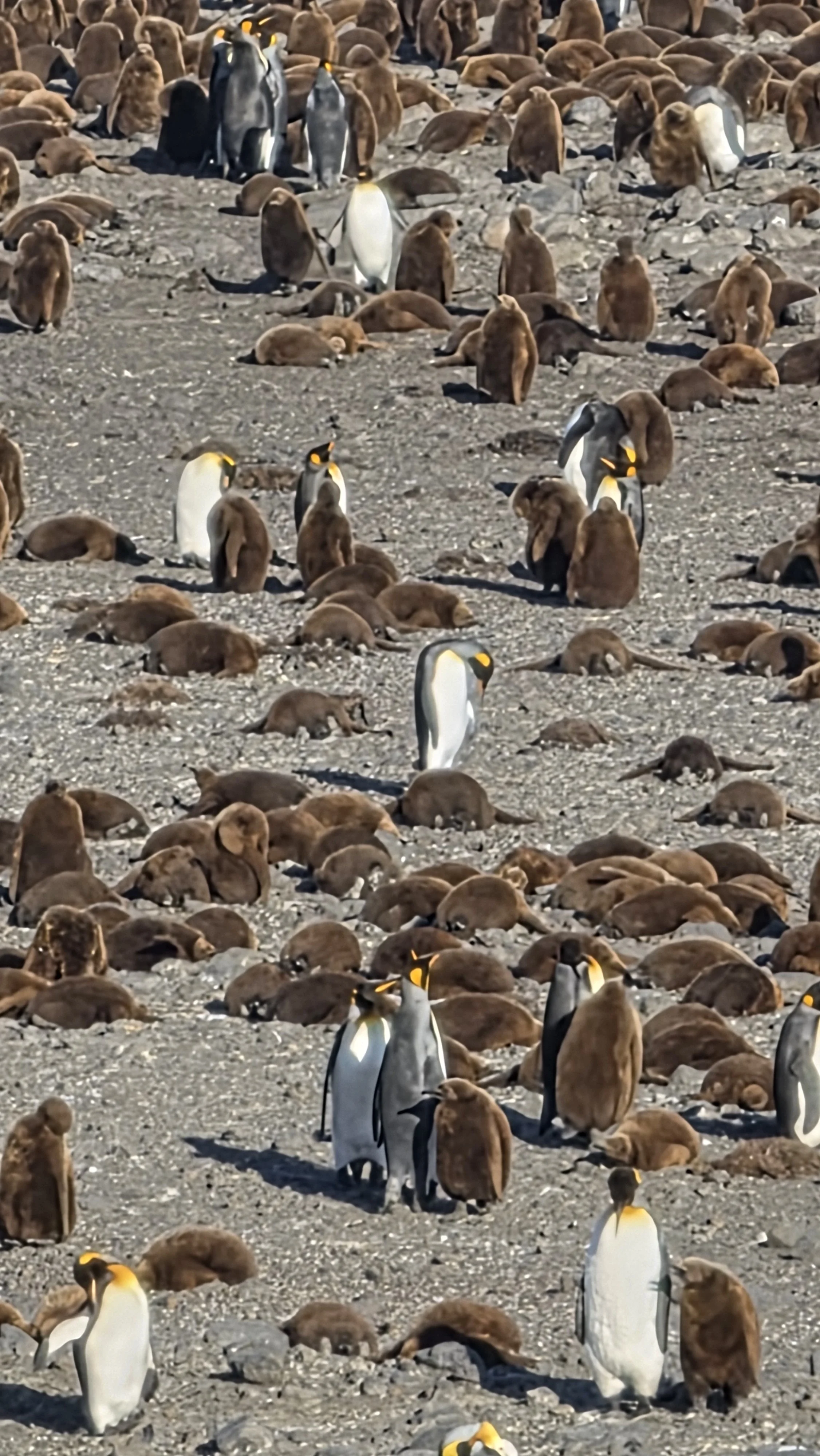
From the ship I can already see thousands of king penguins stretching along the shoreline at Salisbury Plain, home to South Georgia’s second-largest king penguin colony, with about 120,000 penguins. Ashore, the scale is hard to take in. Fluffy brown chicks stand among the adults, while elephant seals and fur seals share the beach.
Many of the king penguins here at Salisbury Plain are molting, and I can’t help feeling a little sorry for them. These otherwise beautiful, sleek birds look so scruffy, with old feathers sticking out in untidy patches as new ones grow underneath. Penguins replace their entire coat during their annual “catastrophic molt,” staying ashore and going without food while their waterproof plumage is renewed. It’s a physically demanding few weeks, using up stored reserves to keep them going and grow new feathers. They look uncomfortable and, to my eyes, rather sad, as though they’re patiently waiting to feel like themselves again. I know it’s a natural and necessary process, but watching them still tugs at my heart.
On the Zodiac ride back, I turn around for another look, watching penguins swimming just off the crowded shoreline.
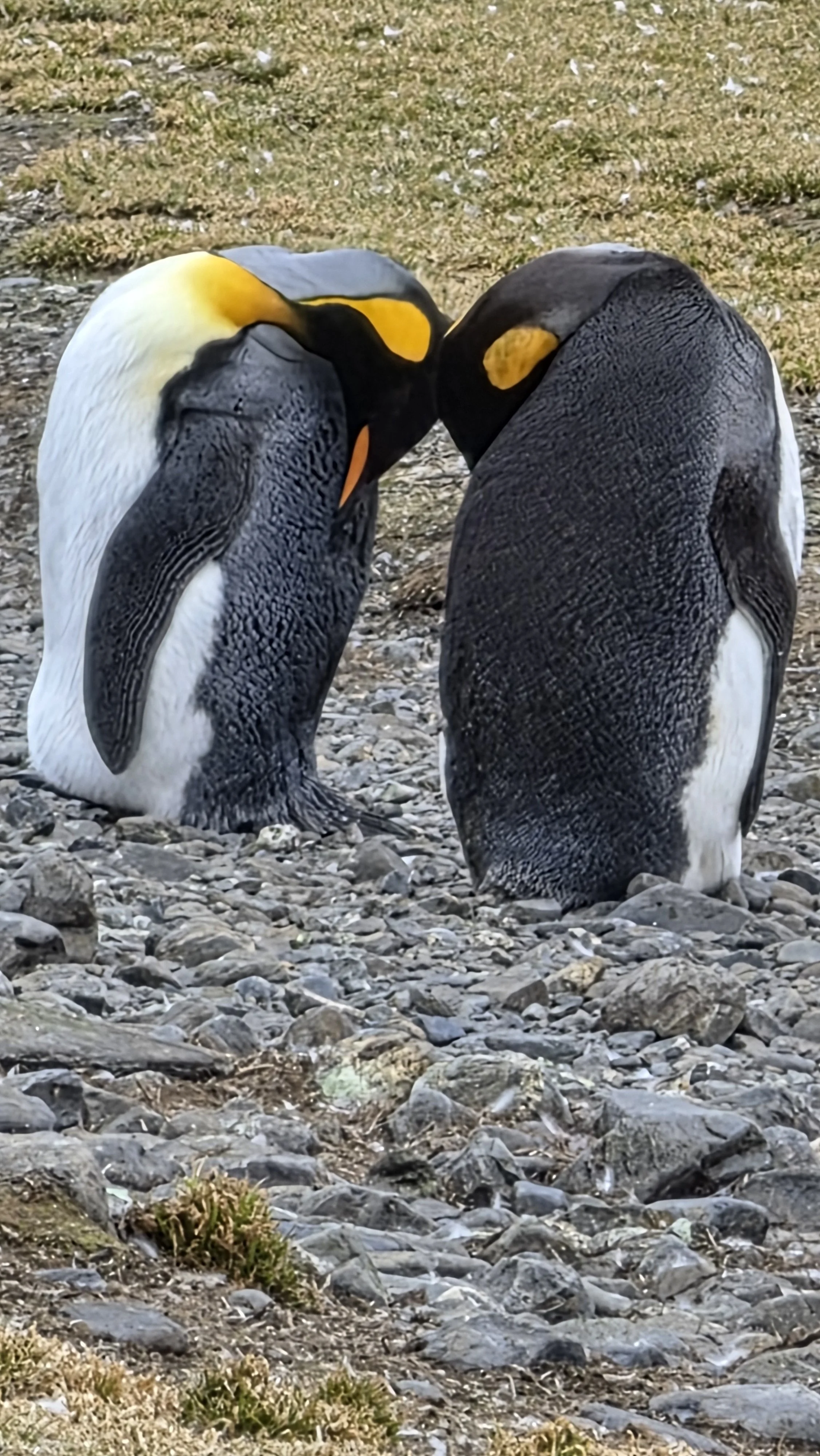
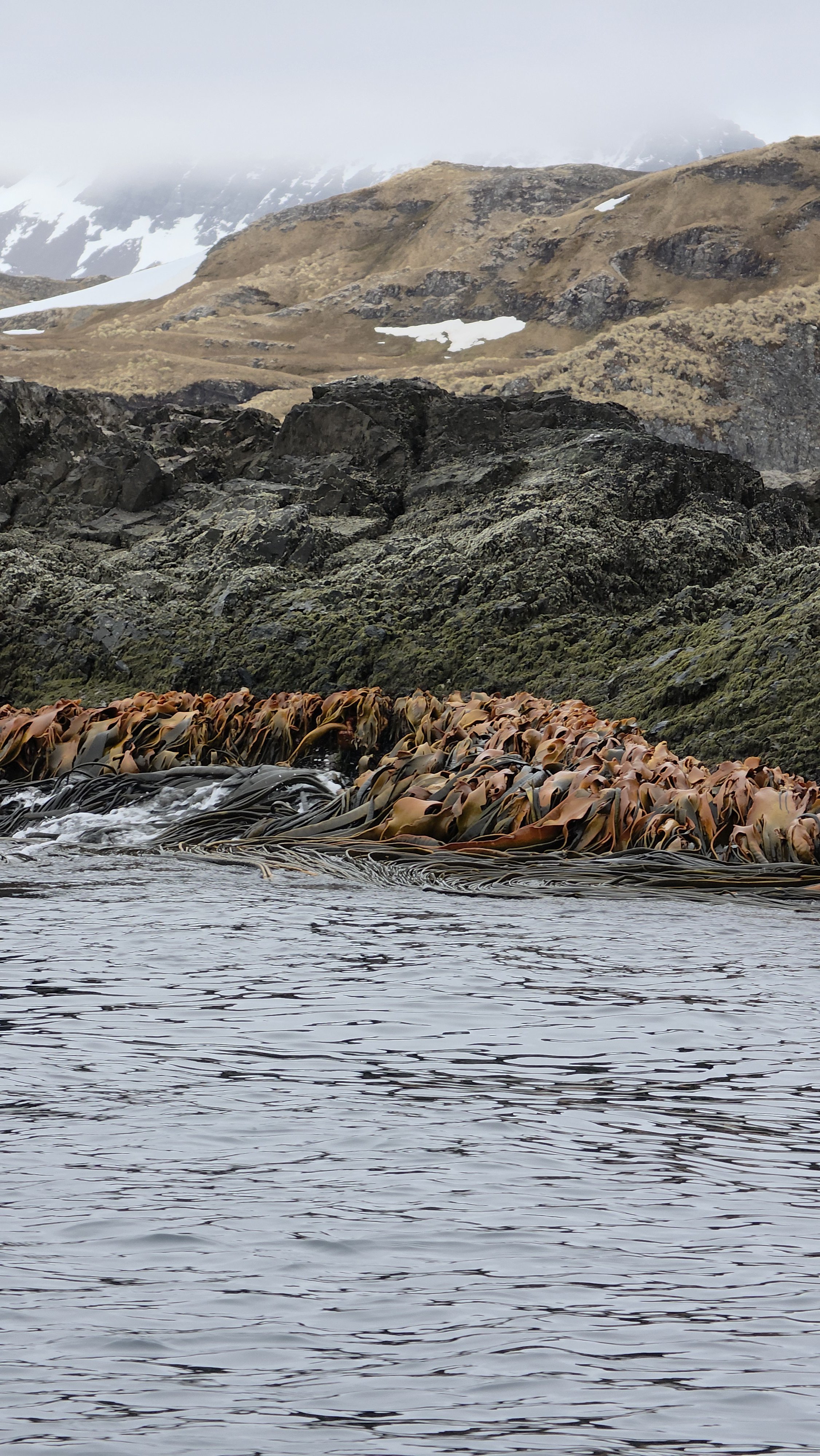
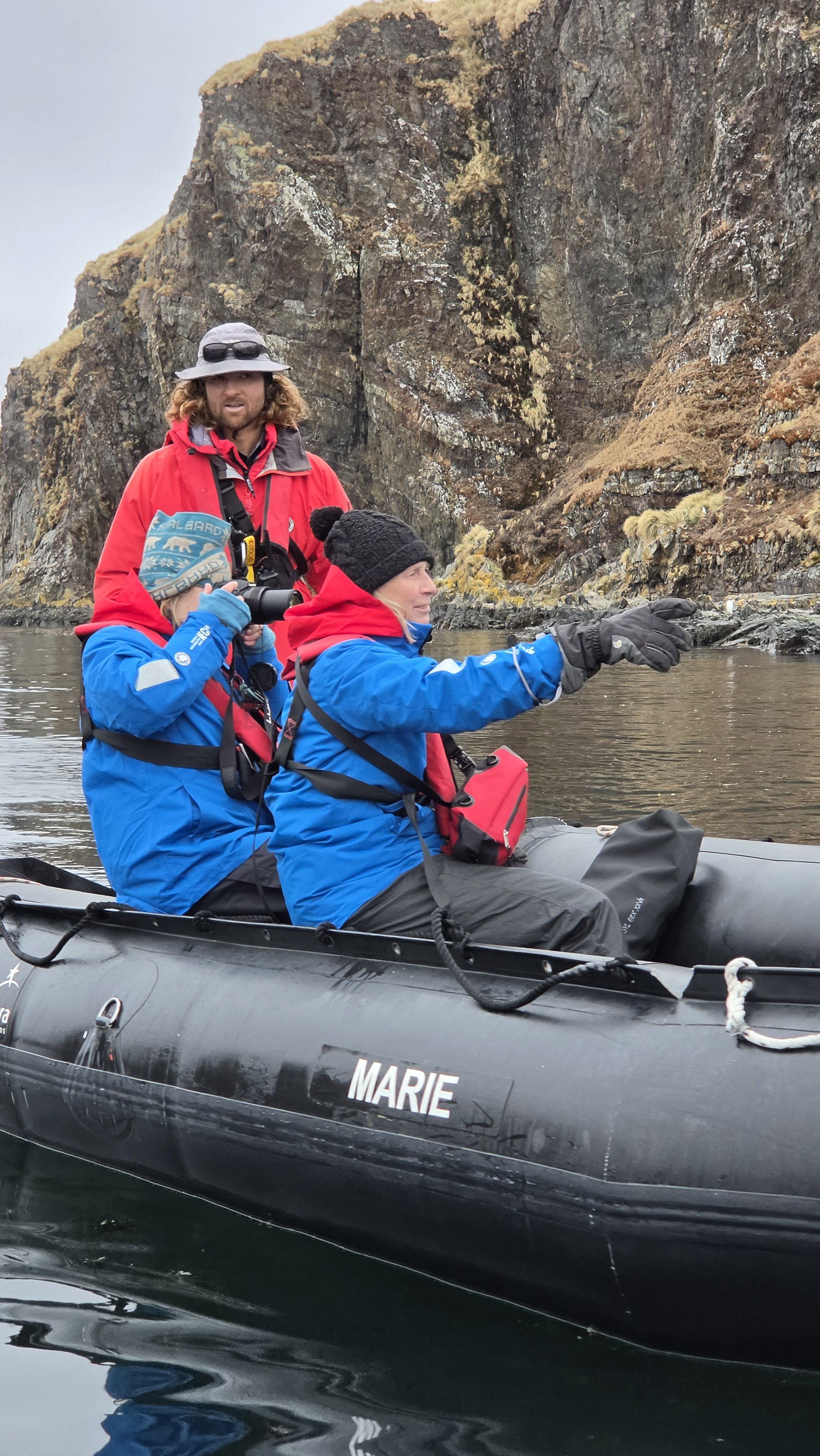
In the afternoon we cruise around Elephant Lagoon. There are birds and seals, but I’m also transfixed by the bull kelp. Anchored to the rocks, its long strands seem to slither like snakes as the water moves. After a morning trying to take in an entire penguin colony, I find myself happily watching a single strand of kelp beside the Zodiac. I hadn’t expected kelp to be such a highlight!
Day 9 | November 2 | Jason Harbour and Ocean Harbour
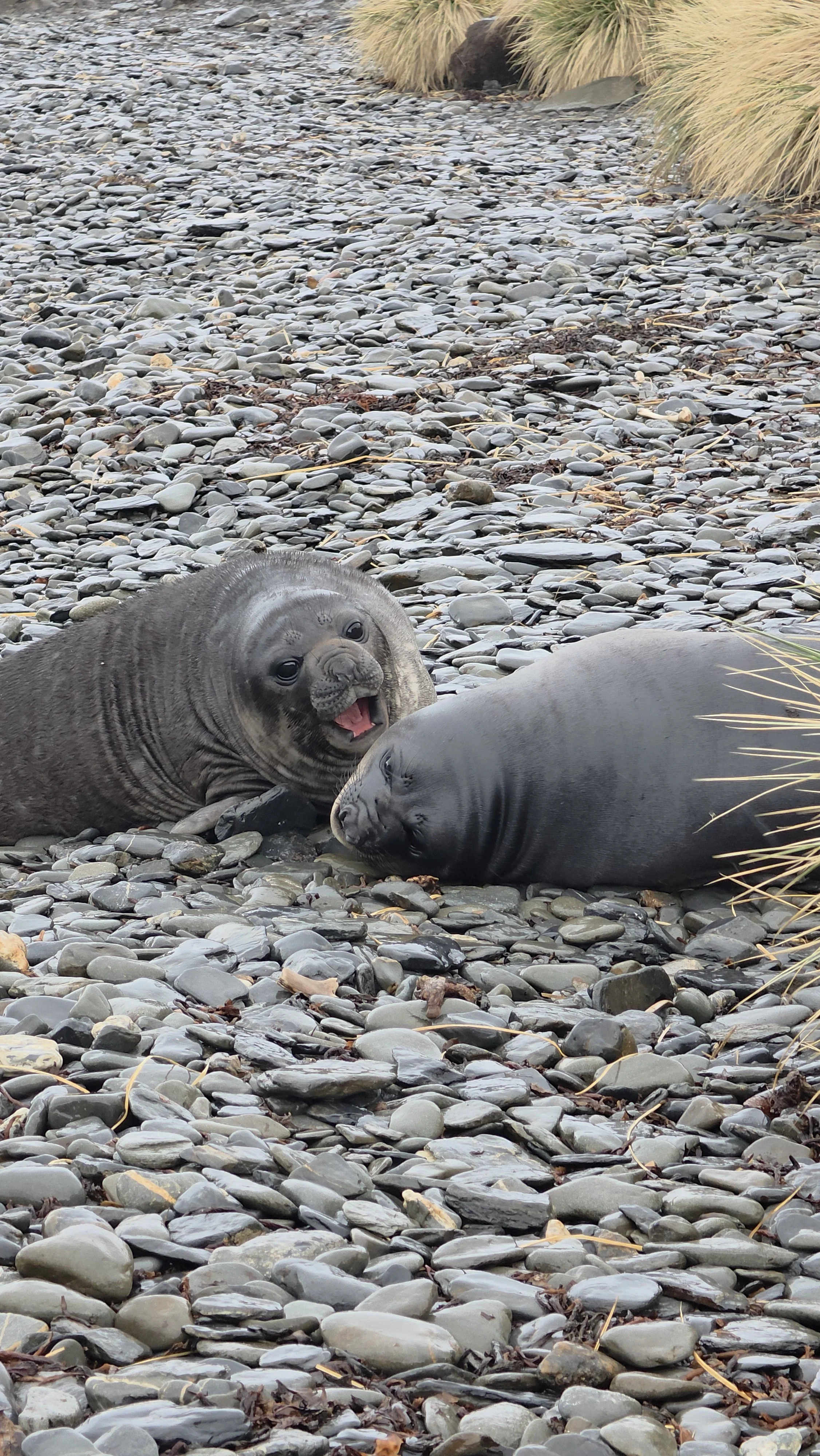
Jason Harbour is full of seals, some resting on the shore and others swimming nearby. Their sizes vary enormously. Some lie stretched out and completely still, while others move about in the water. We see birds gathering around the placenta of a seal that has just given birth. Watching them scavenge the afterbirth is one of those unexpected wildlife moments that reminds me how much is happening on these beaches beyond what first catches the eye.
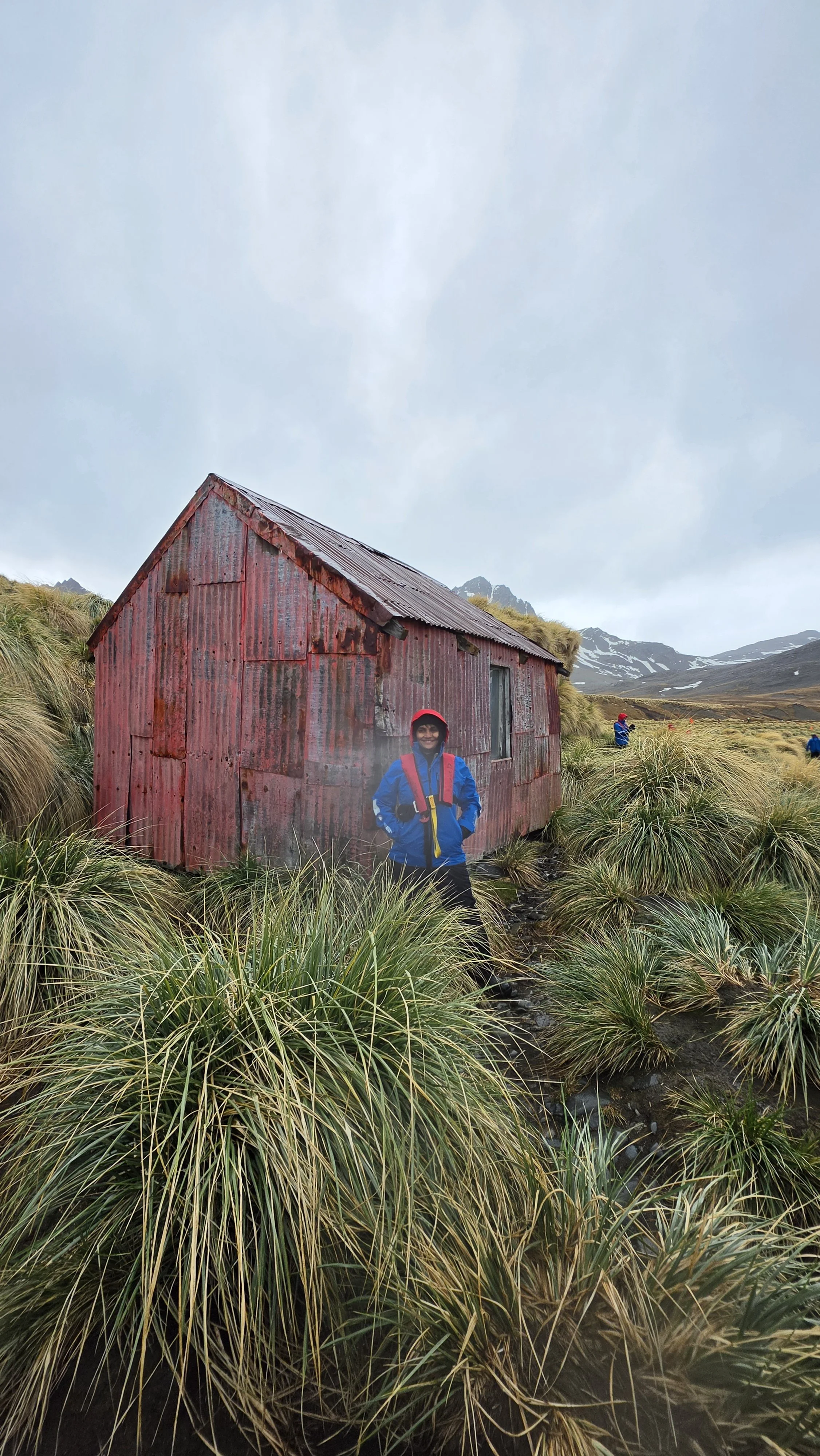
We walk carefully around the tussock grass, where what looks like an empty patch from a distance may have a seal tucked underneath. It’s a lesson in paying attention to where we step and giving the animals plenty of space. Along the way, we pass a little red hut that our guides describe as a former postal building.
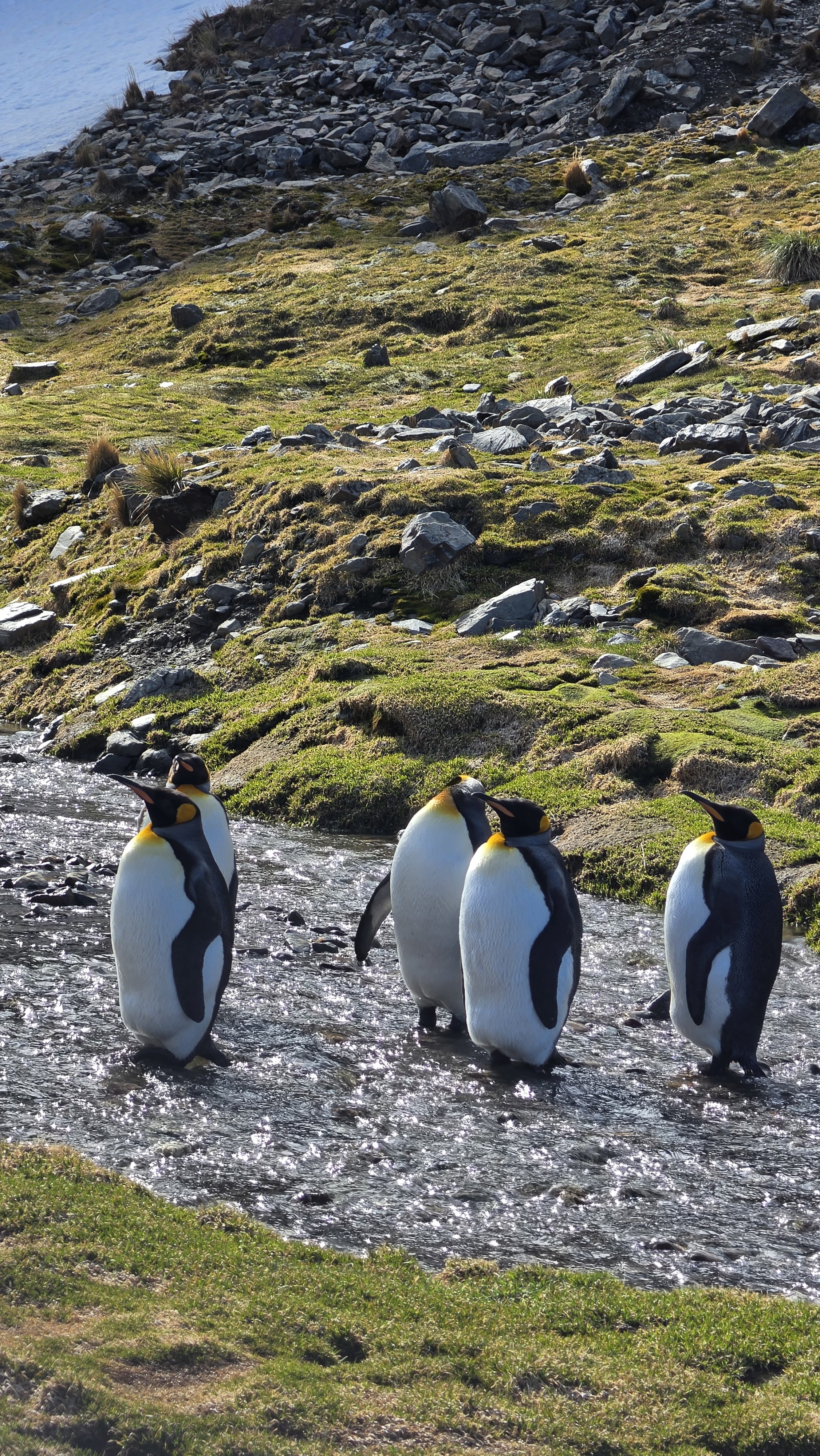
During lunch, the ship moves to Ocean Harbour. We land at the head of the bay, in front of the former whaling station. Small streams run through the mossy ground, with seals resting nearby and penguins standing near the water. I find myself looking down at the moss and little streams almost as much as I look up at the mountains.
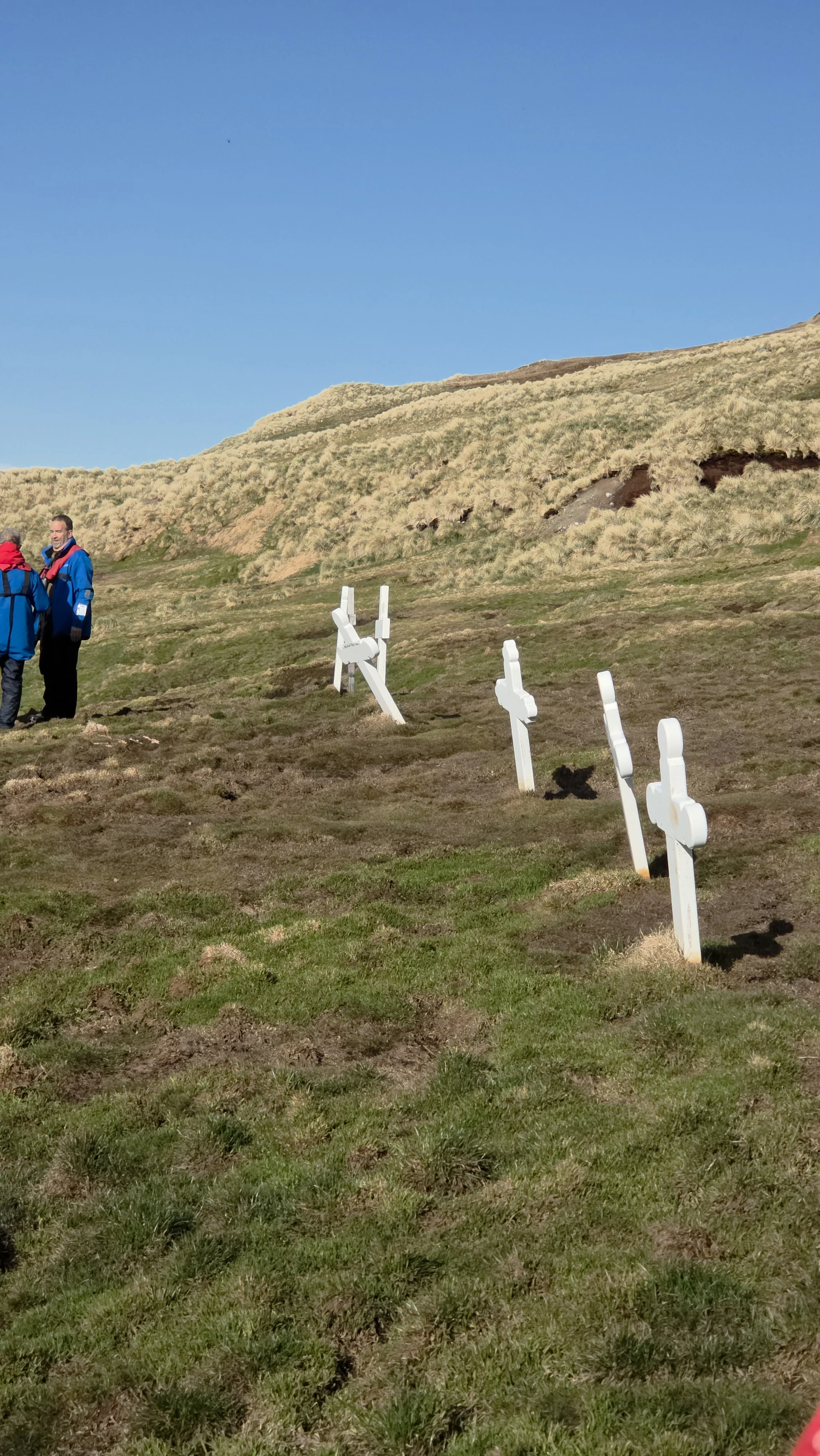
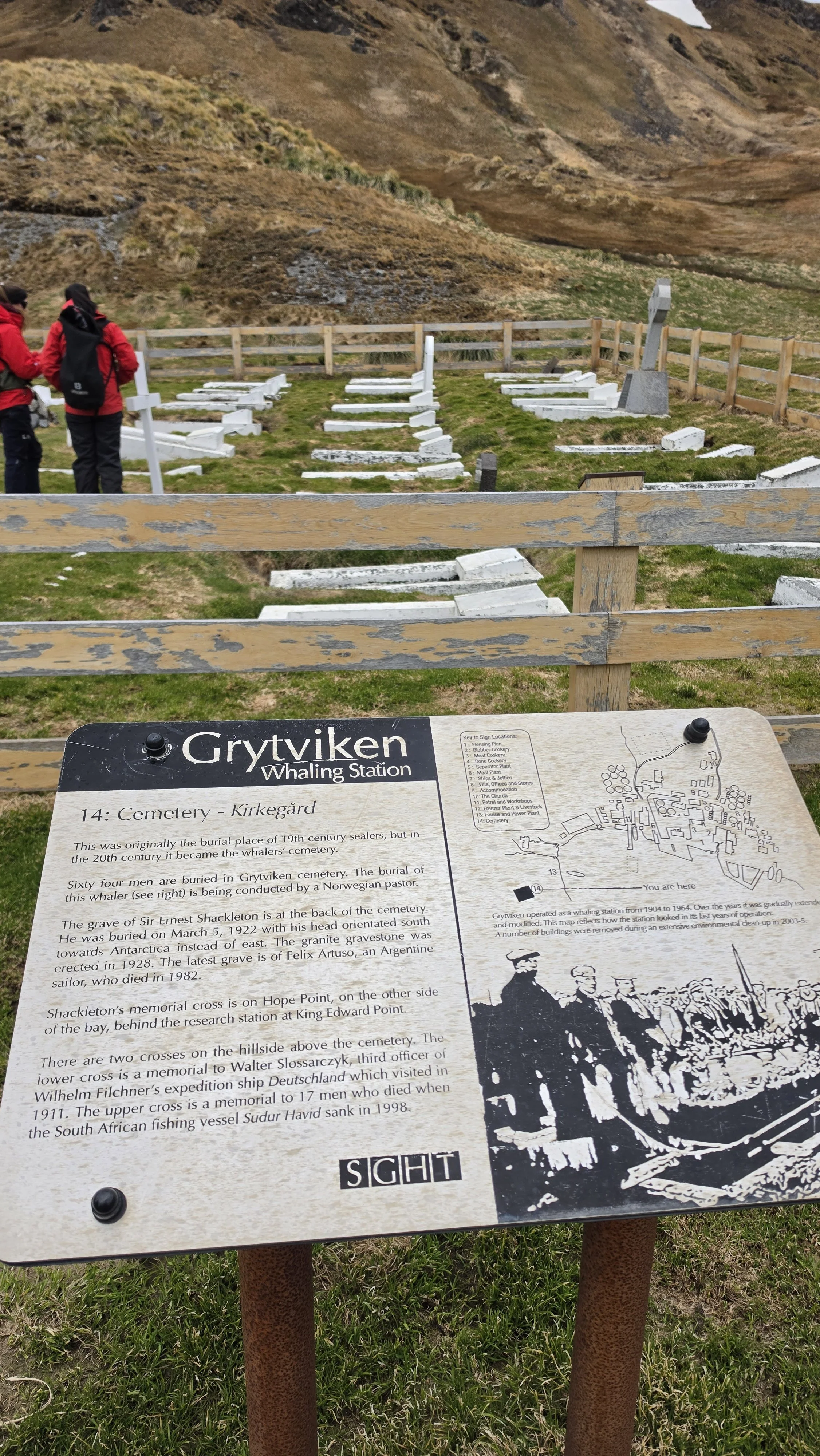
There’s an uphill walk for a waterfall view, giving us a chance to stretch our legs after all those ship meals. We also see remnants of the whaling station and a small cemetery. We hear that six of the people buried there have been identified, while one remains a mystery.
Later, the ship rocks hard for about three hours. I feel queasy and settle on some bread and rice before heading back to my cabin.
Day 10 | November 3 | Fortuna Bay and Stromness
At Fortuna Bay, we hike up to a viewpoint over a king penguin colony. From above, I can see adults and clusters of brown chicks gathered together.
The viewpoint is the reward for the climb. I’ve already stood near a huge colony at Salisbury Plain, and here I get to take in the birds from above. The brown chicks stand out from the adults even at a distance. Fortuna Bay and Stromness sit on the same stretch of coast, so we get wildlife and a major chapter of Shackleton’s story in one day.
In the afternoon, we visit Stromness, the whaling station where Shackleton, Worsley and Crean found help after traversing South Georgia. On the beach we watch a male elephant seal repeatedly attempt to mate as females struggle to get away. I find it hard to watch. It’s one of the moments on this trip that stays with me alongside all the beautiful ones.
I picture the three men arriving at the whaling station after crossing mountains and glaciers on foot, then finally reaching a door where they can ask for help. I’ve heard different versions of the exchange at that door. The part that sticks with me is how extraordinary it must have been for both sides. The men at the station weren’t expecting anyone to simply walk out of those mountains.
Remember the group that set off on their ski adventure at Cape Rosa? They return to the ship today after an incredible journey following in Shackleton’s footsteps. They’ve had some rough nights camping in the rain, but the happiness and pride on their faces tell a different story - that it was absolutely worth it! If a ski expedition along Shackleton’s route sounds like your kind of adventure, reach out to me, and I’ll connect you with the right organization to make it happen.
Day 11 | November 4 | Grytviken and St Andrews Bay
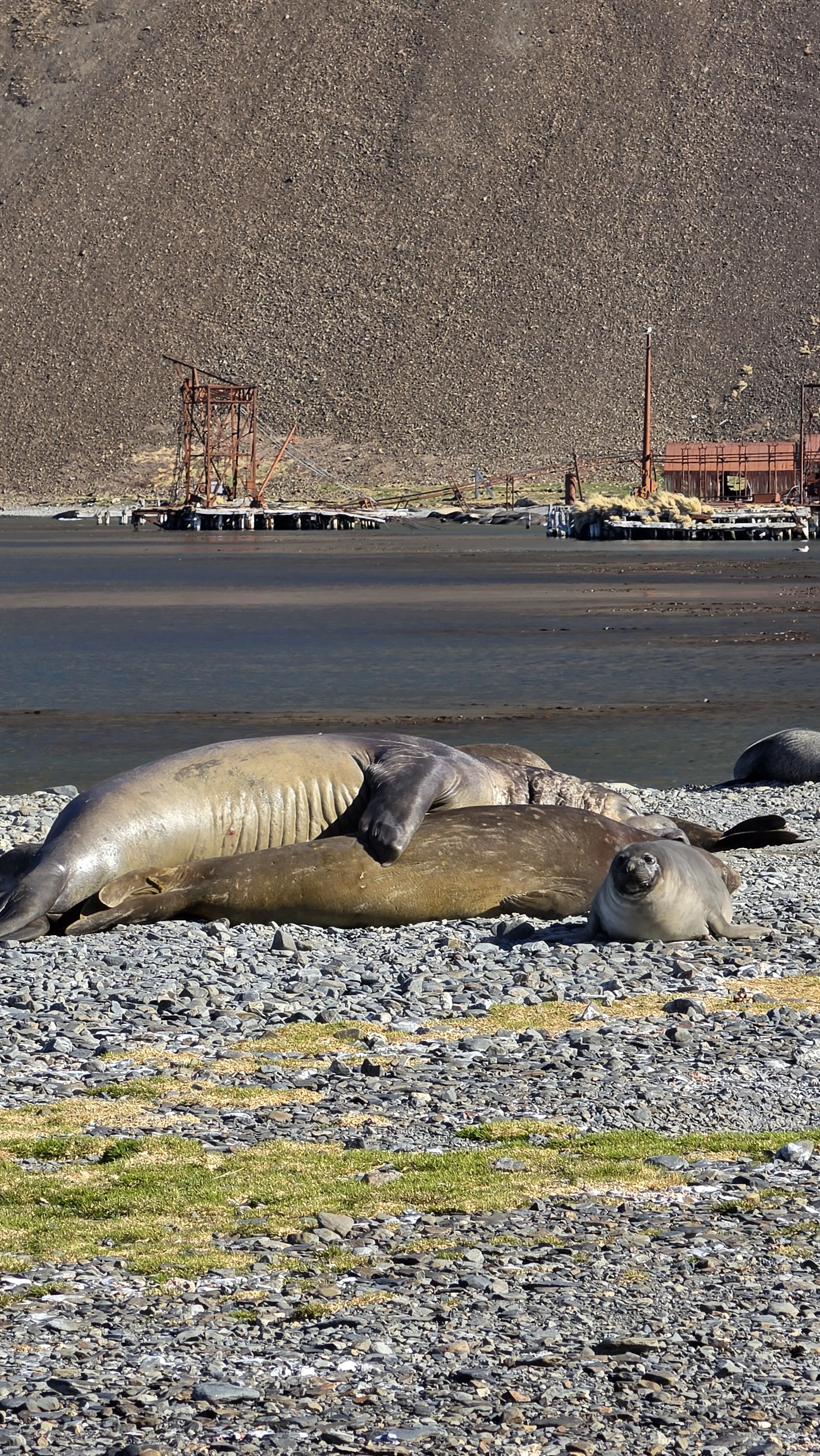
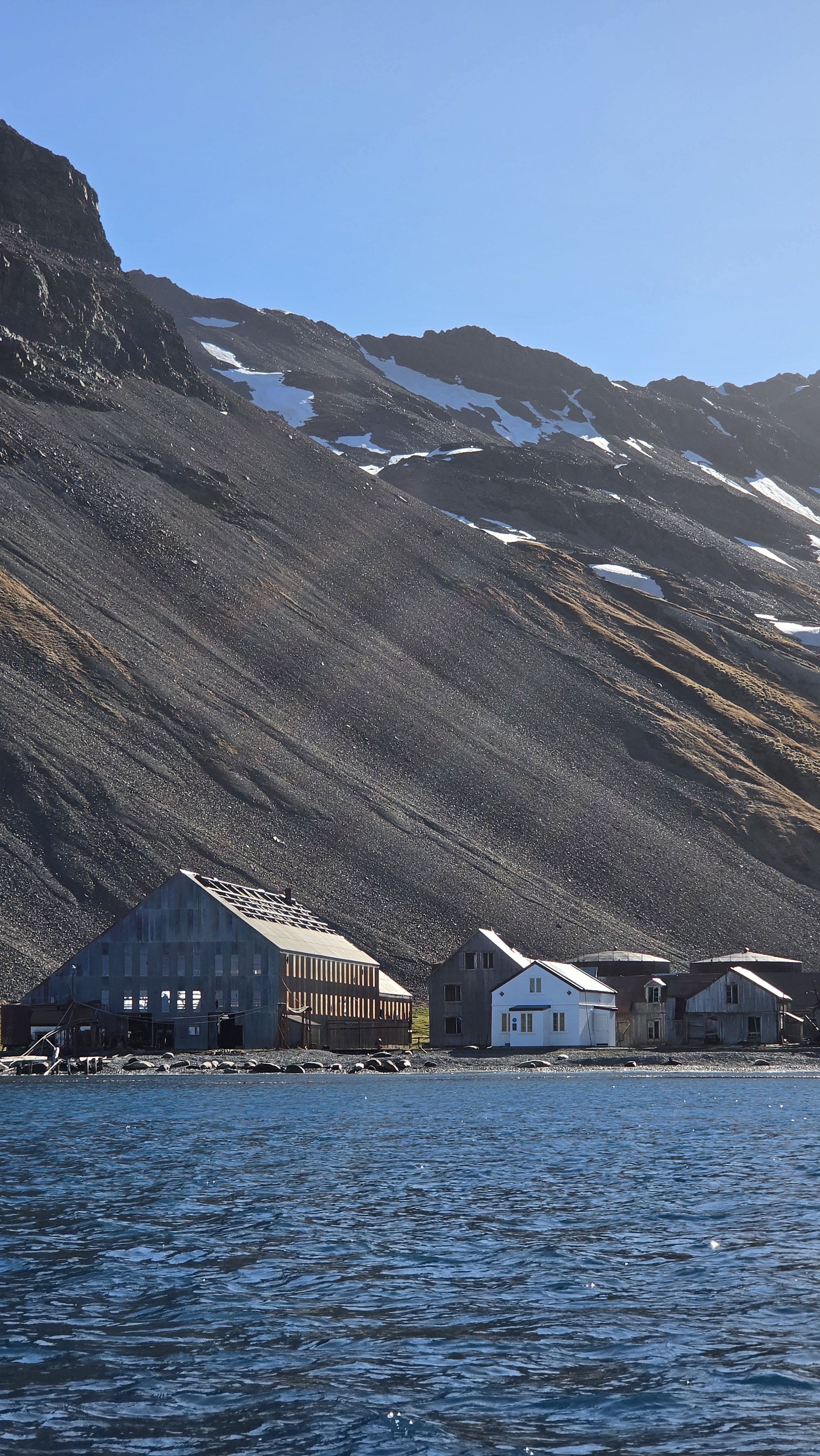
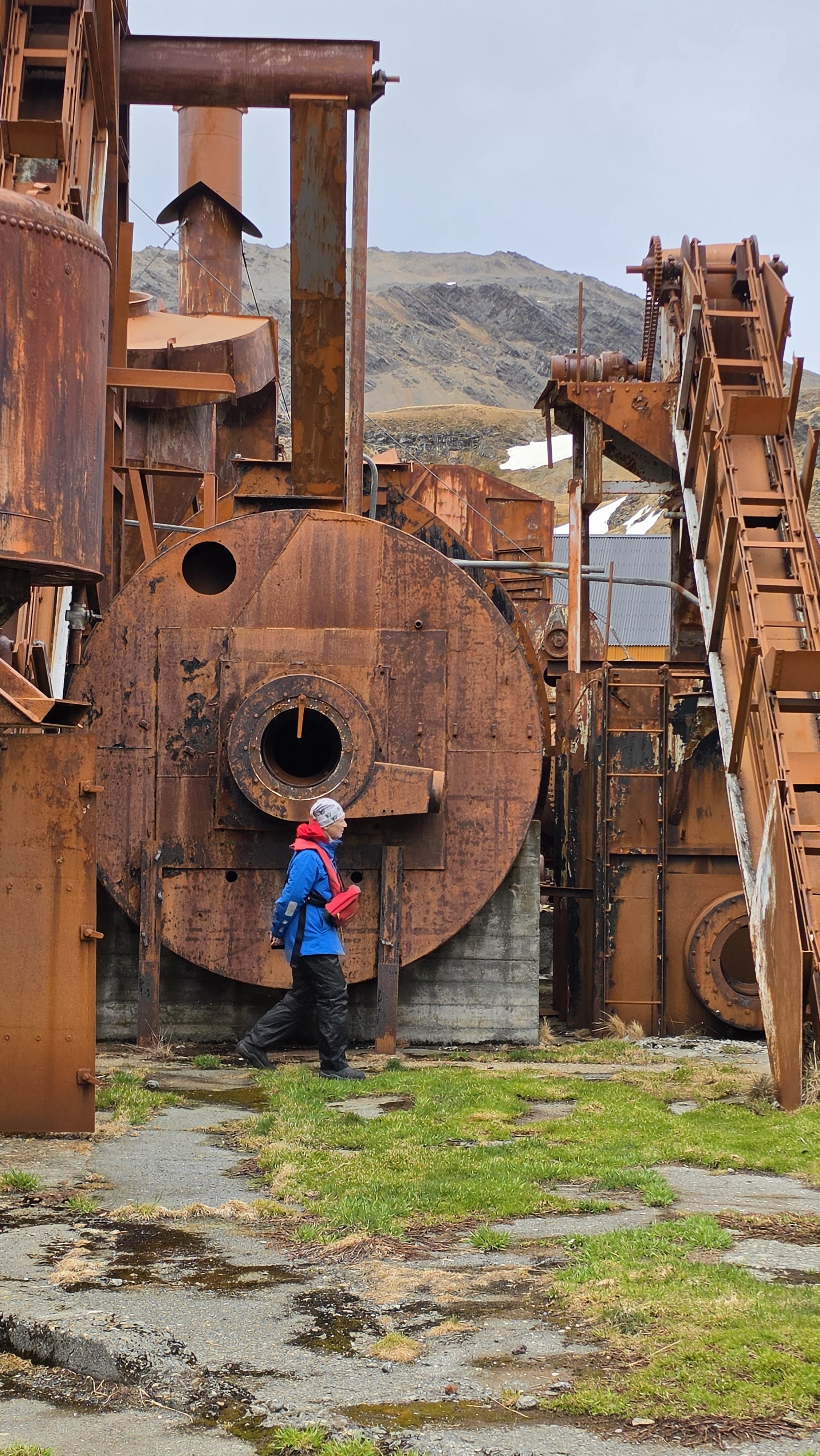
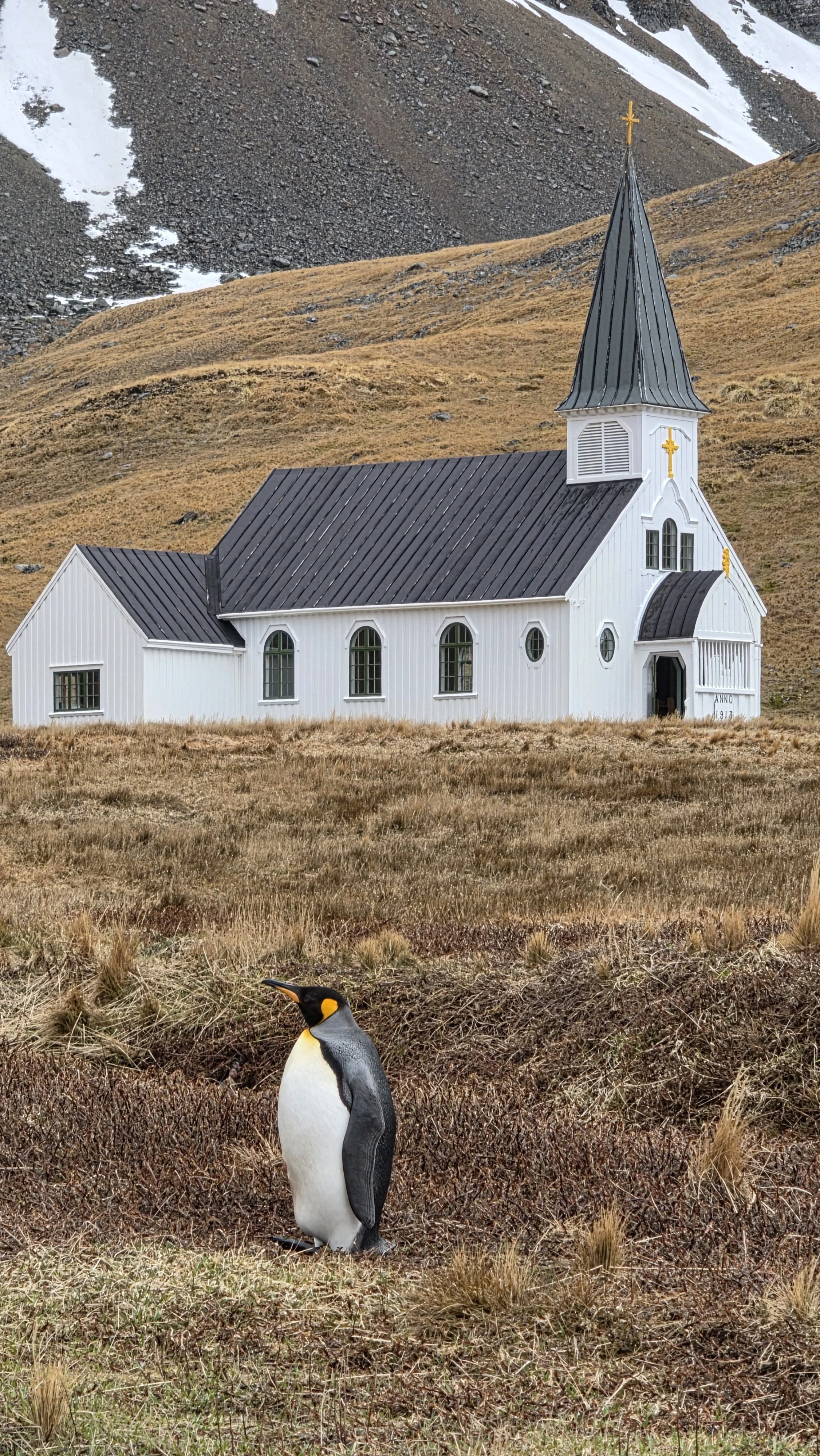
At Grytviken, we visit the museum, post office and church, and explore the remains of the former whaling station. Grytviken grew with the demand for whale oil and operated into the 1960s. On the guided walk, I’m struck by how much machinery is still there. After the onboard whaling lecture, standing among this equipment makes the scale of industrial whaling feel immediate. It’s difficult to imagine the number of animals that once passed through this little settlement.
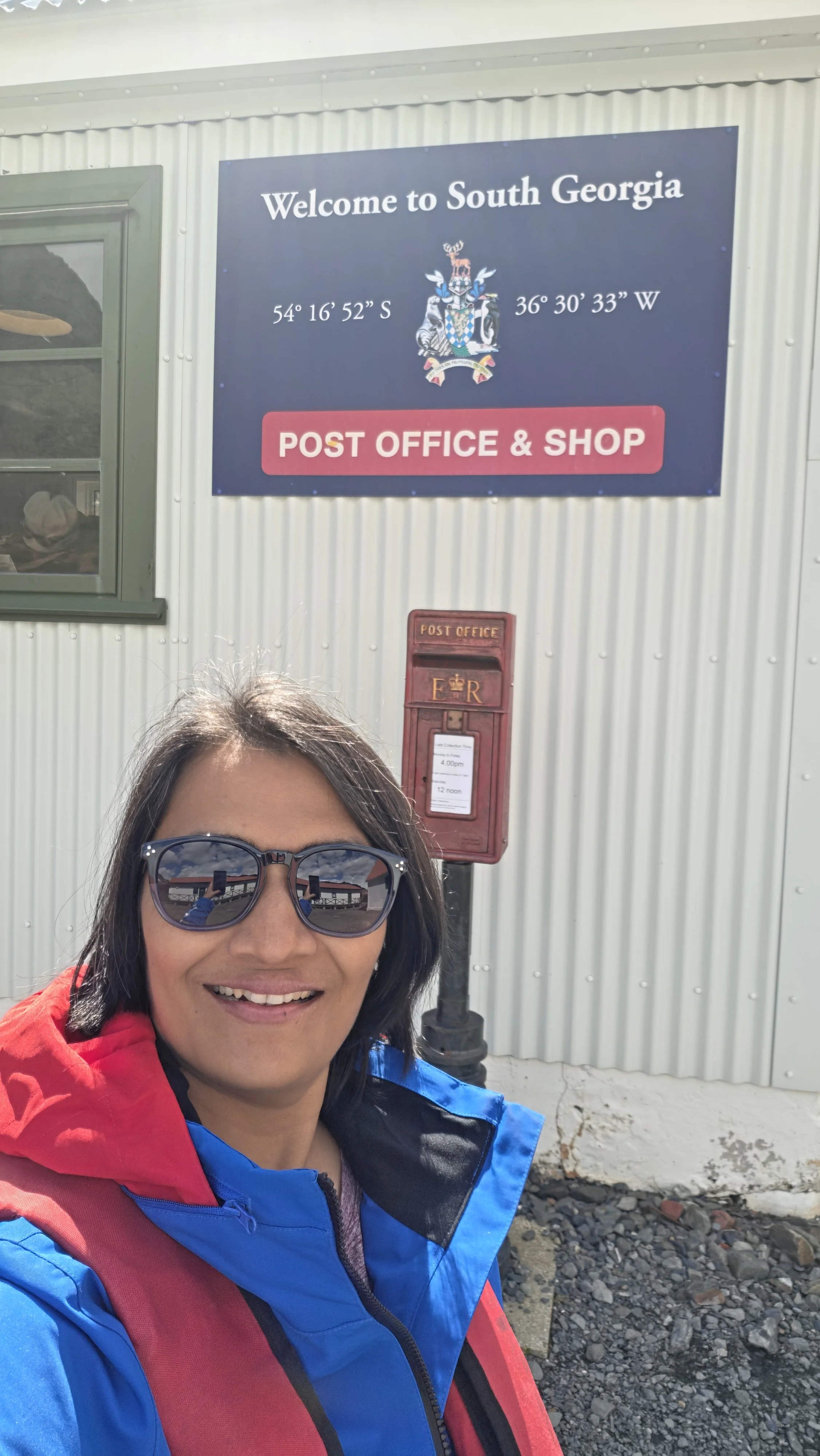
We see the workers’ quarters from outside and hear about ordinary life at the station, including football for recreation. The post office gives me a lighter moment. I buy a postcard, send it to myself and leave wondering how long it’ll take to get home.
At the cemetery, we gather for the traditional whisky toast at Shackleton’s grave, with Frank Wild buried beside him. Shackleton died aboard Quest in 1922, and his wife Emily asked that he be buried in South Georgia. After following so much of his story around the island, it feels fitting to end up here. I’m glad there’s time to stop and look around before we move on.
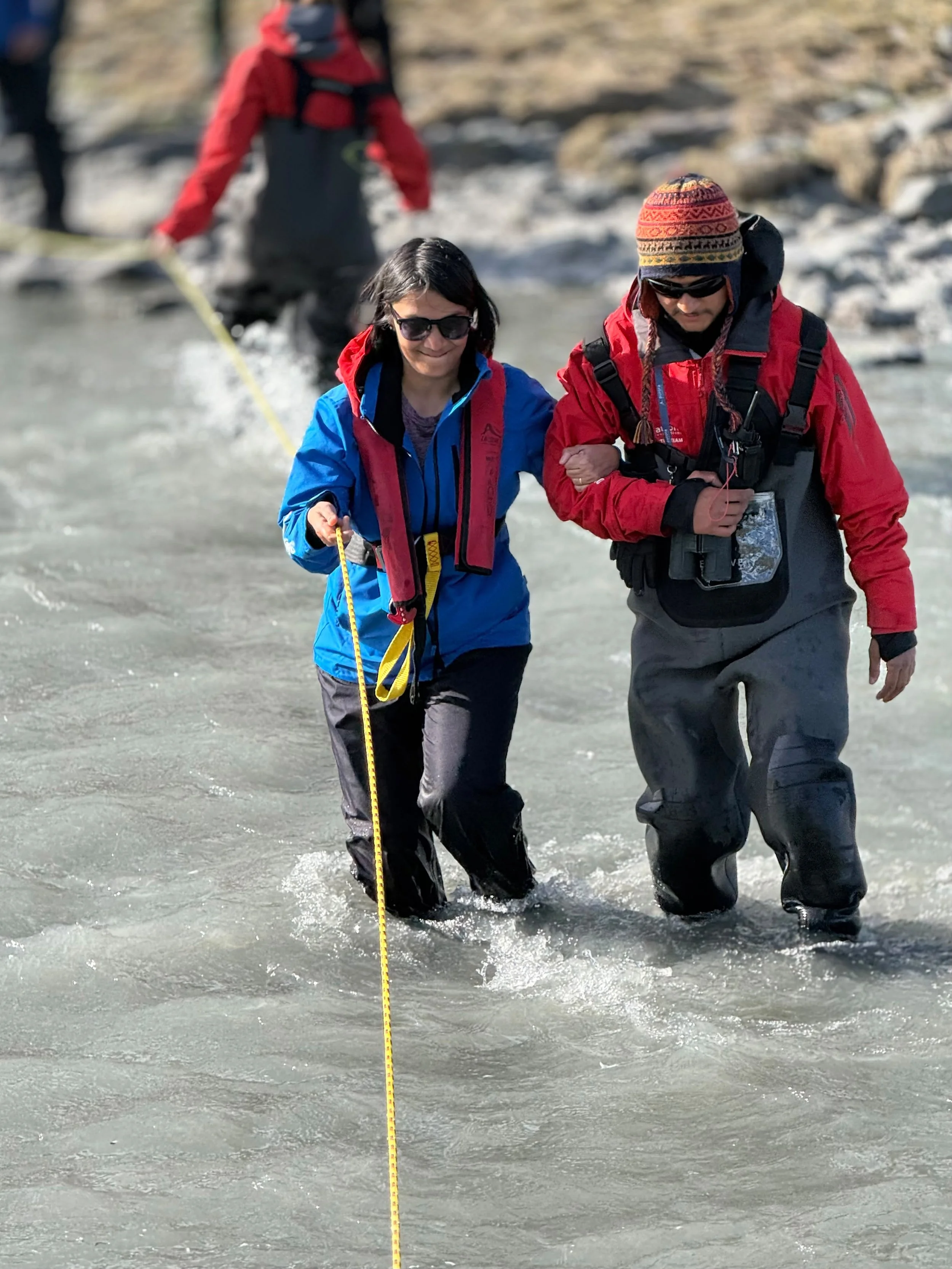
It takes about three hours to sail to St Andrews Bay, and we land at around four. To reach the colony, we hike a few kilometers and cross a river that is knee deep in places, with a strong current. The crossing feels like a small expedition in itself. The expedition team rigs a rope, and I’m grateful for the crew members standing in the water, offering an arm while we hold on and find our footing.
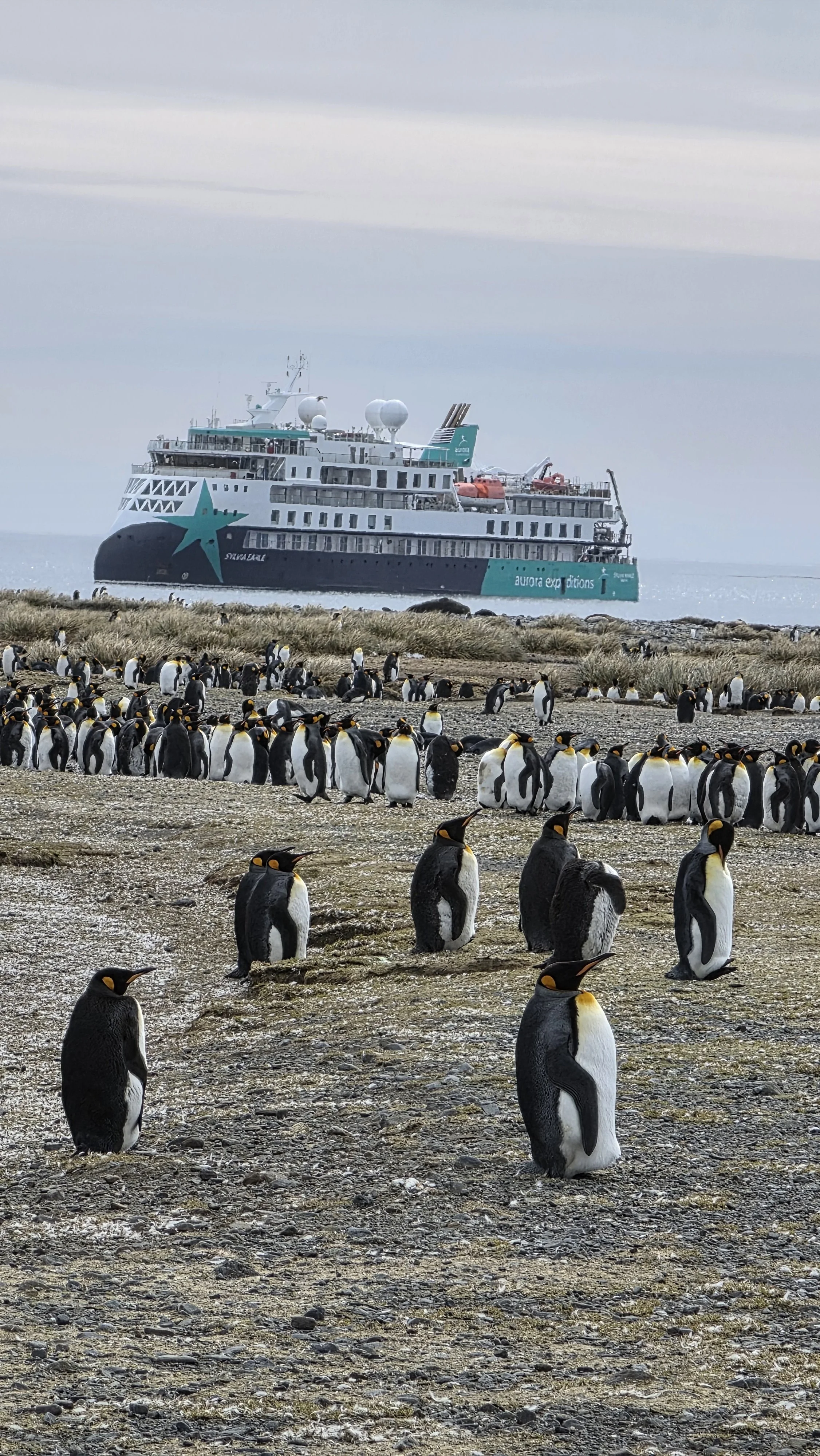
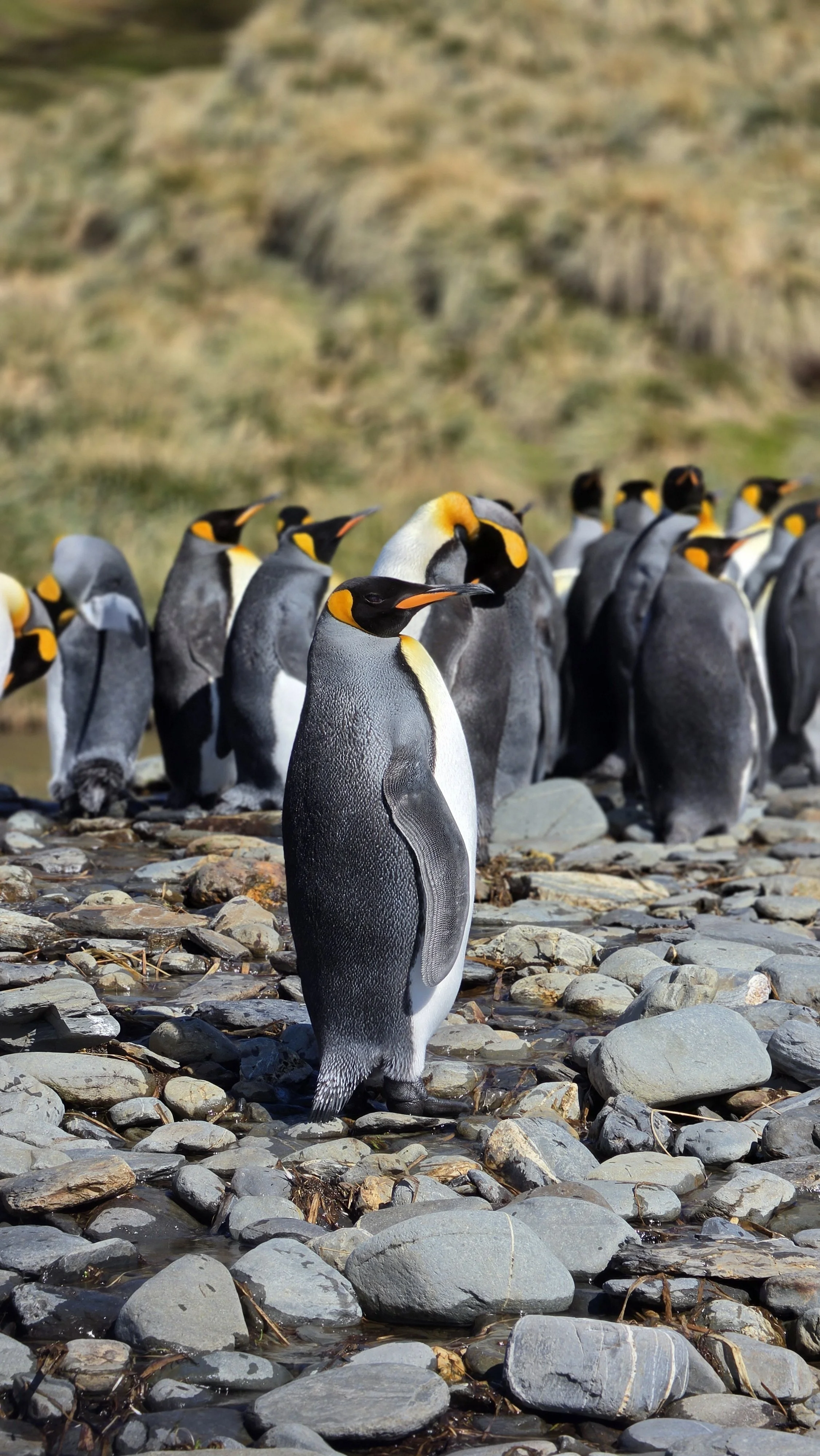
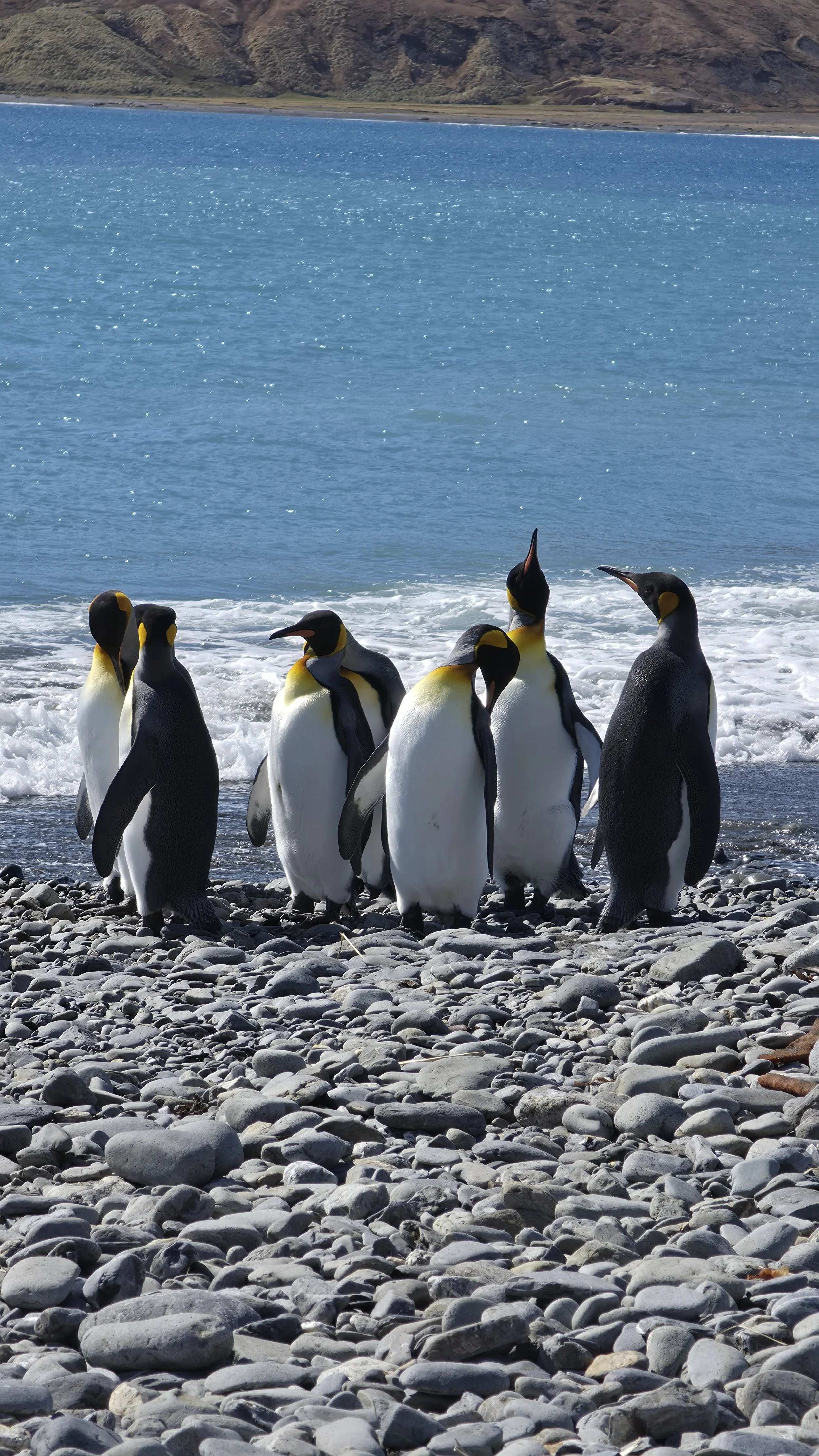
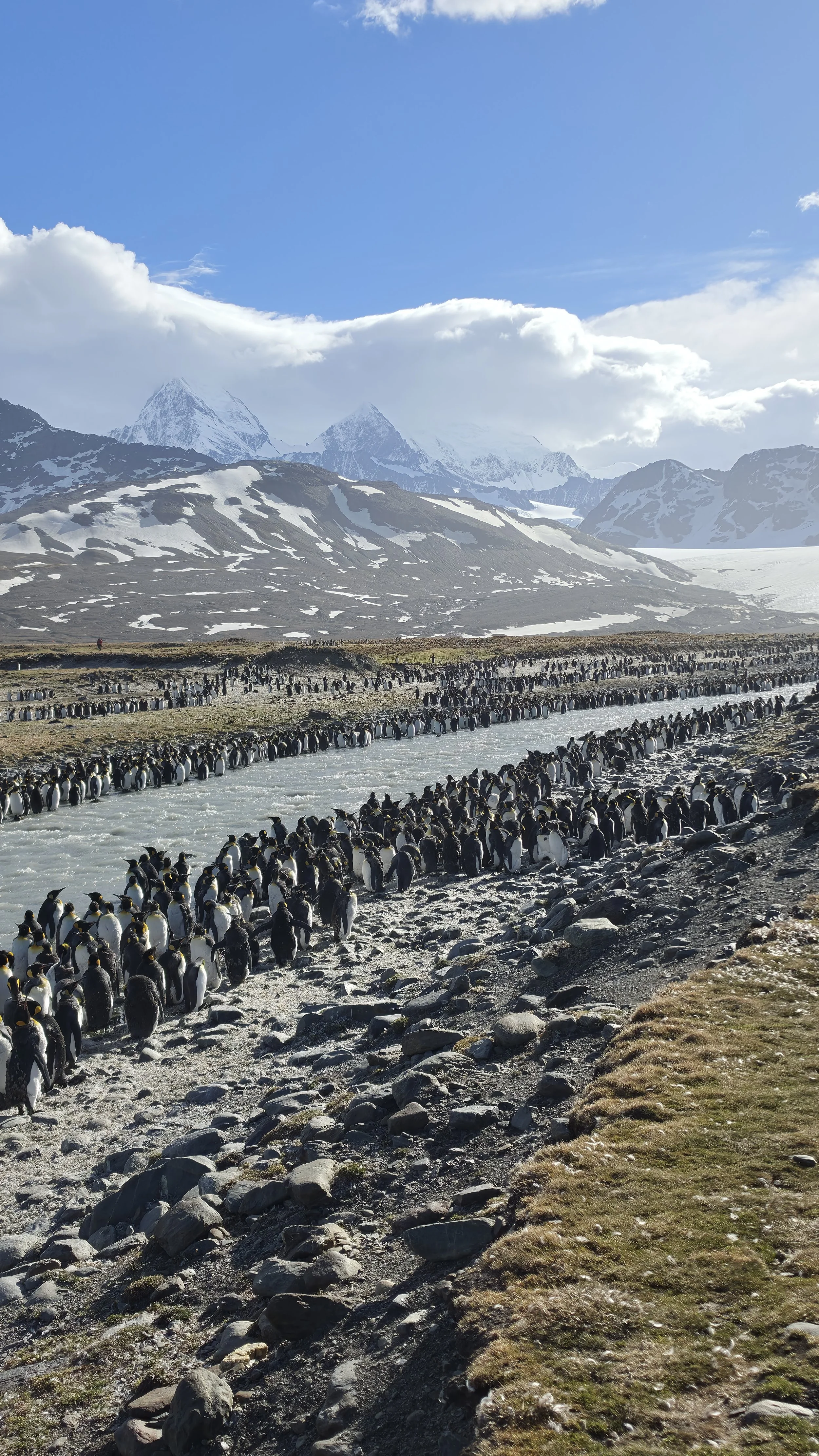
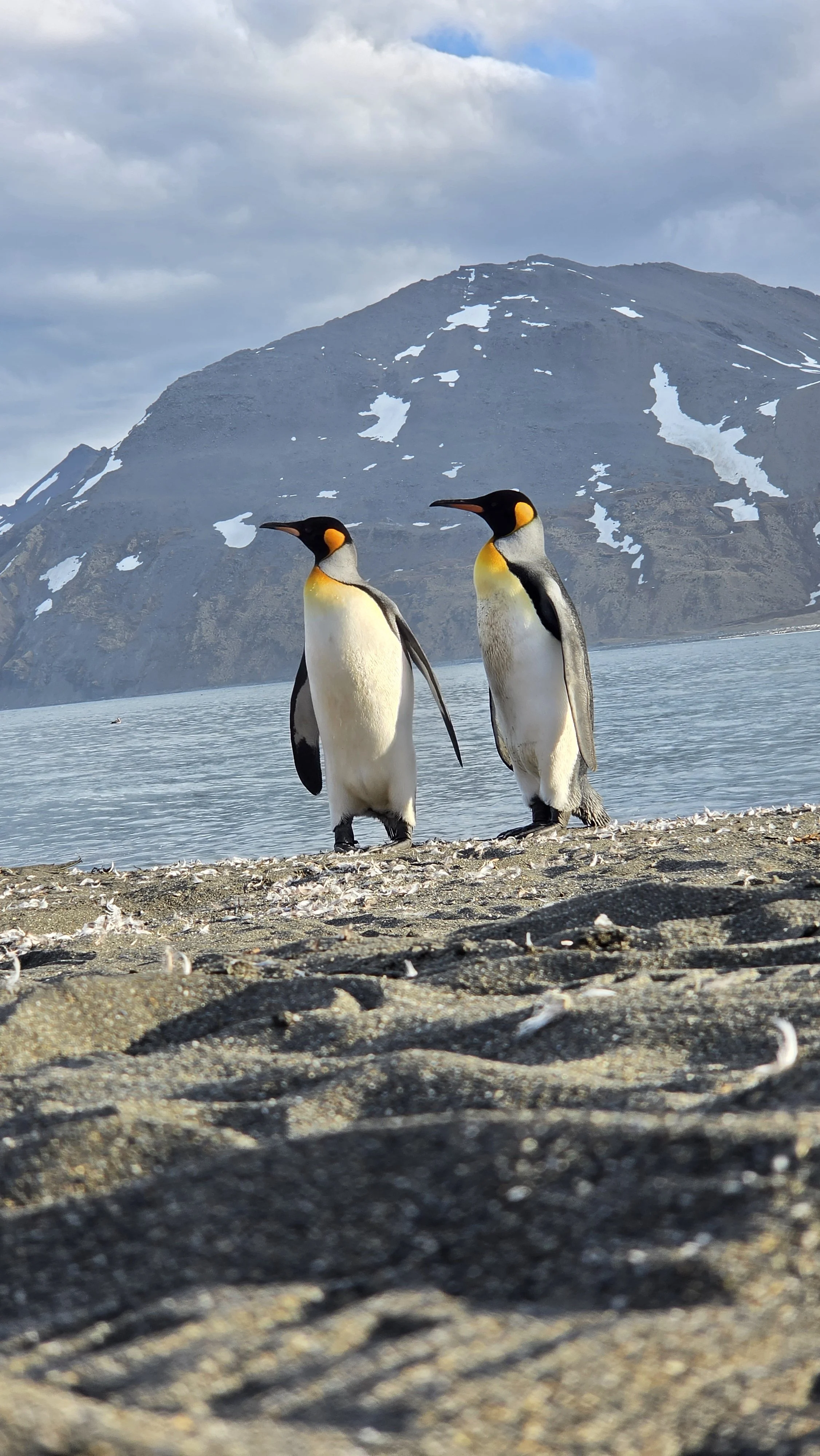
On the other side are king penguins everywhere I look, with mountains rising behind them. The colony is estimated at around 150,000 breeding pairs, or about 300,000 breeding adults. Chicks huddle in crèches, adults gather along the river, and some molting birds look absolutelt miserable. I can look in practically any direction and find something different to watch. Then I look up and remember to take in the mountains as well.
Landing late turns out to be a gift. We’ve eaten lunch, sailed for hours and still have an entire evening ahead of us ashore. We stay until around seven, and the Zodiac ride back along the beach gives us a completely different view of the place. The sun sinks behind the mountains and the clouds darken. Seals twist and splash in the shallows while penguins shuffle away from the commotion. We keep saying “one last photo.” Then someone reaches for a camera again.
Back aboard, we toast our last day in South Georgia over dinner as the ship heads south.
South Georgia’s biosecurity checks are some of the most meticulous I’ve seen. We spend a lot of time cleaning our gear, and the crew checks coat seams, fastenings, Velcro and the underside of our boots. I watch them use tiny needles to pick debris out of the smallest cracks in the soles. Watching them work through every pair gives me an appreciation for what it takes to protect these sites between visits.
From South Georgia to the Antarctic Peninsula
Days 12 to 14 | November 5–7 | At sea and Elephant Island
The seas get rougher each day. There are lectures and a dumpling-making workshop, which is a welcome distraction. I spend plenty of time resting.
I start relying on ginger chews and seek out the ship’s sauna when I’m ready for a change of scene. Dumpling making is a particularly good diversion because it gives me something to do with my hands. Between the workshop, the presentations and time in my cabin, I can set my own pace on these days. Once we pass 60 degrees south, I’m excited to be in Antarctic waters even as I’m happy to stay put for a while.
On the third afternoon we reach Elephant Island, where the rest of Shackleton’s party waited while he sailed for help. Elephant Island brings the Shackleton story back into focus. After seeing where his boat party reached South Georgia and where he found help, we’re now off the island where the men he left behind waited for rescue. The winds are too high for our Zodiac cruise, and seeing the island from the ship is still meaningful.
Day 15 | November 8 | Astrolabe Island and Lindblad Cove
We take a scenic Zodiac cruise at Astrolabe Island after the planned landing at the chinstrap penguin colony is canceled. It gives us an introduction to the Peninsula from water level, with scenery that feels very different from the green shorelines we’ve been walking in South Georgia.
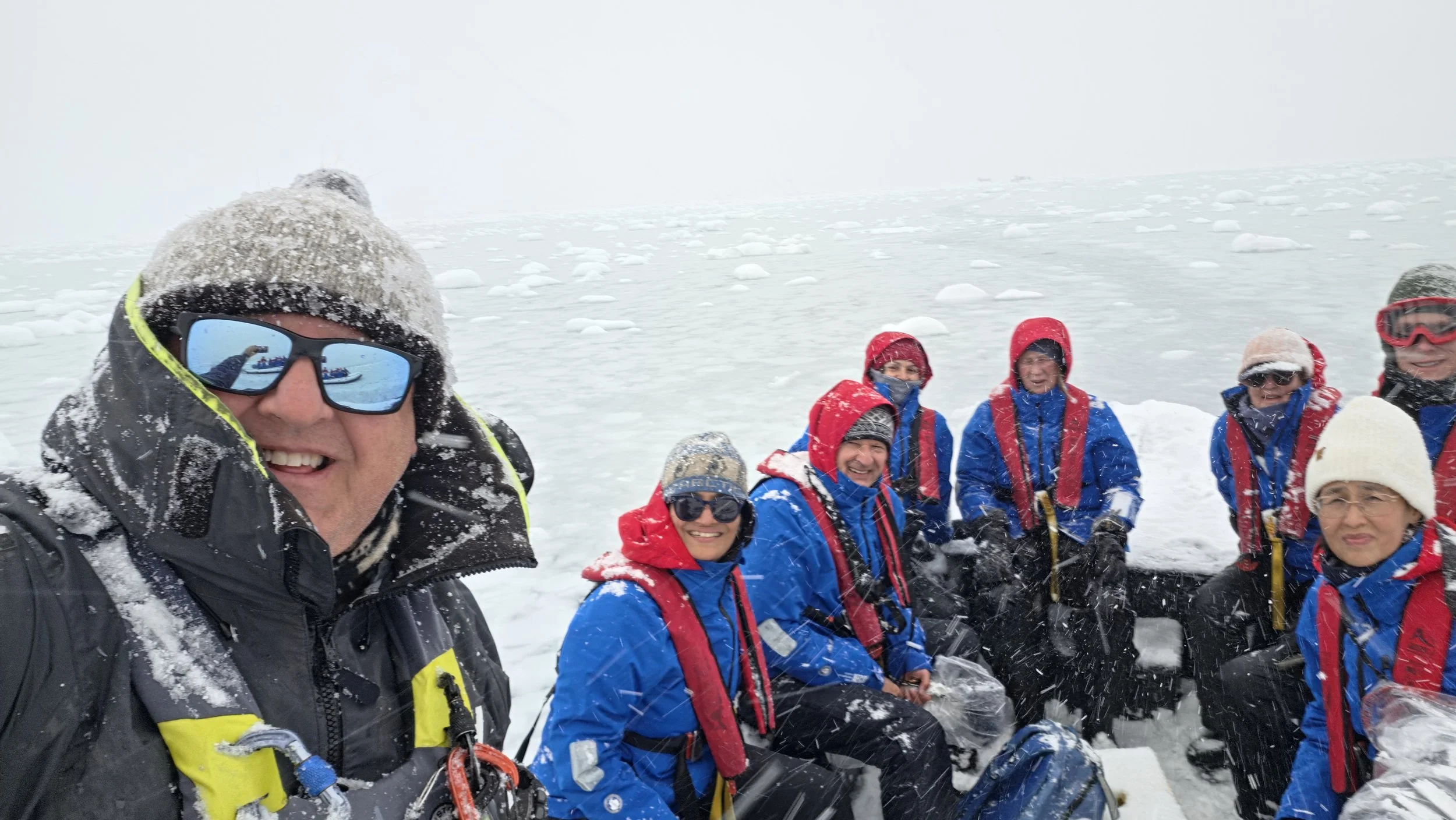
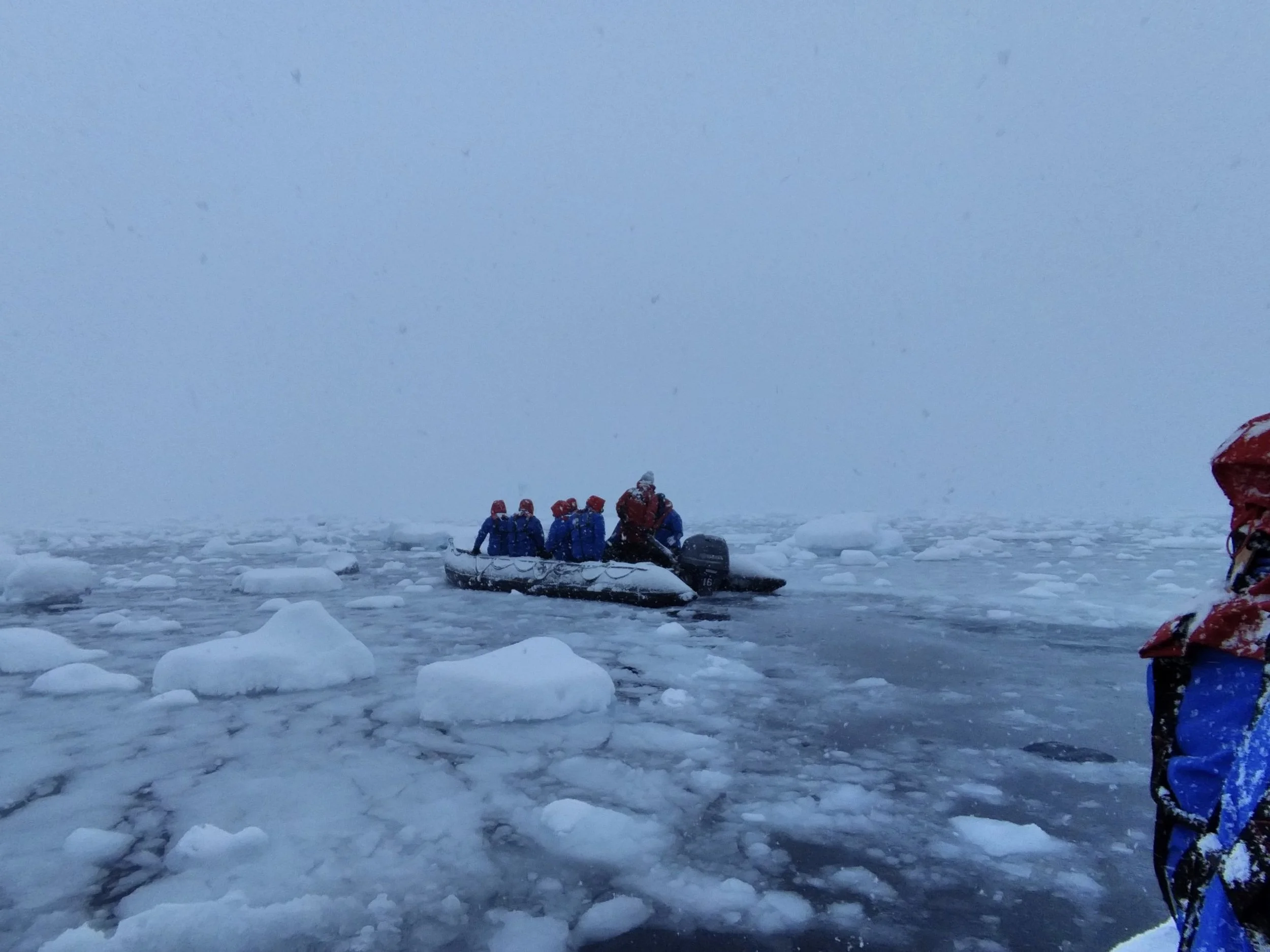
In the afternoon at Lindblad Cove, snow falls around the Zodiac as we weave through floating ice. A slight swell lifts and lowers the pieces in the water, and I find myself watching them rise and settle together. Snow petrels and Cape petrels circle the boat, giving me something to follow whenever I look up from the ice.
An onboard presentation about slowing down and observing Antarctica stays with me here. Our driver switches off the engine and asks us to sit quietly for two minutes. I watch the ice rise and fall without reaching for my phone. It feels like a dream, and I’m grateful Aurora makes room for moments like this.
Day 16 | November 9 | Danco Island, Cuverville Island and camping on Rongé Island
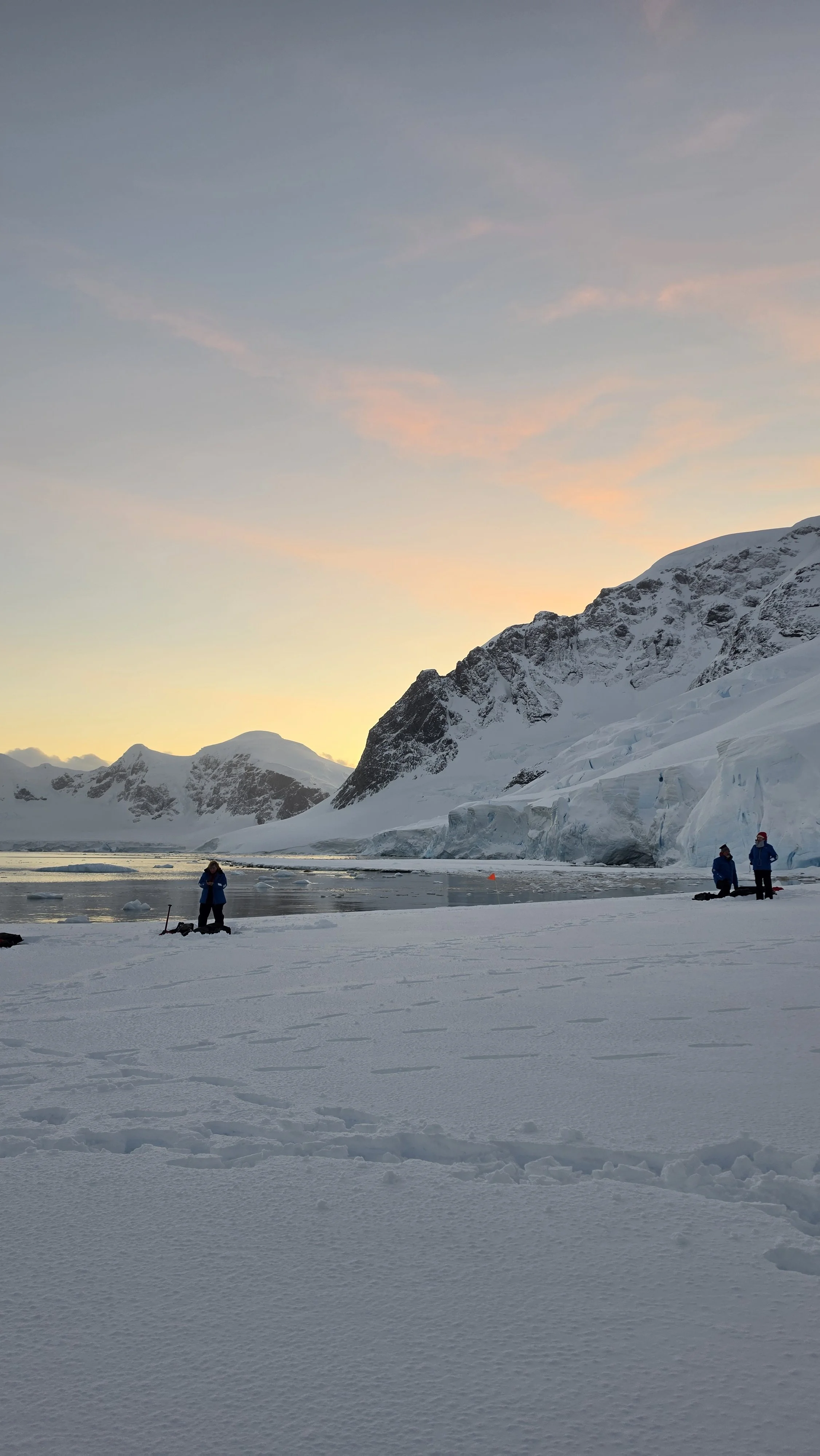
At Danco Island, we wake to sunshine, and the bases of the floating icebergs glow a radiant blue. After the snow at Lindblad Cove, the light changes everything. The expedition team goes ahead of us to assess the landing and mark the walking route with flags. There’s a choice between walking uphill and spending more time among the icebergs. I take a very short hike ashore, then choose the longer Zodiac cruise.
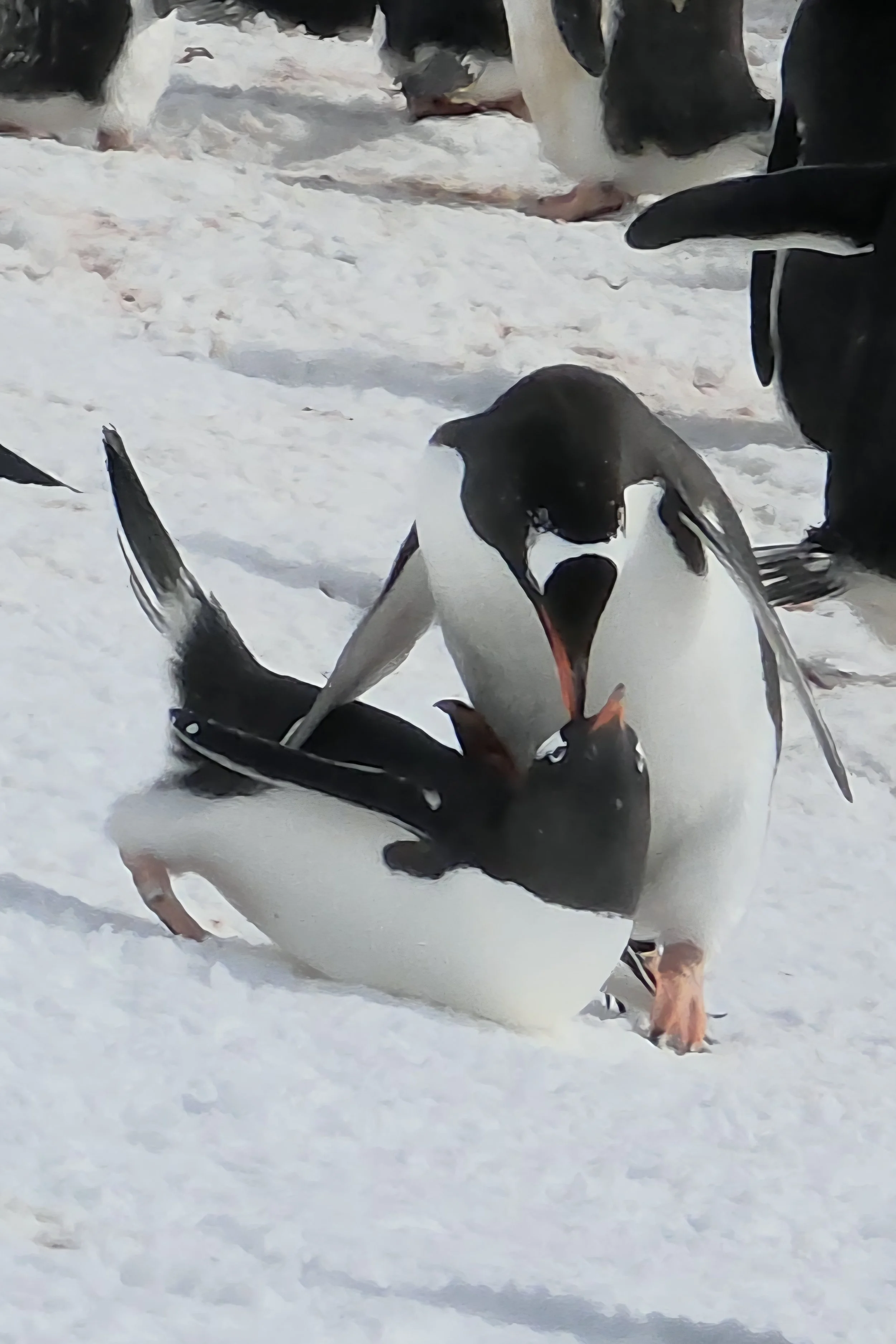
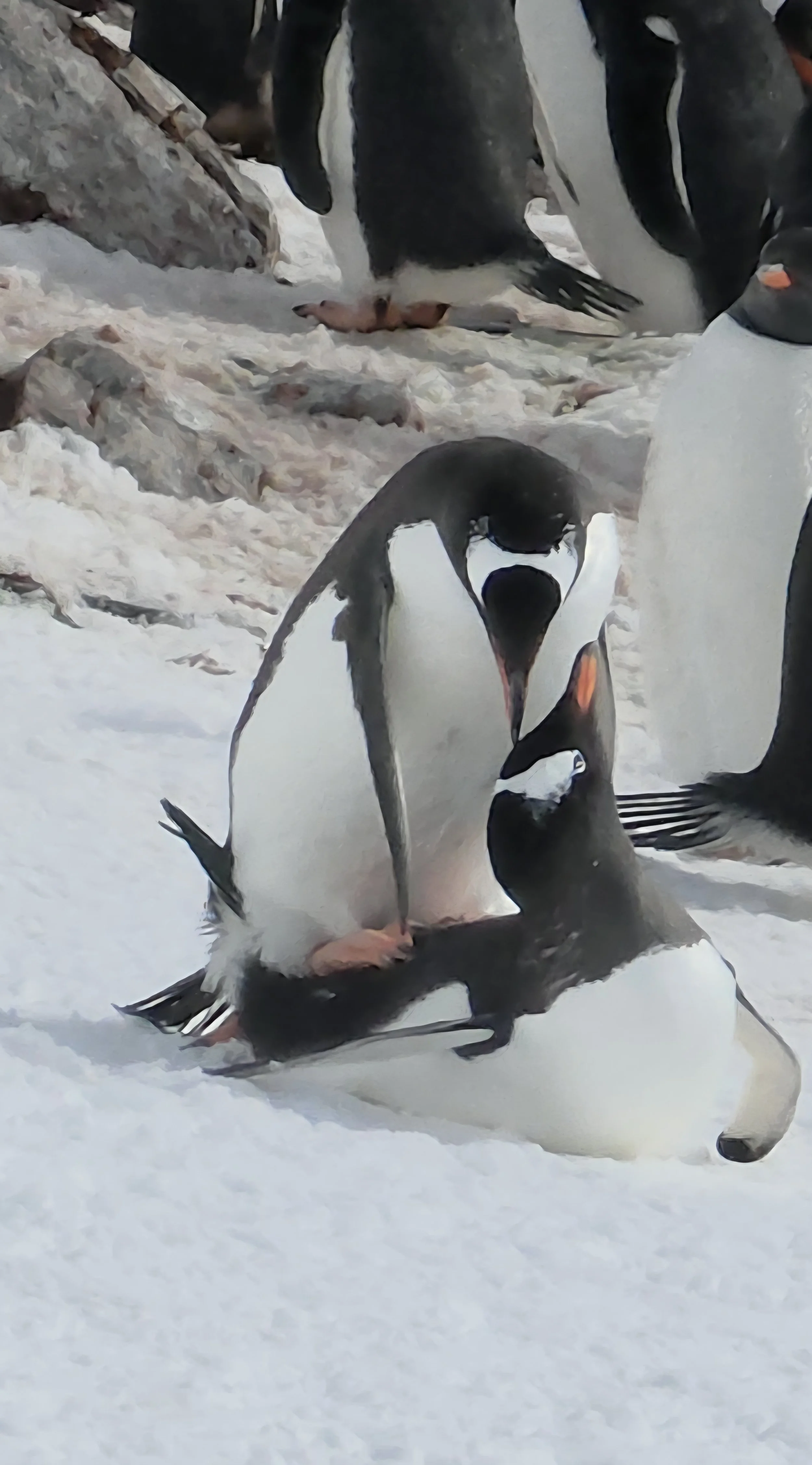
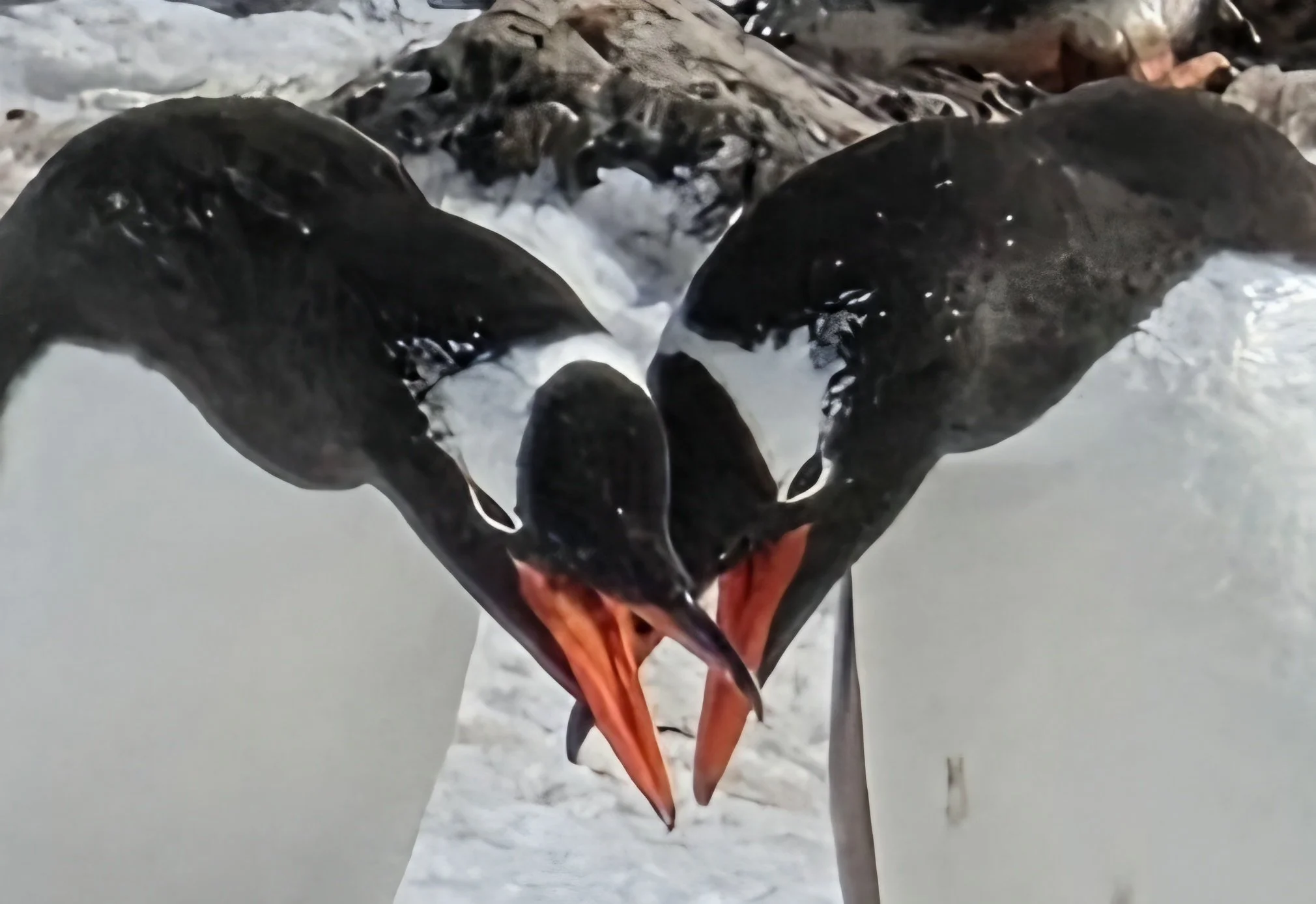
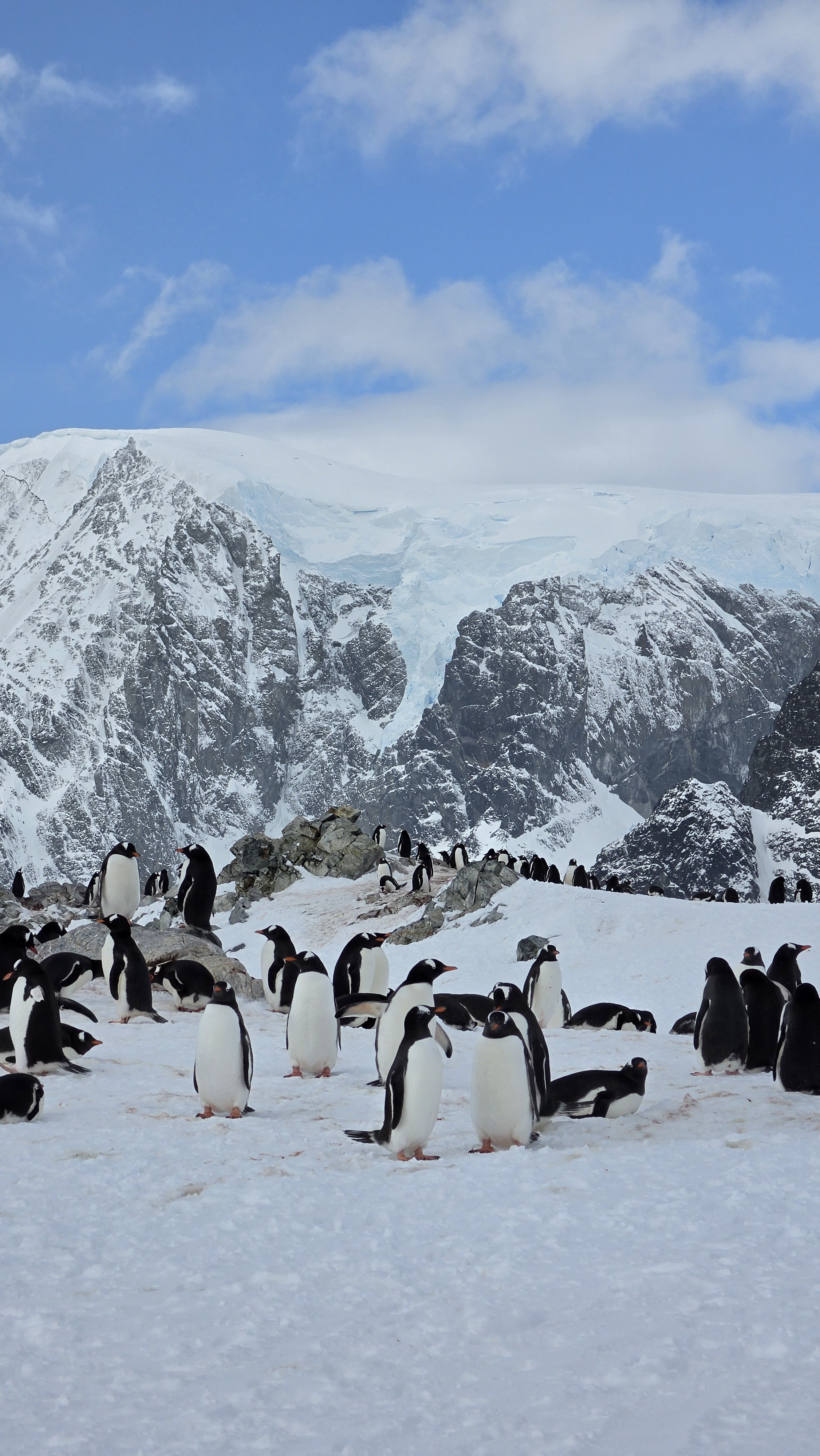
In the afternoon at Cuverville Island, I watch gentoo penguins bend their necks together in a courtship display that looks like a dance. Spending time with the colony gives me a chance to notice these little interactions. Courting behavior in penguins is very endearing, and something that will stay with you for a long time.
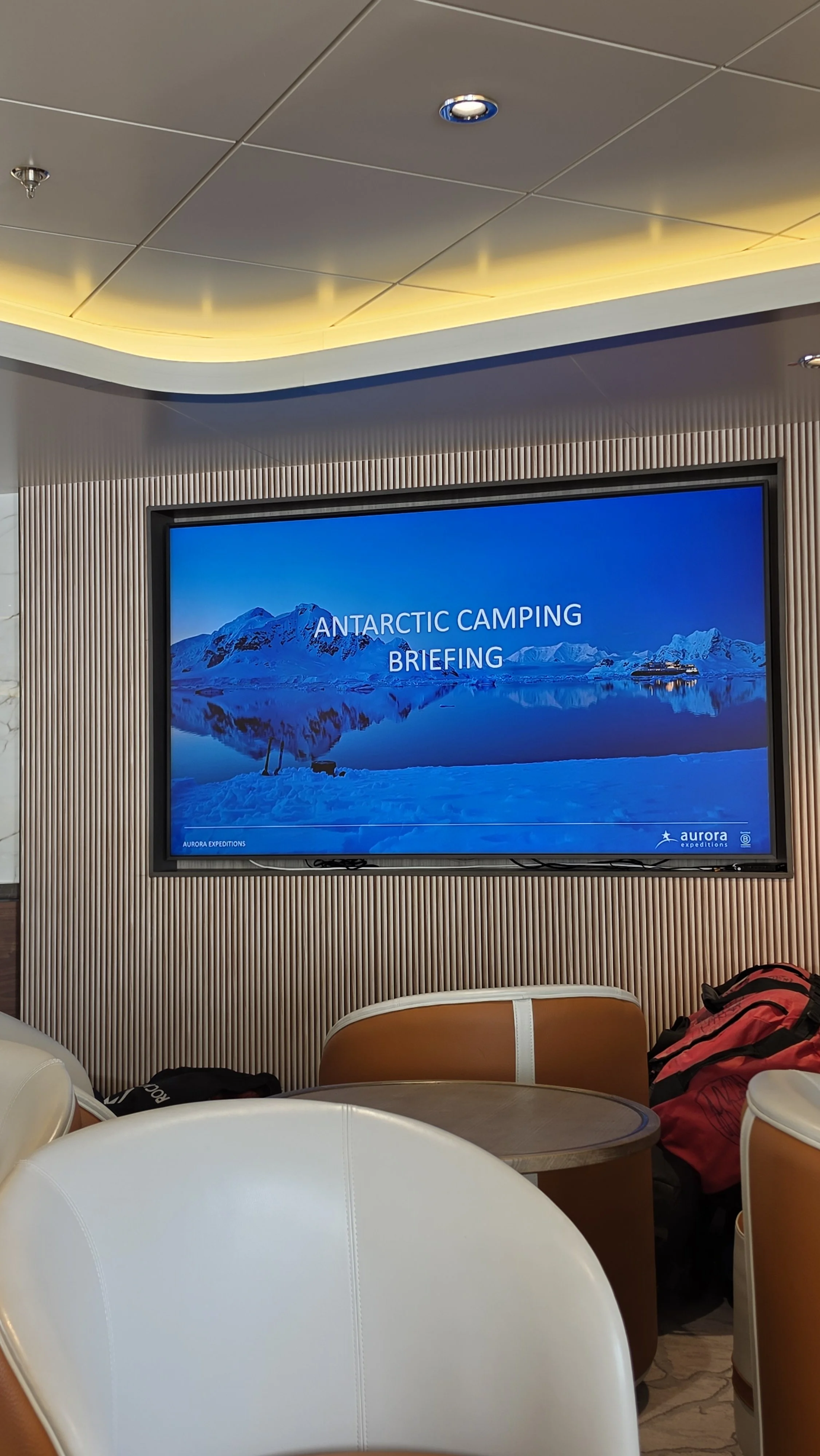
That night I go camping on Rongé Island along with 22 others. I had been nervous about and it, and nearly talk myself out of it, but I decide to go anyway. Before we head out, we’re given a very detailed briefing on how to pack our bivy bags with all the different layers, and the expedition team checks our packing. We also go through the camping dos and don’ts, including keeping our distance from wildlife even if an animal approaches us. The team chooses a site away from penguin colonies, so we aren’t setting up camp right beside one.
The 22 of us travel ashore in a few Zodiacs, accompanied by four expedition team members who will camp with us. By the time we arrive, flags mark the boundaries of our camping area. At the far end, the team has even dug out a bathroom area in the snow, complete with two snow steps leading down to a couple of buckets. We’re encouraged to use it only if absolutely necessary. A big thank-you to Aurora’s expedition team for setting up and handling this less glamorous but essential part of camping in Antarctica!
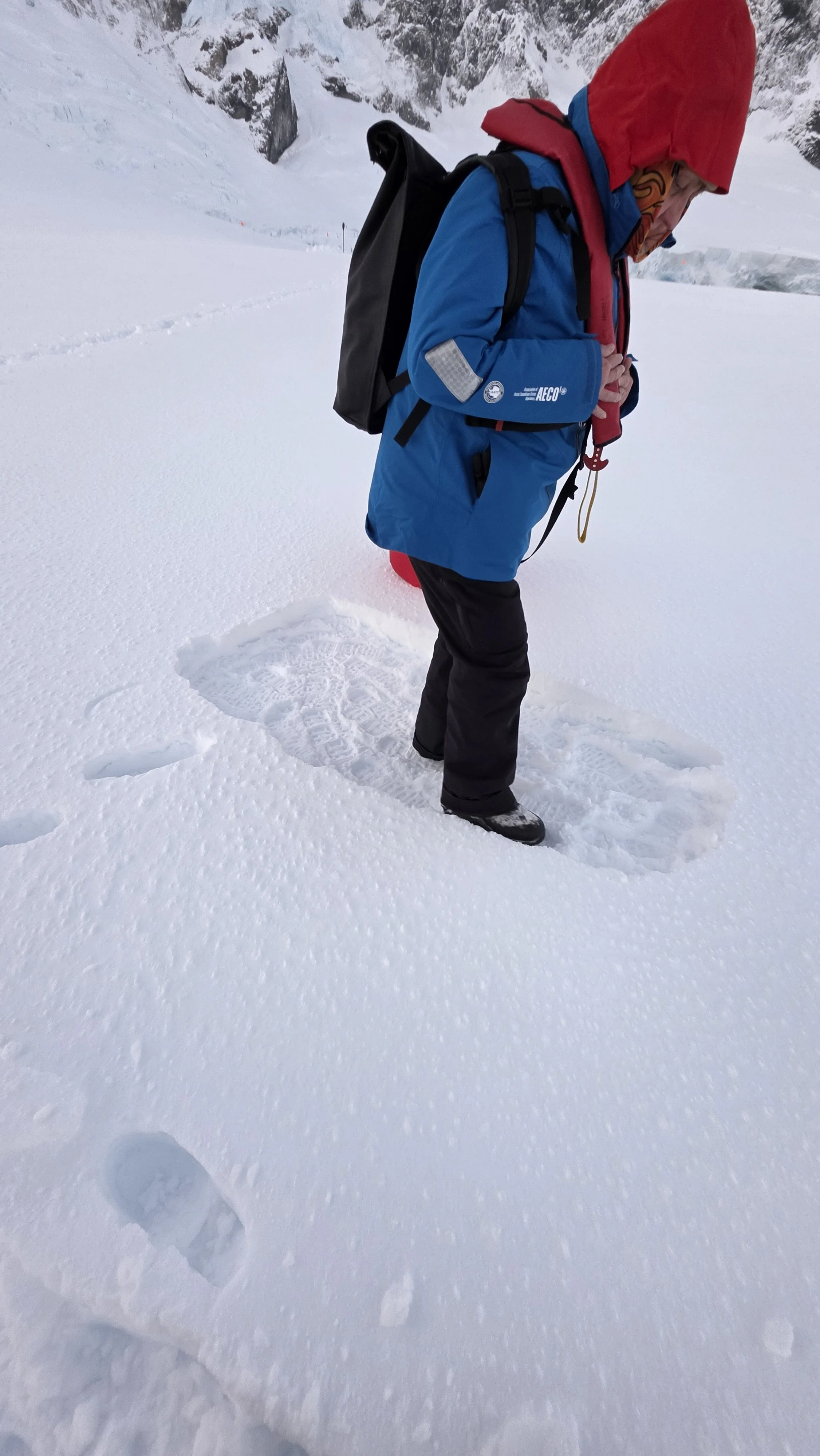
Then we begin setting up our sleeping spots. There are about ten inches of snow beneath us, which we need to flatten before laying out our gear. Some people use tools, but we choose the fun way, stamping around in our boots until we have a nice, level patch for our bivy bags. We inflate our Therm-a-Rest sleeping mats, which provide insulation from the snow, and arrange our sleeping layers. Then it’s boots and coats off and into our cozy beds for the night. The temperature is around −3°C, feeling closer to −9°C, but Aurora provides good camping gear, and I’m pleasantly surprised by how warm I feel inside.
Some of the others manage to fall asleep, but I’m far too excited. I lie there watching the sky change color, taking in the fact that I’m spending a night out in the open in Antarctica. It never becomes completely dark. There’s only about 45 minutes of near-darkness before the sky begins to brighten again, a reminder of how long the days already are in November as the austral summer approaches.
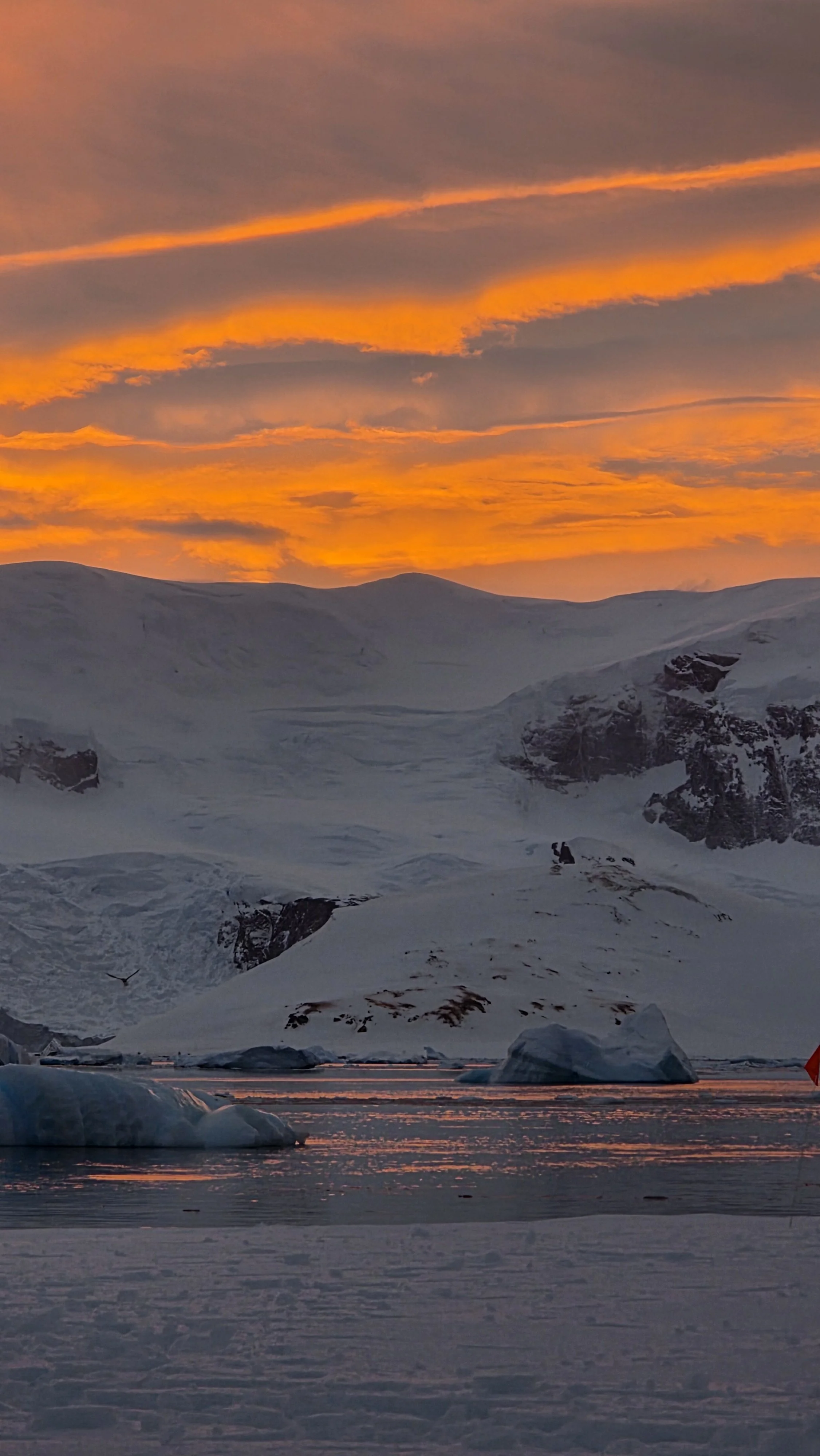
At around three in the morning, we’re treated to a beautiful golden sunrise, with birds flying around and calling overhead. It’s an extraordinary scene to wake up to, or, in my case, to have stayed awake for! We spend some time looking around and soaking it all in before the Zodiacs arrive at about five to take us back to our warm ship.
Overall an experience I will never forget!
Day 17 | November 10 | Snow and ice
It’s exceptionally icy and snowy. I skip both Zodiac outings and spend the day aboard. After that night of camping, my heart is full. I’ve already gotten so much out of this trip that I don’t feel the need to do more today.
On a voyage of this length, I appreciate having the option to stay in when the conditions look uninviting. I rest, look back through photos from the previous landings, catch up on some reading and make notes for this journal!
Day 18 | November 11 | Portal Point, continental Antarctica
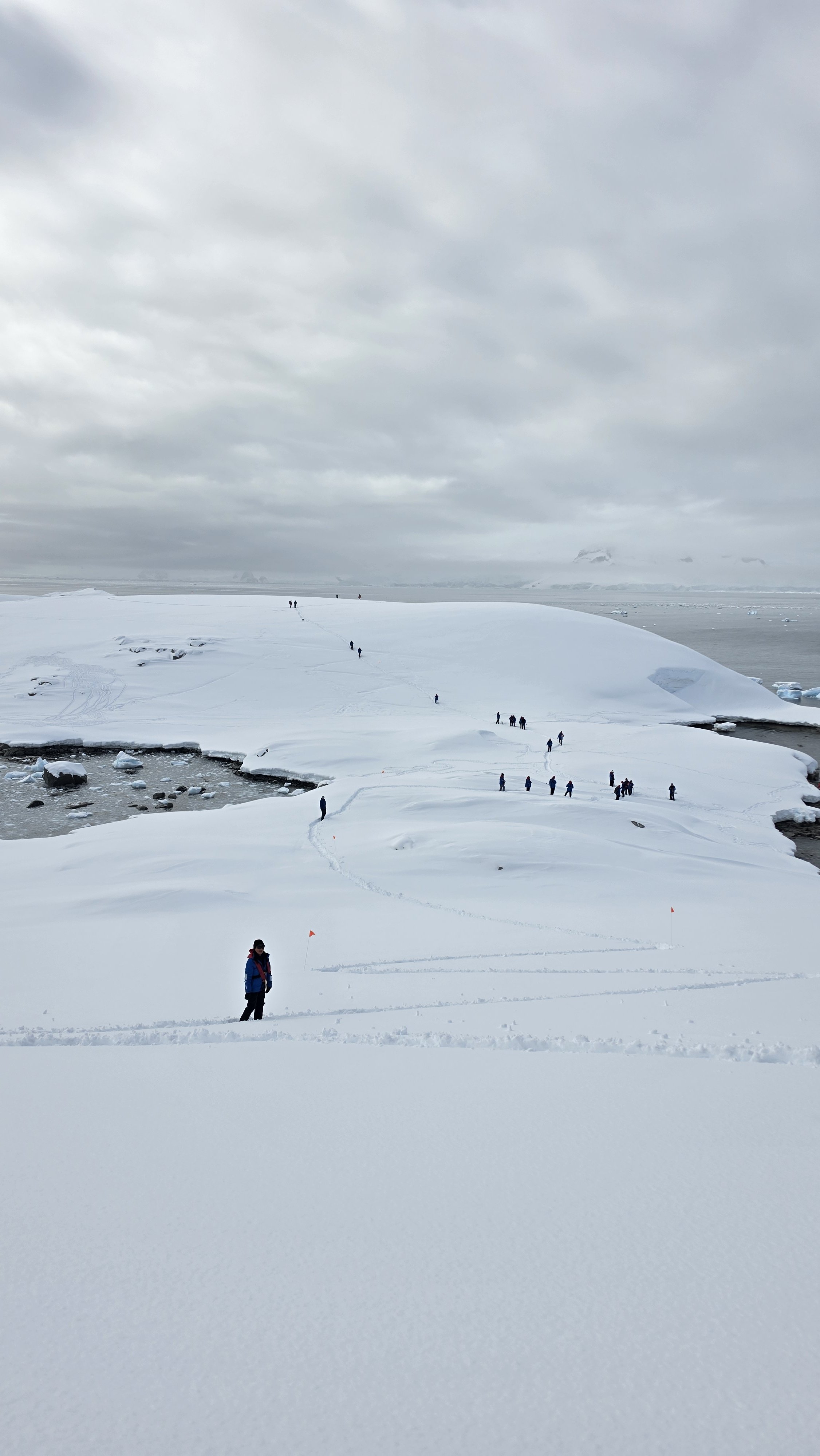
We land on the Antarctic mainland at Portal Point, which feels like a milestone after so many island visits. I hike, stopping wherever the angle on a glacier or the icebergs offshore catches my eye. I like being able to take the walk in stages, with time to enjoy the views and take photographs along the way.
Back aboard, we take a group photo and hear that we’re skipping the afternoon landing to head straight for the Drake Passage. The original plan was to leave the following morning, but the forecast calls for swells of around 10 meters, or roughly 33 feet. Leaving early gives us a chance to get ahead of the worst of it, and I’m glad the team makes that call.
Later, we hear that several other ships on the Antarctic Peninsula that week also adjusted their plans to get ahead of the rough seas.
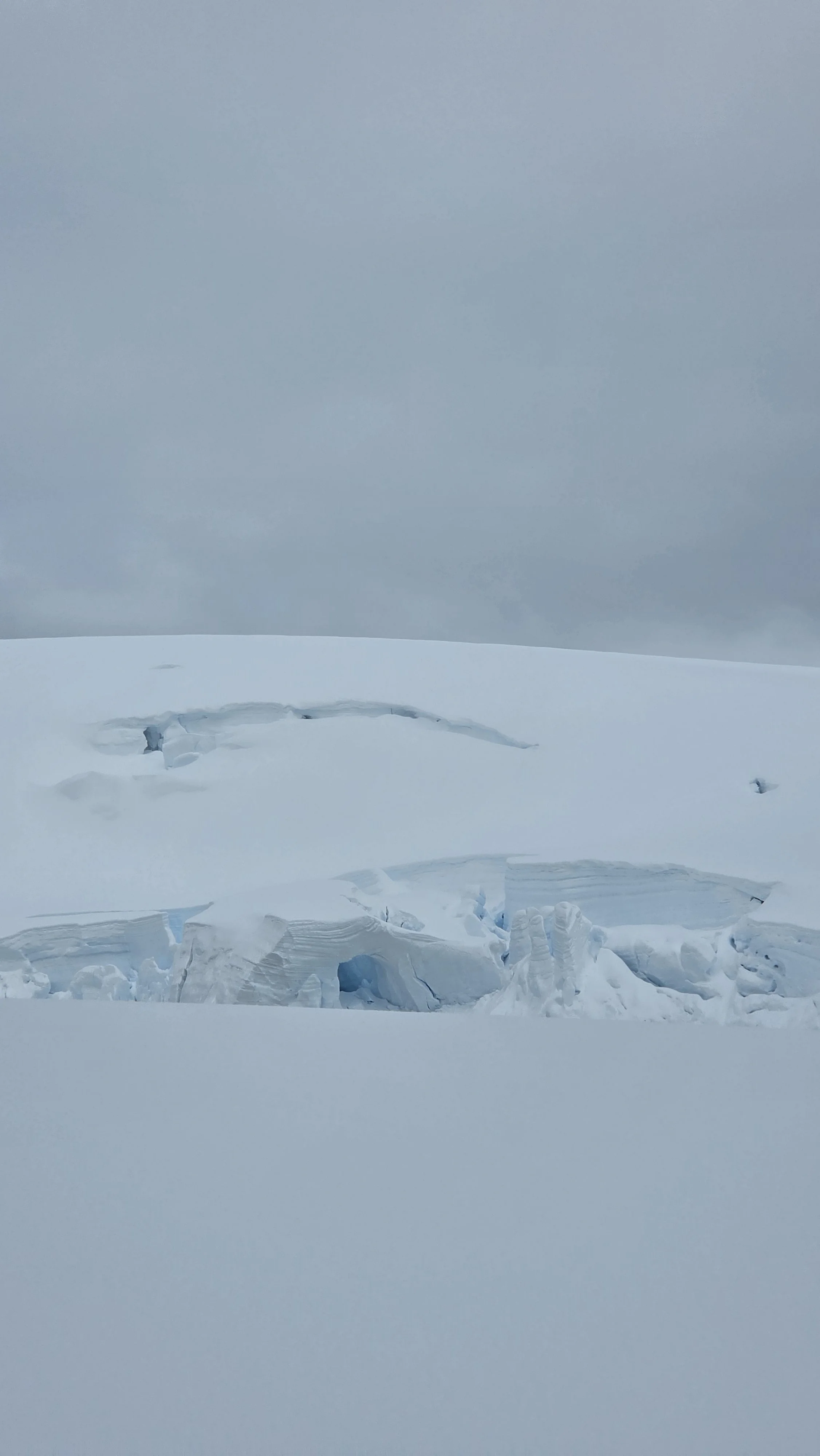
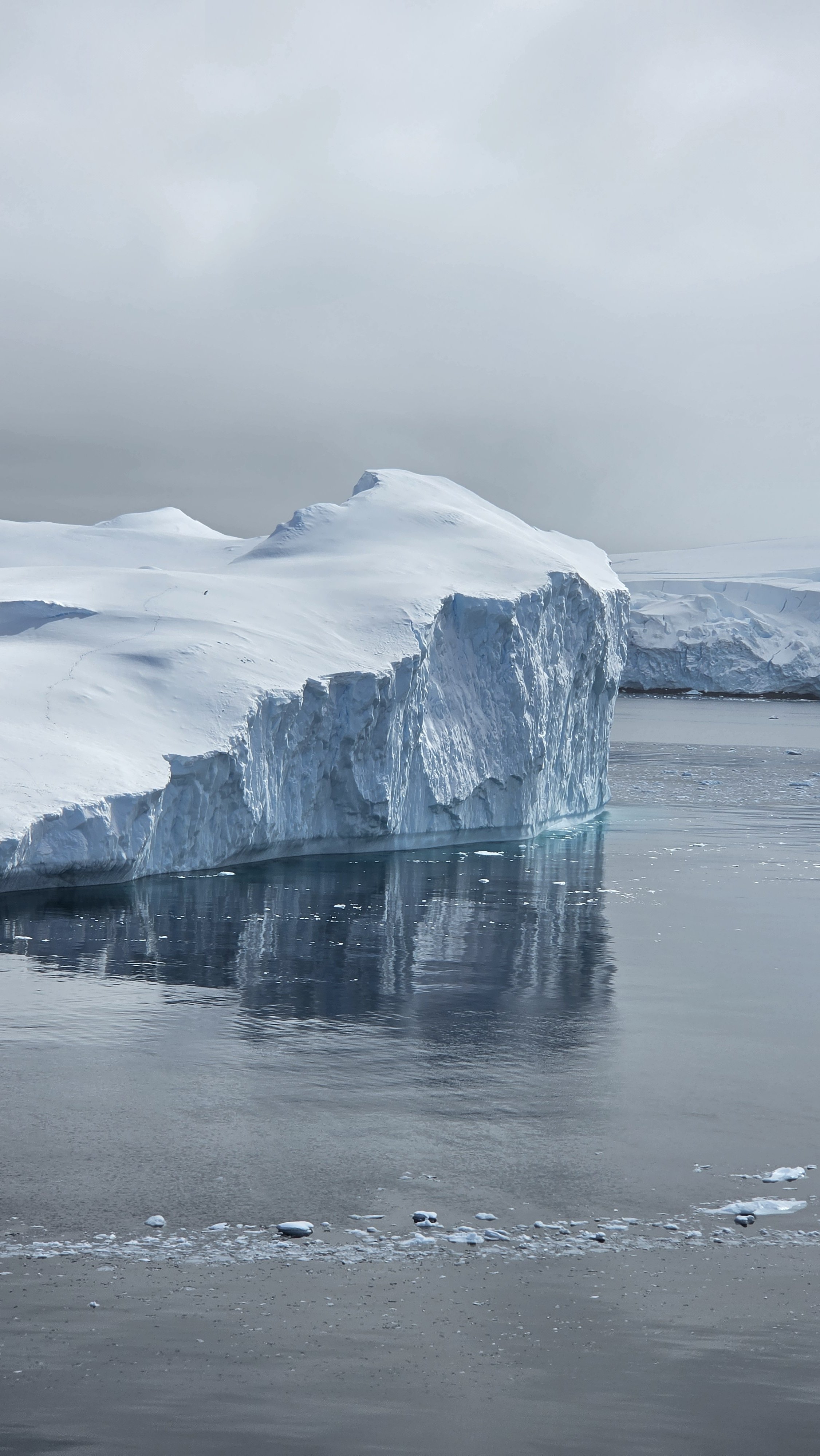
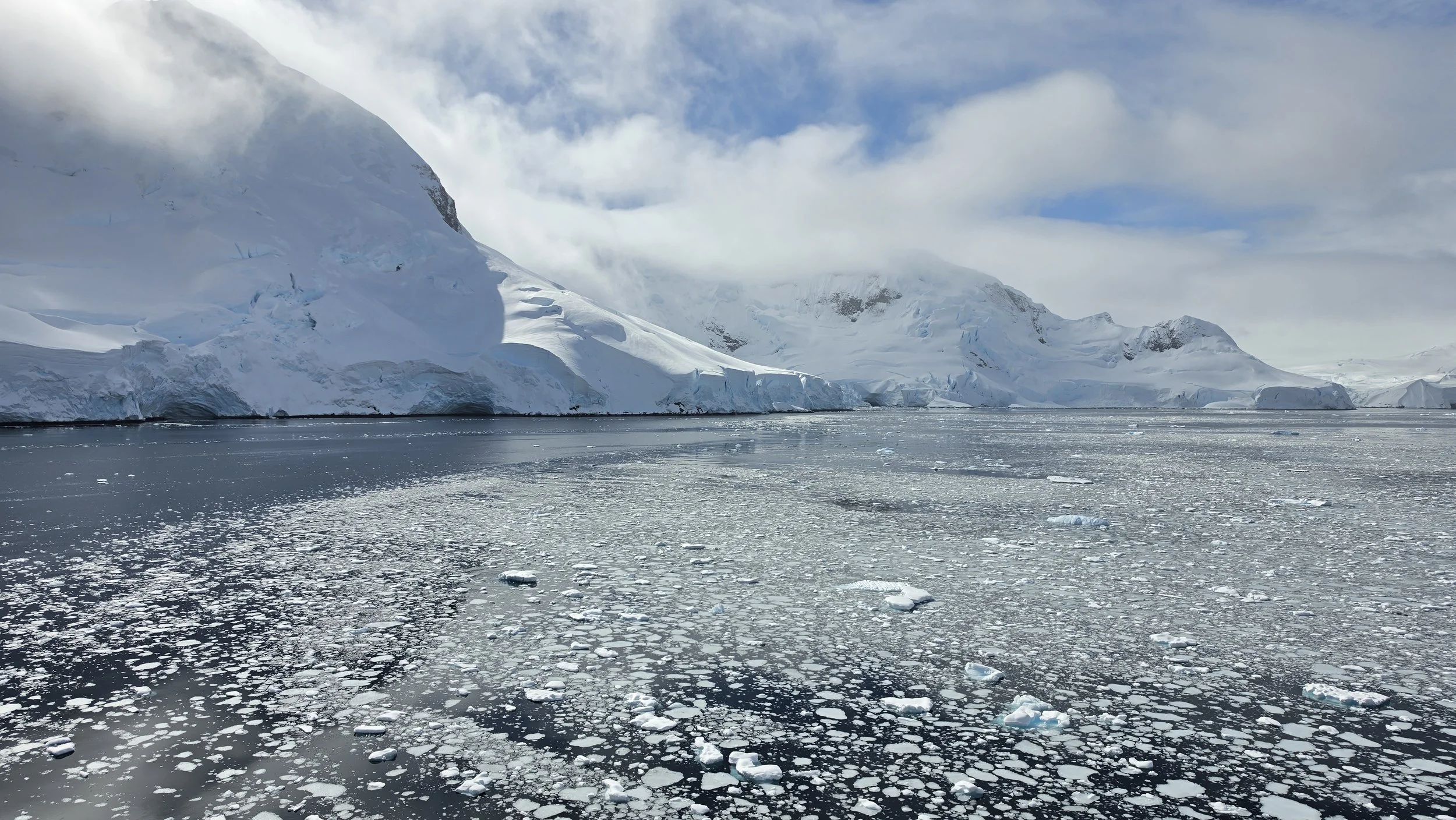
As we begin sailing north, we pass through Graham Passage, surrounded by massive glaciers and mountains rising steeply from the water. Scattered pieces of ice fit together like mosaic tiles across the sea, their whites and blues creating a beautiful pattern against the dark water. Everywhere I look, there’s another view I want to photograph. It’s one of the most picturesque stretches of the entire expedition, a magnificent farewell to the Antarctic Peninsula.
Days 19 and 20 | November 12–13 | Crossing the Drake Passage
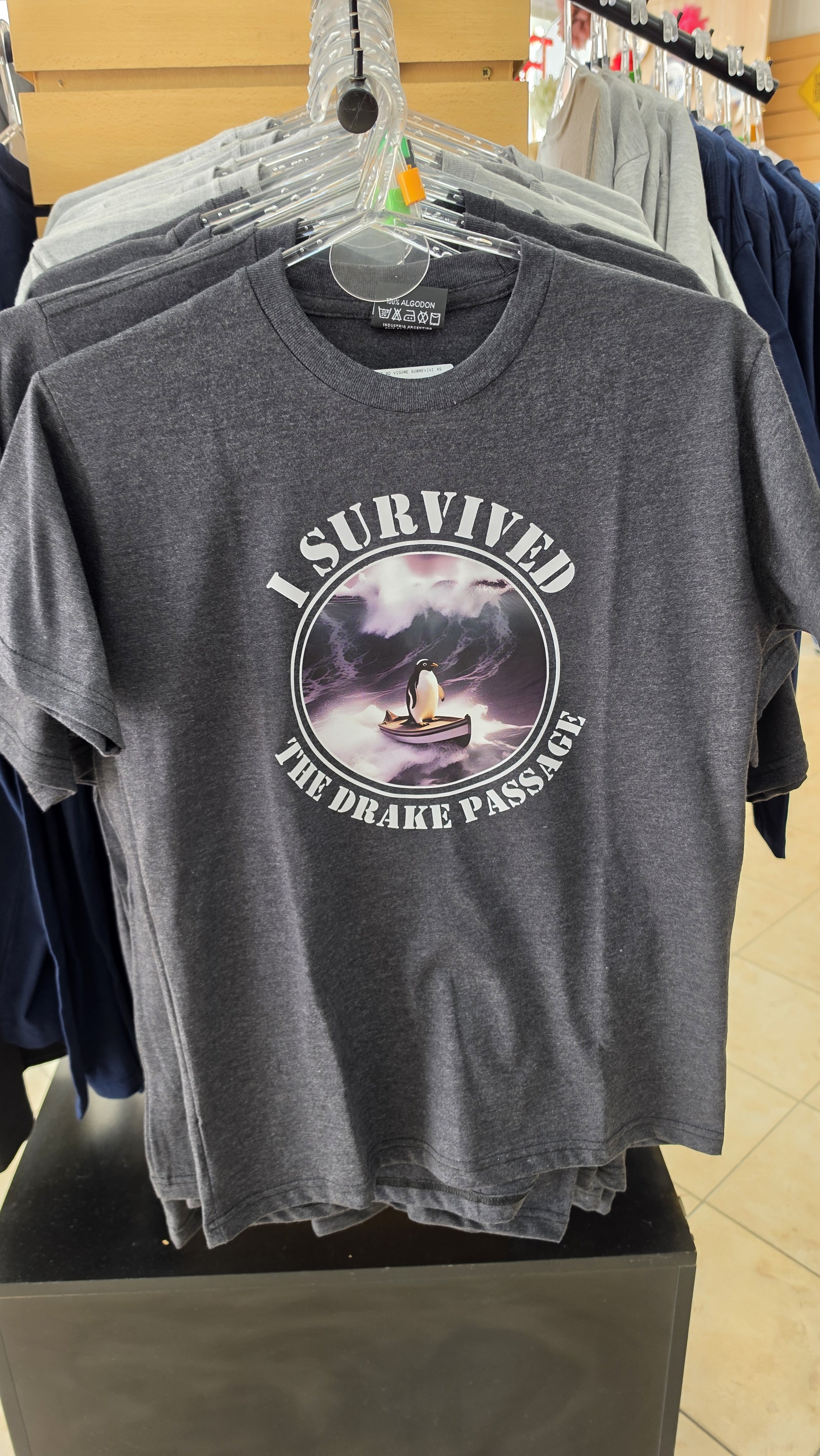
We still get a taste of the Drake Shake, with waves reaching about 5.5 meters on our crossing. By now, I have a better sense of what works for me on rough sea days. I keep portions moderate at meals, rest when I need to and get plenty of sleep. With that simple routine, I find the crossing manageable.
Both the journey to the Peninsula and this return crossing remind me how much conditions at sea shape an expedition. After the pace of our time in South Georgia and Antarctica, I’m happy to take these two days slowly.
Day 21 | November 14 | Back in Ushuaia
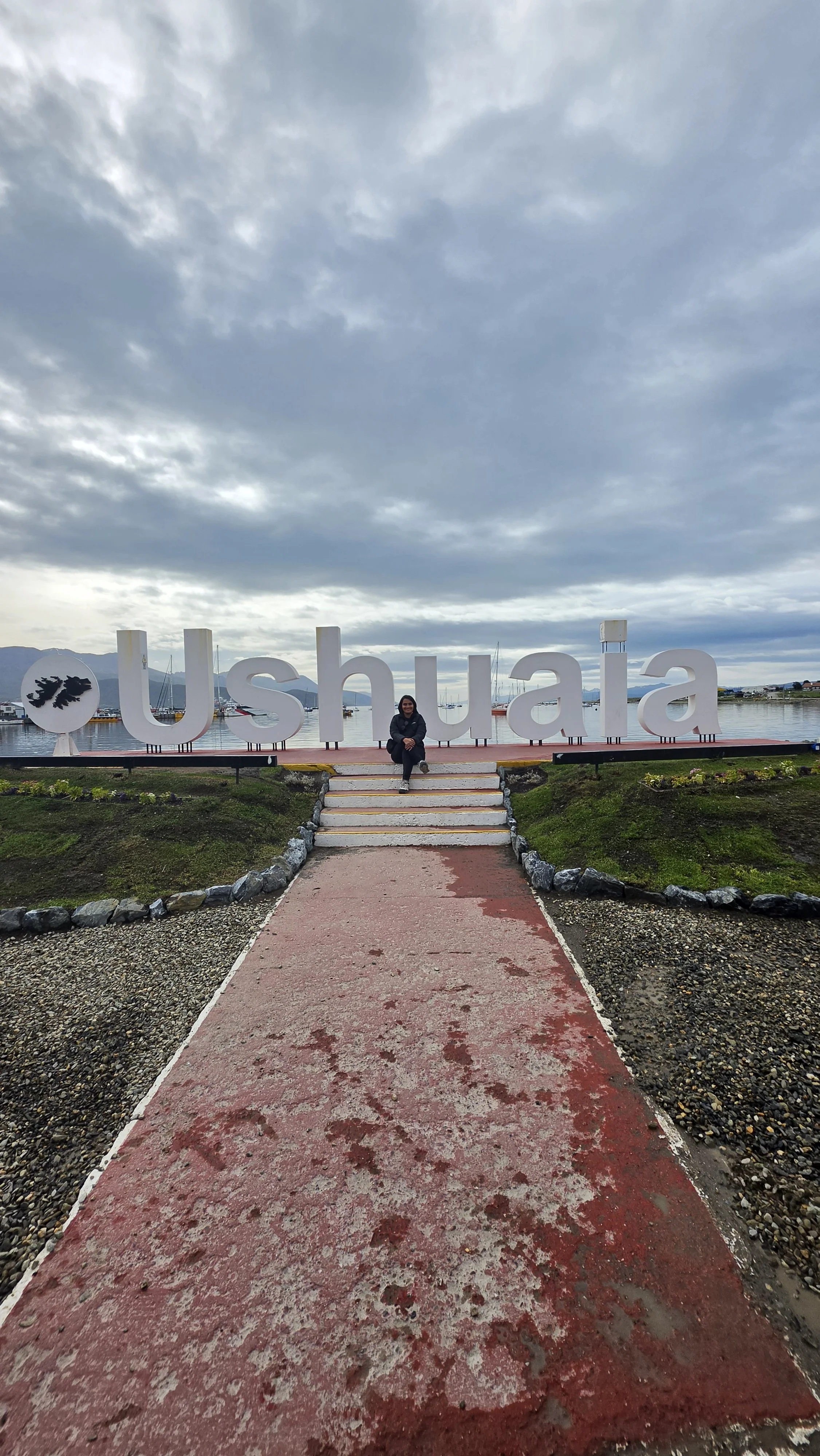
We disembark in Ushuaia and spend the morning buying souvenirs, drinking local coffee and taking photos at the big Ushuaia sign. If you have time for one last stop in town, make it the sign.
It’s strange how quickly normal life comes back. After three weeks of thinking about the next landing, I can wander into a coffee shop or spend a little longer framing a photograph without watching for a Zodiac. This time, the only thing left on the schedule is the complimentary airport transfer and the journey home.
Would I recommend the South Georgia and the Falklands?
South Georgia is home to one of the world’s greatest concentrations of marine mammals and seabirds, and you can start to grasp what that means before you even step ashore. If you love wildlife and can spare the extra days at sea, I’d absolutely include both island groups. South Georgia is one of the best places on Earth to see king penguins gathered in extraordinary numbers and is home to the world’s largest breeding population of southern elephant seals, while the Falklands support one of the largest populations of southern rockhopper penguins.
These islands also look and feel very different from the Antarctic Peninsula. Green slopes rise toward snow-covered peaks, thick tussock grass covers the hillsides, and little streams run through open grasslands. The mountains remind me of Alaska, and the green slopes and waterfalls make me think of Iceland. Then I look down at the water, and in some bays it’s such a vivid blue that I think of the Caribbean. Seeing all of that in a single view is what makes South Georgia feel like a place entirely of its own.
Would I recommend sailing with Aurora Expeditions?
Yes! And here are the reasons why -
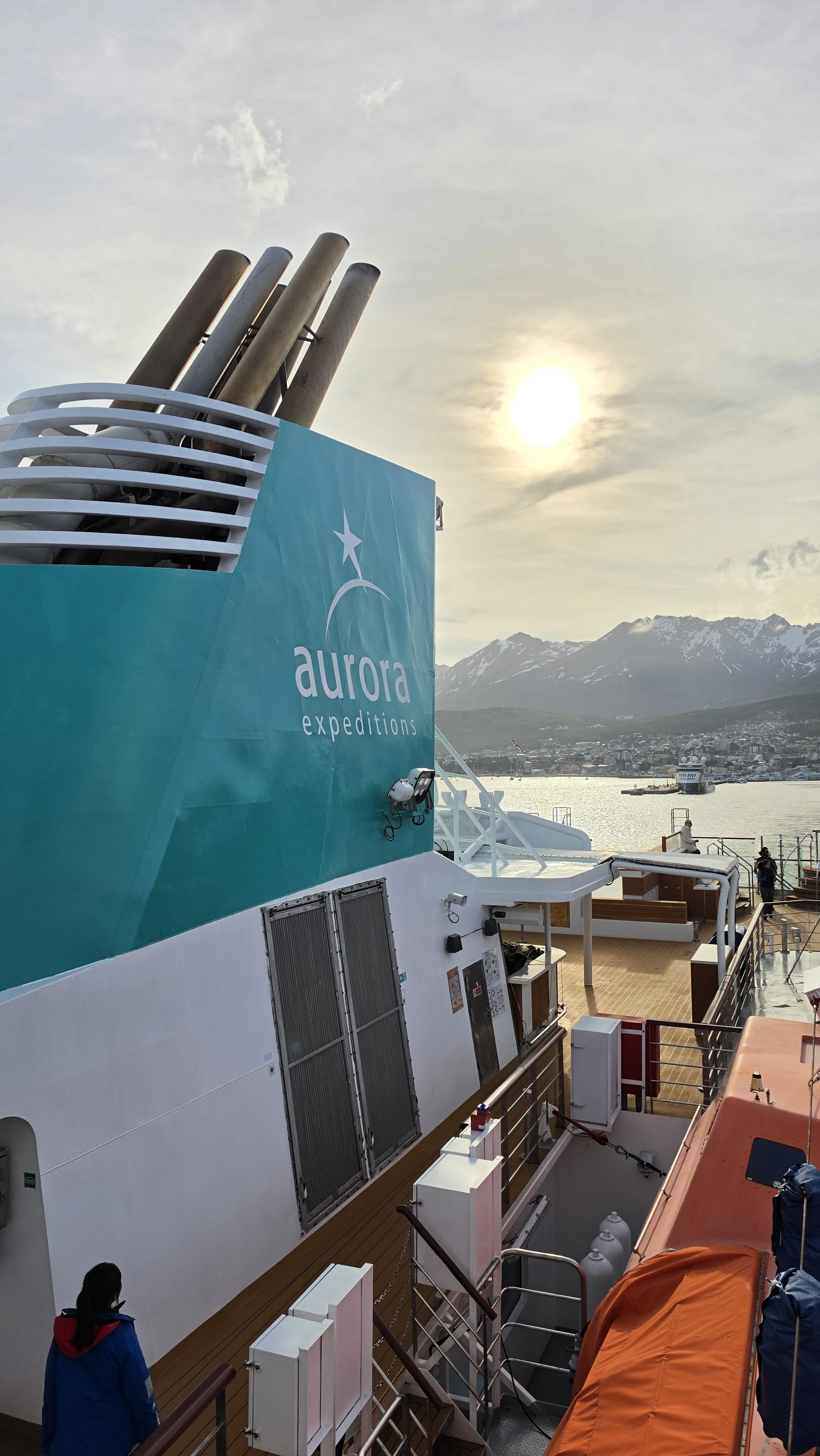
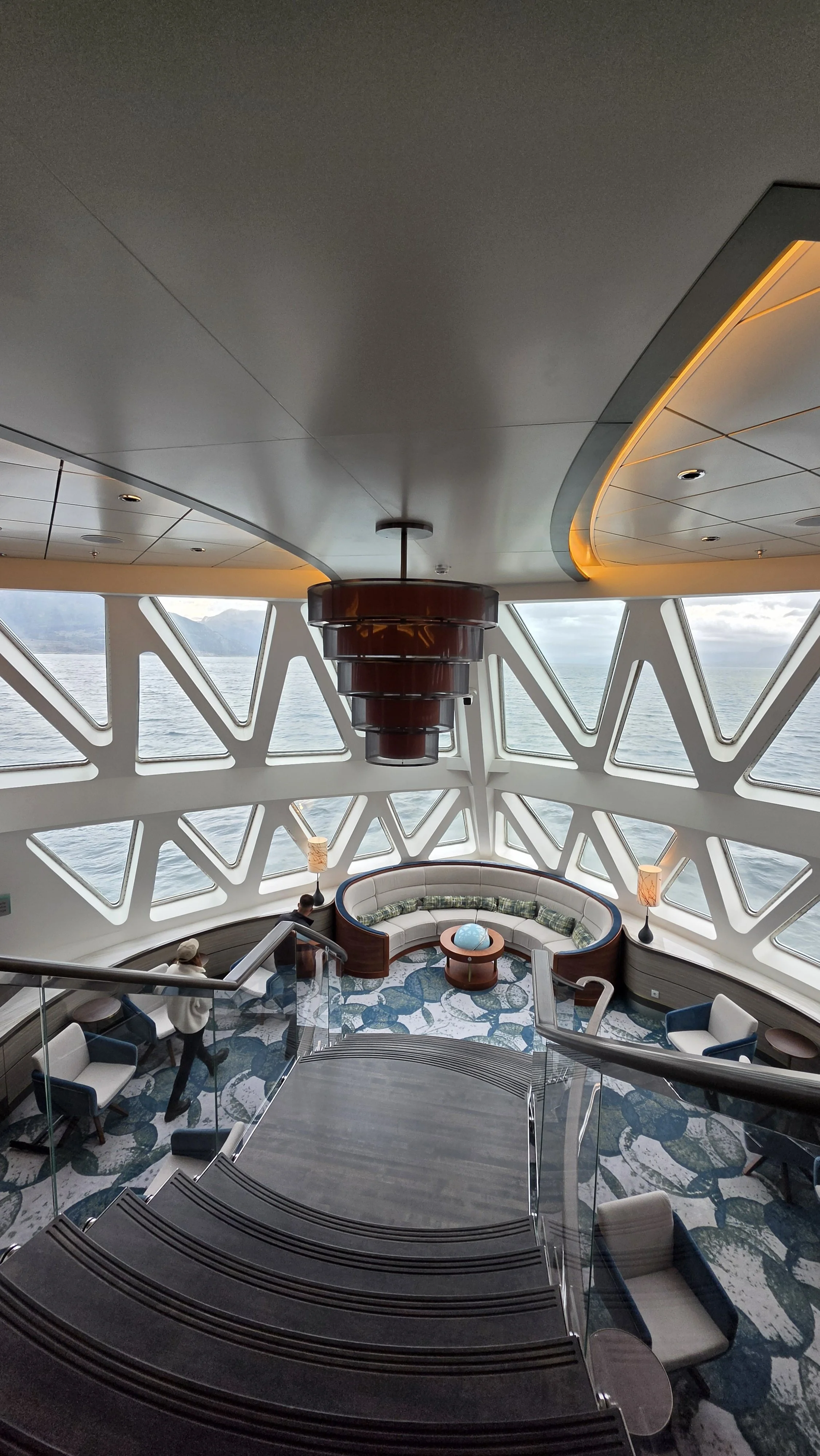
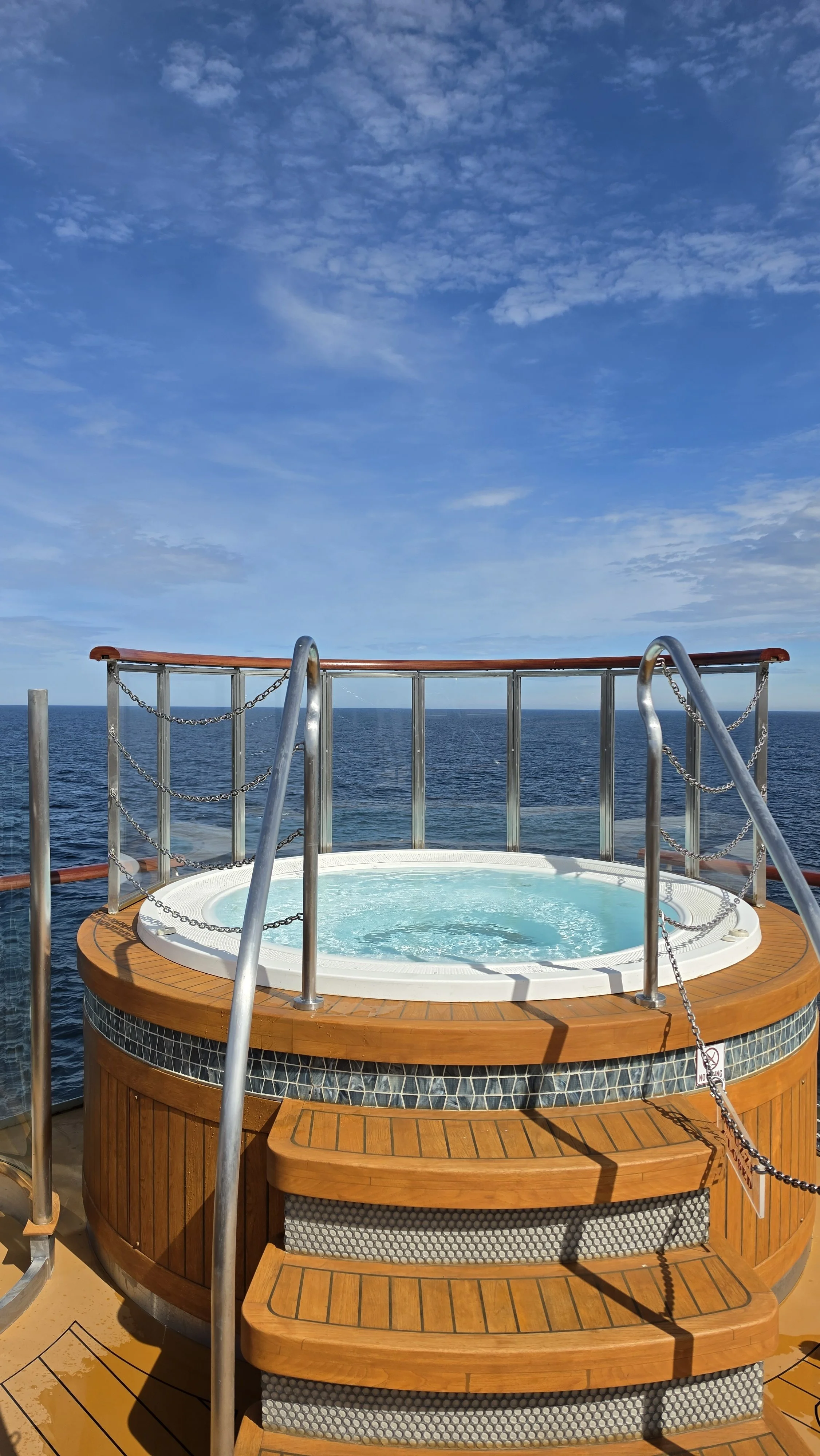
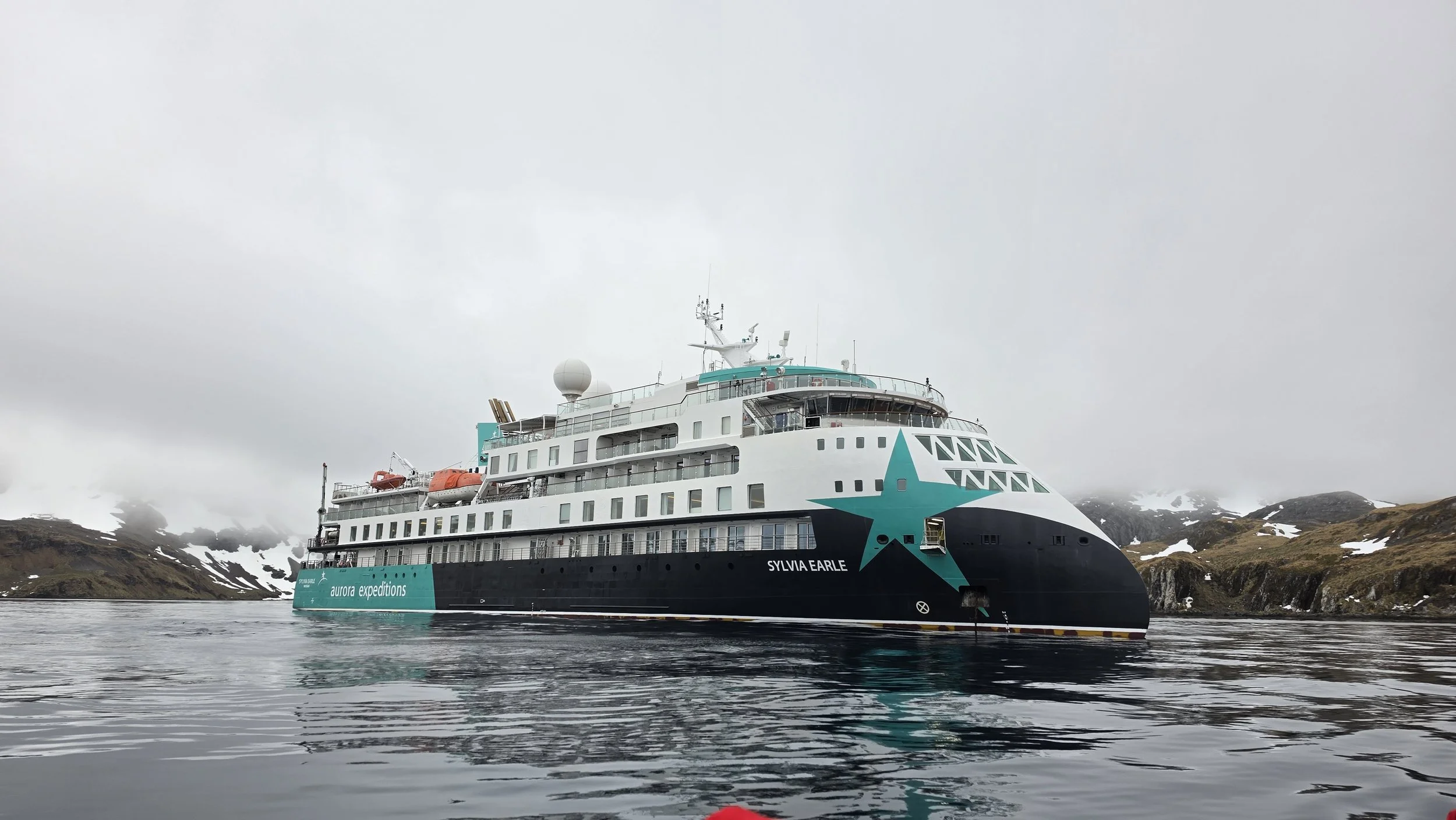
The ship. Sylvia Earle is a comfortable place to spend several weeks. My balcony cabin was spacious, modern, with enough storage to unpack properly, and there was plenty of room to spread out around the ship. You can read in the library, catch up with other travelers in the bars and lounges, or make use of the well-equipped gym and spa. I also liked having two restaurants to choose from, including Rockhopper for an à la carte dinner.
I personally stayed in a Balcony room, but I also got to tour four other cabin categories aboard Sylvia Earle: the Captain’s Suite, Junior Suite, Balcony Stateroom Superior, and Aurora Stateroom Superior, which has a window instead of a balcony. What stood out across all four was how well the space was used. The layouts felt thoughtfully designed, the bathrooms were practical, and there was plenty of closet space for unpacking on a longer voyage. If you’d like to see my cabin photos or talk through which category might suit you, get in touch and I’ll be happy to share them.
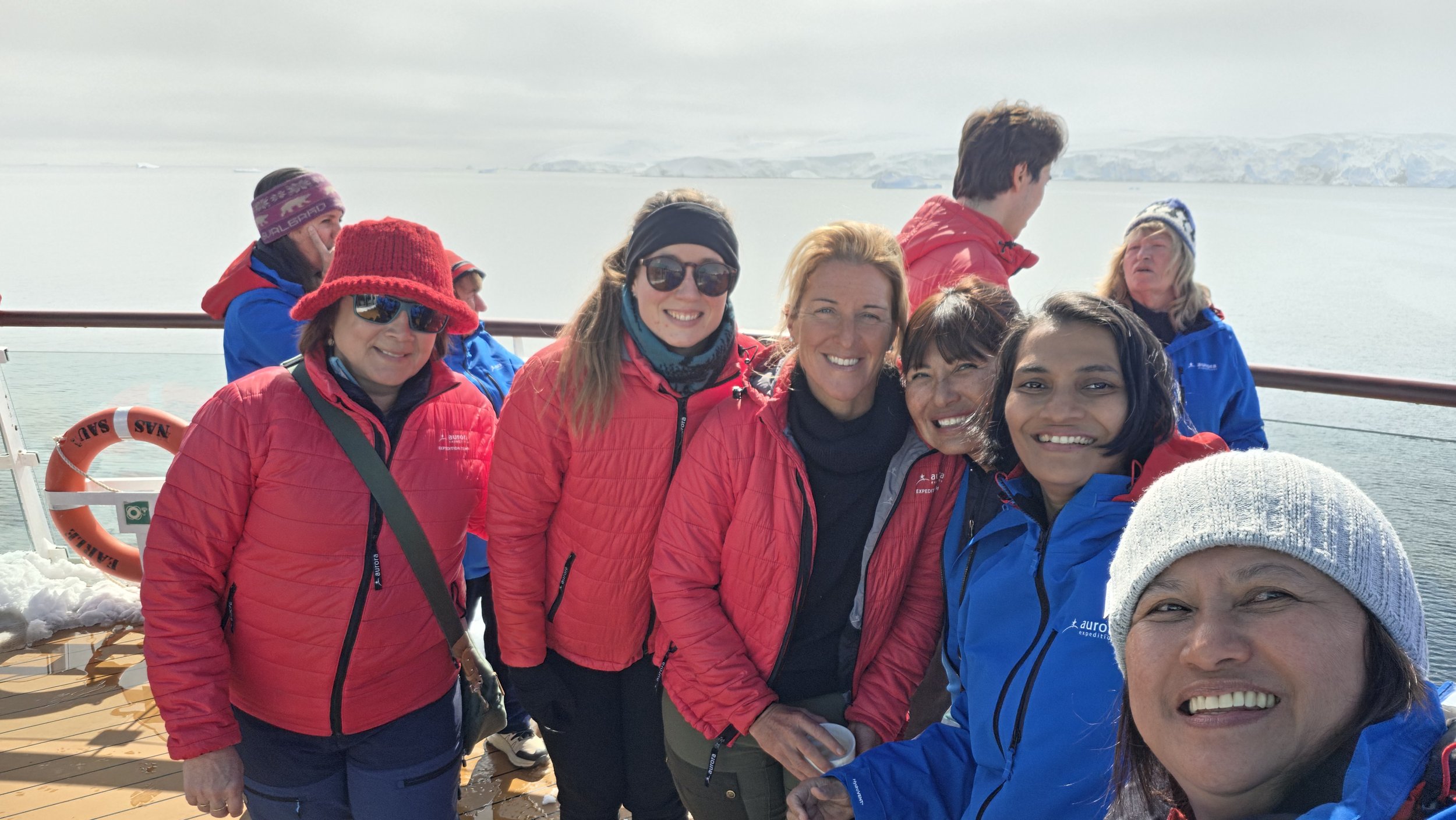
The expedition team and staff. We had a historian, an ornithologist, a glaciologist, a kayaking guide, a citizen science coordinator, and several hiking leaders on board. They brought deep experience in their fields and were friendly, approachable, and easy to talk to. One of my favorite things was how naturally they mingled with us. They’d sit down with guests at lunch, and you could carry on a conversation about something you’d seen that morning or ask a question you hadn’t thought of during a talk.
The expedition team works incredibly hard to make our voyage fun and complete, whether clearing ice so the Zodiacs can reach a landing point, offering a steady hand on a hike or standing in freezing water to help us cross a river. So much effort goes into getting us ashore safely and helping us make the most of our time there, and I’m grateful for their care and hard work.
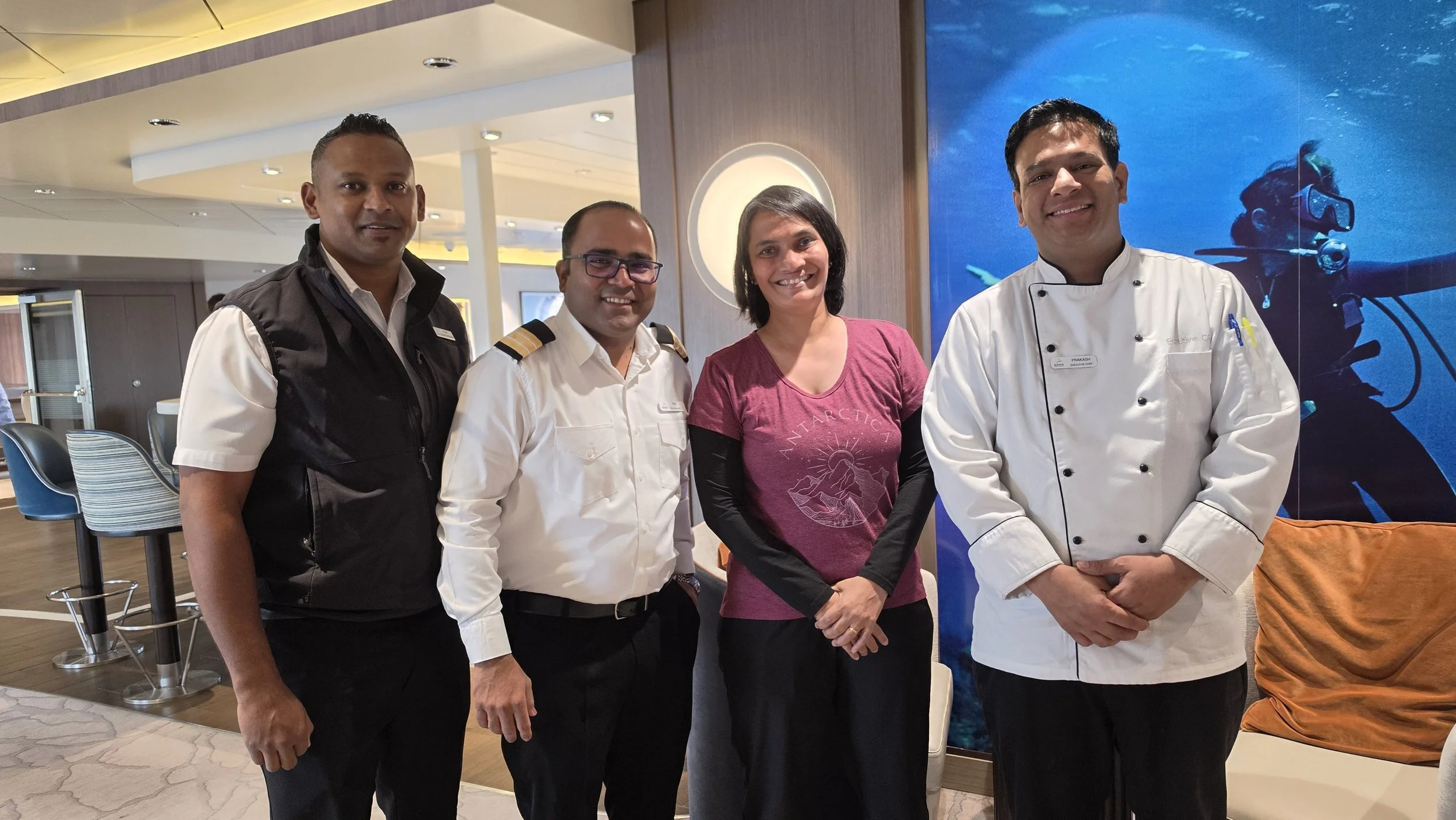
Everyone, right from the front desk staff to the restaurant team and cabin stewards, is exceptionally efficient, kind and caring. I often joked that I’m being looked after even better than I would be at my grandmother’s home!
The time off the ship. Zodiac deployment was quick and the groups were well organized. When conditions allowed, we often had several hours at a landing site, which gave us time to walk, take photos, or stay in one spot and watch the wildlife. Depending on the voyage, Aurora offers activities such as snowshoeing, kayaking, and camping, with snorkeling or paddling on select departures. That flexibility is a big reason I’d recommend Aurora to travelers of different ages and fitness levels. You can skip a Zodiac outing and enjoy a quiet morning aboard, take a short walk ashore, or sign up for a more active adventure. Everyone can set their own pace, even when they’re traveling together.
Safety and Bio Security
At every landing, the expedition team brings emergency supplies ashore in case changing weather delays our return to the ship. These include food and first-aid supplies, with emergency shelter and thermal protection also recommended under IAATO’s shore-stranding guidance. It’s reassuring to know there’s a plan for the unexpected while we’re out enjoying these remote places.
Aurora takes safety and biosecurity seriously, too. Before outings, we receive detailed briefings, and the team assesses landing sites for risks before guests go ashore. Boots, outer clothing and equipment undergo thorough cleaning and inspection to avoid carrying seeds, soil or disease between sites. On our voyage, I watch crew members check seams and Velcro and pick tiny bits of debris from boot soles. We’re also reminded to keep our distance from wildlife and follow the marked routes. With avian flu a concern, these precautions are an essential part of protecting the animals and places we’ve come to see
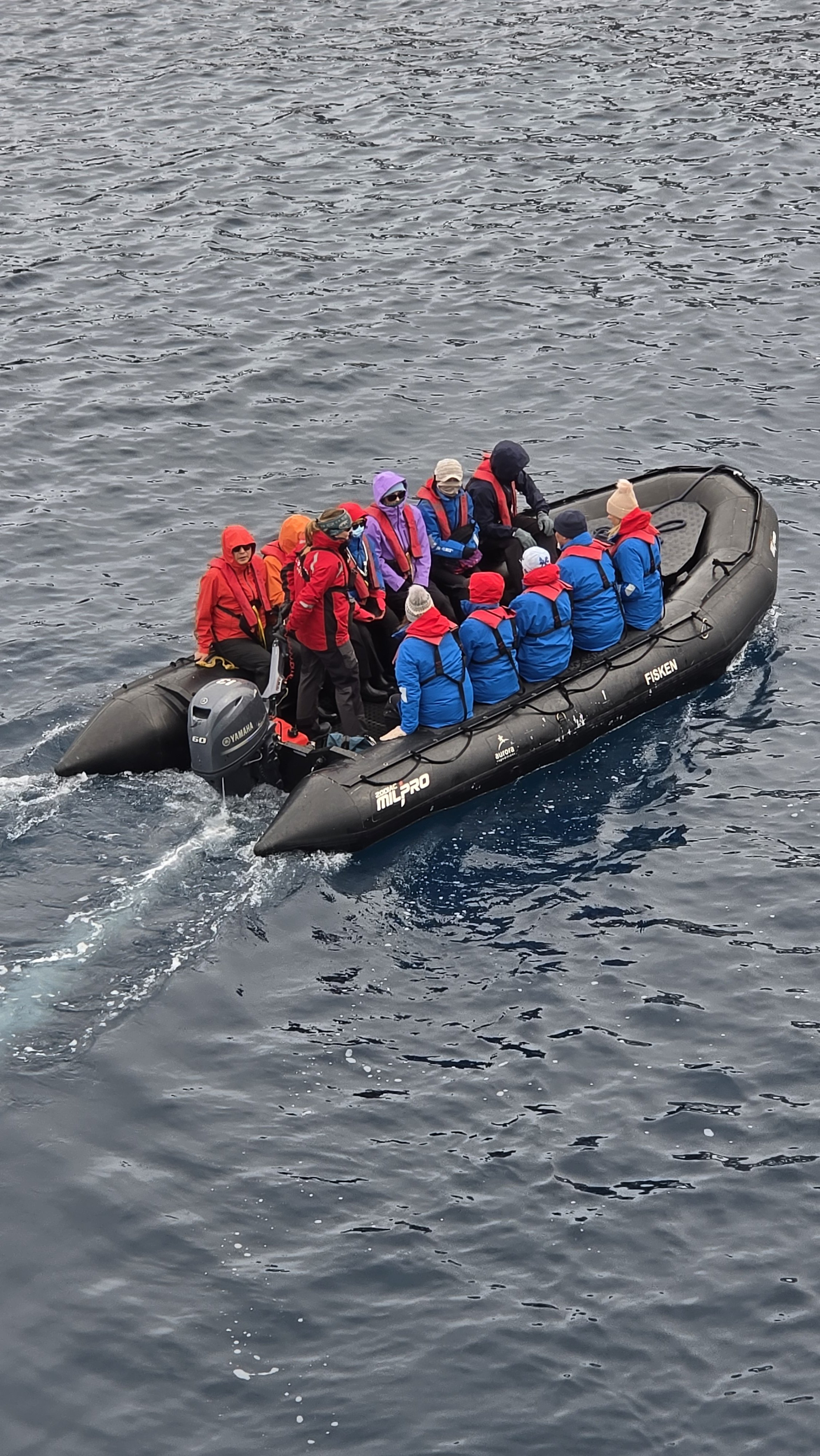
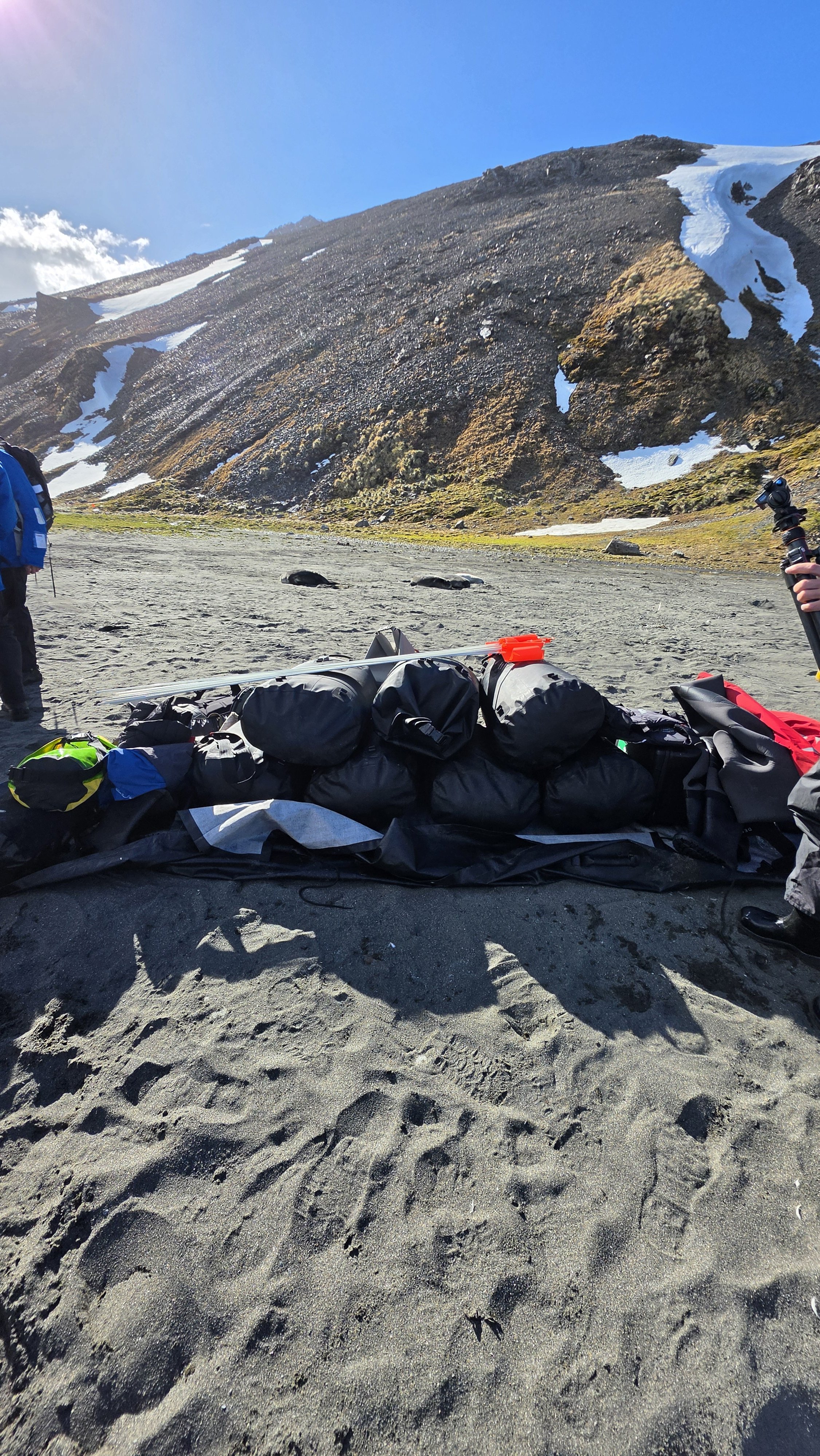
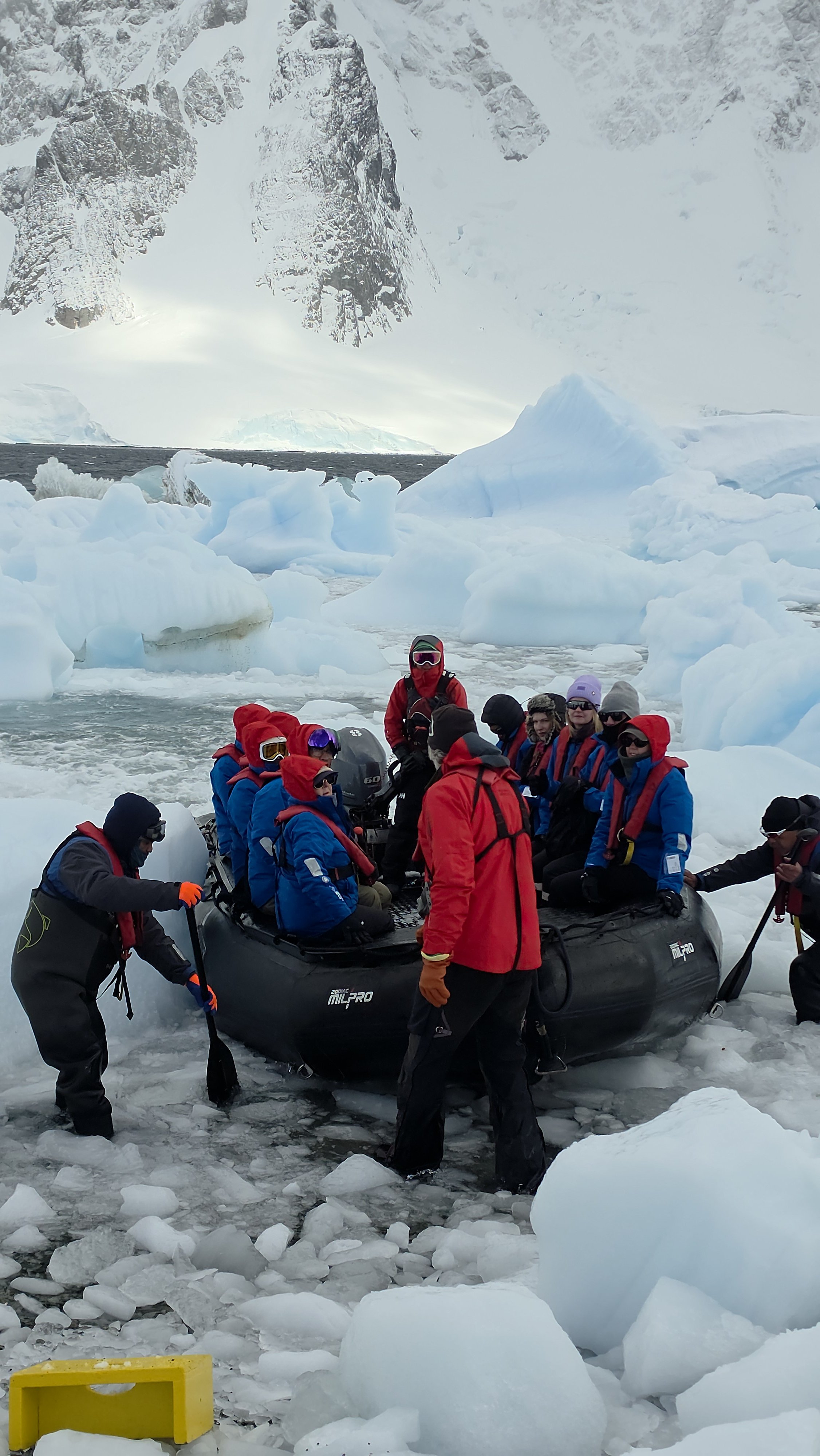
The small ship advantage. Aurora caps its Antarctic voyages at 130 guests across all three ships. That matters in Antarctica, where most landing sites allow only 100 visitors ashore at a time. With fewer people to rotate through the Zodiacs, there’s less waiting for your group to be called and more flexibility to make the most of a short weather window. On my sailing, it also meant more time to walk, take photos, or simply stay in one spot and watch the wildlife.
If you’re deciding how much time to set aside, my guide to Antarctica itineraries explains how the routes differ. My guide to choosing an Antarctica expedition covers what else to consider before booking.
Author Bio
Dee Swaminathan is the founder of Deeper Meridian and a Fora X Travel Advisor specializing in polar expeditions, wildlife-rich journeys and complex bespoke travel. She has personally traveled twice to Antarctica and has helped numerous travelers plan and book their expeditions. She is an an IAATO Antarctic Ambassador, bringing both firsthand experience and formal polar training to expedition planning.