Galápagos Cruise vs Land-Based: Which Is Right for You?
You have decided you want to go to the Galápagos. Then comes a question that can completely change the experience: Should you explore the islands by expedition cruise, or stay on land and take day trips?
Both are valid ways to experience the Galápagos, but they are not simply two different accommodation choices. A cruise is a moving expedition, with the ship traveling between islands and visitor sites, often while you sleep. A land-based trip uses one or more inhabited islands as a base, with excursions organized from there.
TL;DR
For most first-time visitors, I prefer a Galápagos expedition cruise because it gives access to a broader range of islands, habitats and wildlife sites while minimizing time lost to transportation. A land-based trip is better for travelers who value flexibility, hotels, restaurants and more independent time, or who strongly prefer not to sleep aboard a small ship. If time and budget allow, combining a cruise with a short land stay can offer an excellent balance.
First, How Is the Galápagos Laid Out?
Before deciding between a cruise and a land-based trip, it helps to understand the geography. The Galápagos is not one compact island destination. It is an archipelago, and the islands visitors see on a one-week trip can be quite different depending on the route.
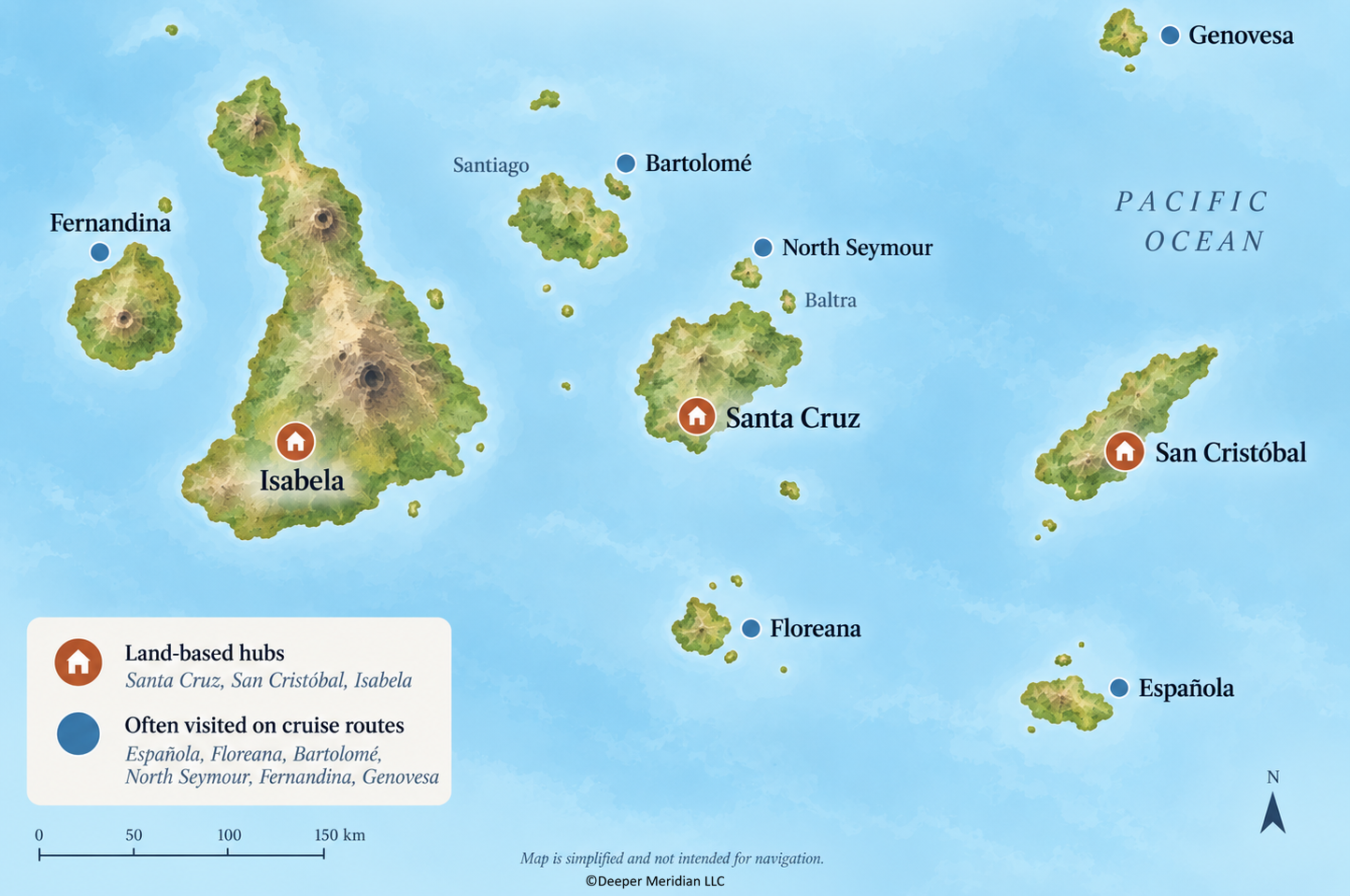
Most land-based trips are built around the three main visitor bases: Santa Cruz, San Cristóbal and Isabela. Santa Cruz is the main tourism hub and has the widest range of hotels, restaurants and day trips. San Cristóbal is the easternmost major inhabited island and has its own airport and visitor sites. Isabela, farther west, feels more spread out and gives land-based travelers access to a very different volcanic landscape and marine environment.
Cruise itineraries range much more widely. A useful way to think about them is in two broad route families. Southern and Central routes often include islands such as San Cristóbal, Española, Floreana, Santa Cruz, Bartolomé and North Seymour. Western and Northern routes reach farther toward Isabela, Fernandina and Genovesa, where the landscapes are younger and more volcanic and some wildlife experiences are more geographically specific. Ecoventura, for example, divides its week-long itineraries this way: Beaches & Bays in the south and center, and Volcanic Wonders in the west and north.
That geography matters because the Galápagos is not a place where every island gives you essentially the same experience. Española is particularly associated with waved albatross in season, while Fernandina and western Isabela are key places for flightless cormorants. The route you choose determines not only which islands you see, but also which habitats, landscapes and wildlife you are most likely to encounter.
Once you understand that, the cruise-versus-land decision becomes clearer: a land trip gives you deeper time around a few inhabited islands, while a cruise is what allows you to move efficiently through several different parts of the archipelago.
Galápagos Cruise vs Land-Based at a Glance
| EXPEDITION CRUISE | LAND-BASED | |
|---|---|---|
| Best for | Wildlife, exploration & seeing more islands | Flexibility, independence & a slower pace |
| Island access | Broader access, including remote visitor sites | Primarily inhabited islands + day trips |
| Wildlife variety | Generally greater because you reach more habitats | Excellent, but geographically more limited |
| Packing | Unpack once | May involve changing hotels/islands |
| Daily pace | Structured and often active | More flexible |
| Dining | Meals primarily aboard | Freedom to try local restaurants |
| Snorkeling & water activities | Integrated into the expedition | Available through excursions |
| Seasickness | Potential consideration | Less time sleeping at sea |
| Budget flexibility | Generally higher upfront cost | Wider accommodation range |
| My pick for a first trip | Usually yes | For the right traveler |
The most important distinction is access. Only a handful of Galápagos islands are inhabited, while much of the archipelago's wildlife and wilderness lies beyond those population centers. A land-based traveler can still have extraordinary experiences, but a ship gives you a mobile base from which to reach a broader range of visitor sites.
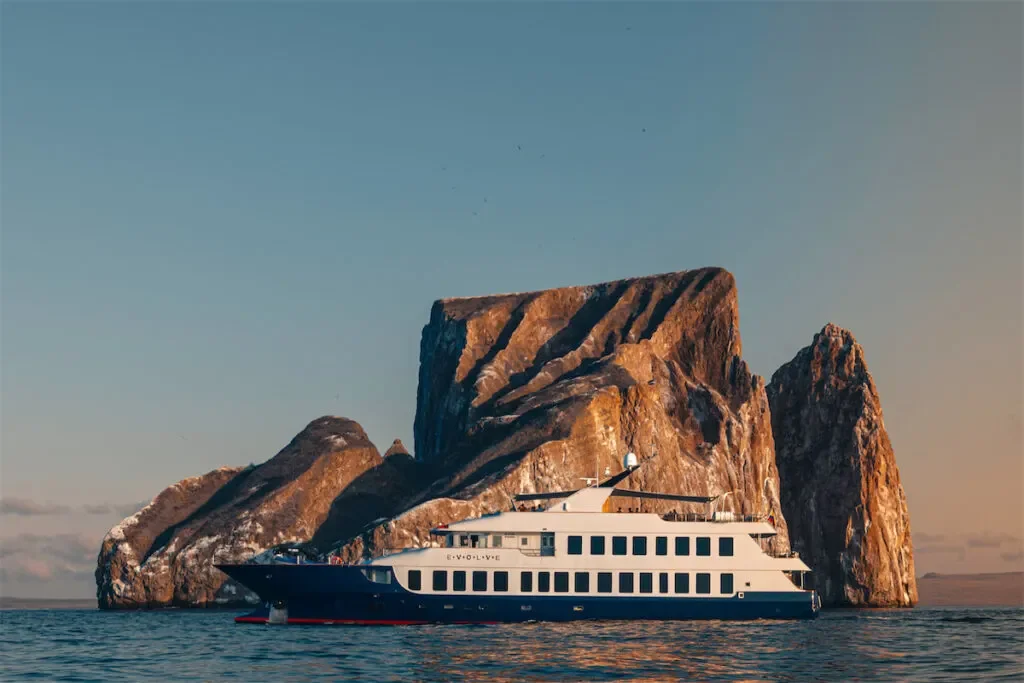
Pic Credit: Ecoventura
What Does a Galápagos Expedition Cruise Actually Look Like?
A Galápagos expedition cruise bears little resemblance to the traditional image of a large cruise ship. The ship is primarily a base for exploration. A typical day might include a morning landing, wildlife walk, snorkeling session, Zodiac ride or kayak excursion, followed by another activity later in the day. In between, you return to the vessel for meals, lectures and downtime.
One of the biggest advantages is efficiency. While you are eating dinner, sleeping or relaxing, the ship can reposition to the next island or visitor site. You wake up somewhere new without needing to pack, transfer luggage or spend a large part of the day moving between hotels and ports. This is particularly valuable in Galápagos because the islands are not interchangeable. Different islands have different geology, landscapes and wildlife. A moving ship allows the itinerary to unfold across the archipelago rather than around one home base.
What Does a Land-Based Galápagos Trip Look Like?
A land-based trip usually involves staying on one or more inhabited islands, most commonly Santa Cruz, San Cristóbal and Isabela. From there, you can explore locally and take day trips to nearby visitor sites or other islands. Depending on the itinerary, you might stay in one hotel for the entire trip or move between several islands.
The biggest advantage is independence. You can choose restaurants, spend time walking around town, sleep later on some mornings or build in unscheduled afternoons. A hotel can also feel more familiar to travelers who simply do not enjoy staying aboard small ships. The trade-off is geography. Every excursion has to begin and end somewhere, and moving between islands takes time. If you change bases, you also introduce packing, transfers and additional logistics.
A land-based trip therefore works best when it is designed around what the inhabited islands do particularly well, rather than trying to reproduce a cruise itinerary from shore.
The Biggest Difference: How Much of the Archipelago You Can Experience
This is where I think the cruise advantage is strongest.
A cruise can connect several different island regions in a single week because much of the longer-distance travel happens while you are eating, relaxing or sleeping. From a hotel, every day trip has to begin and end at an inhabited island, which naturally limits how far you can range.
Land-based travelers can still reach excellent wildlife sites, but they are exploring outward from a base. Cruise travelers are moving through the archipelago itself.
For someone whose priority is wildlife variety and seeing several distinct parts of the Galápagos, I would generally choose the cruise.
A beautiful vessel cannot compensate for an itinerary that does not take you where you actually want to go.
Galápagos Is as Much About the Water as the Land
This is easy to underestimate before your first trip.
Some of the most memorable Galápagos wildlife encounters happen in the water. Depending on the location and conditions, travelers may snorkel with sea lions, sea turtles, rays, marine iguanas, tropical fish and Galápagos penguins.
On an expedition cruise, snorkeling, Zodiac excursions, kayaking and other water activities are usually woven naturally into the itinerary. You do not need to treat every experience as a separate excursion. National Geographic-Lindblad, for example, builds snorkeling, kayaking, Zodiac exploration and naturalist-led walks into its Galápagos programs.
A land-based traveler can certainly snorkel and take boat excursions too. The difference is less about whether the activity is possible and more about how seamlessly it fits into the trip.
If marine wildlife is one of your priorities, I would weigh the cruise option more heavily.
Which Style Gives You More Freedom?
This is one area where land wins.
Expedition cruises operate on a schedule. The naturalists and expedition team plan each day's activities around the authorized itinerary, weather and conditions. You can always opt out of an excursion, but you cannot decide to move the entire ship's schedule around your personal preferences.
A land stay gives you more flexibility. If you want a slower morning, a long lunch or a free afternoon, you can build that into the trip much more easily. That does not necessarily mean a cruise is less relaxing. In some ways, it is easier because the logistics disappear. You unpack once, meals are organized and excursions are arranged for you.
The distinction is really this: Cruise gives you logistical ease. Land gives you personal flexibility.
What If You Are Worried About Seasickness?
This is one of the reasons to consider land. If you know you are highly motion-sensitive and the idea of sleeping on a small vessel is going to make you anxious before the trip even begins, a land-based experience may simply suit you better.
That said, I would not automatically rule out cruising if you occasionally get seasick. Vessel design, itinerary, cabin location and conditions all matter. Some travelers who are concerned about motion do perfectly well with the right preparation and ship.
Ecoventura's Origin, Theory and Evolve, for example, were designed as small expedition yachts with passenger comfort and stability in mind. The key is to tell your travel advisor about motion sensitivity early rather than selecting the itinerary first and worrying about it later.
What Does Luxury Look Like in the Galápagos?
Expedition travel does not automatically mean basic accommodations. There are several excellent options for travelers who want wildlife and serious exploration without giving up comfort.
Ecoventura
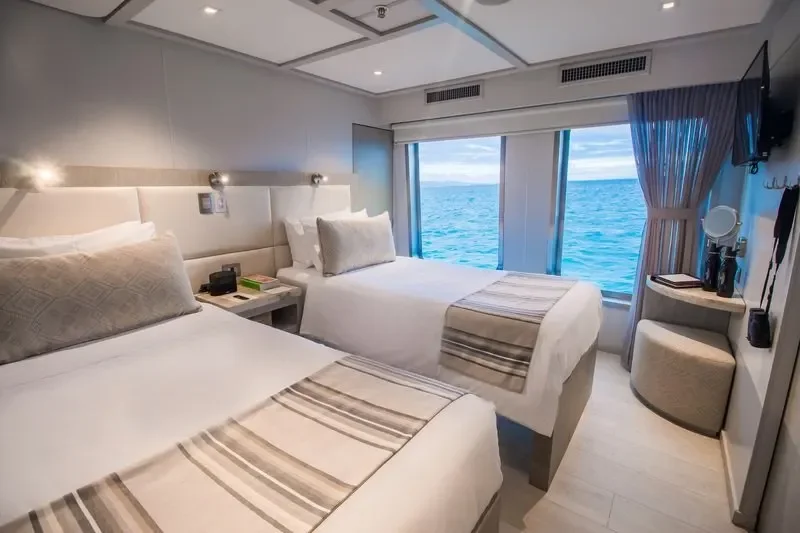
Ecoventura is one of the operators I particularly like for travelers who want an intimate, polished, yacht-style experience. Its sister ships Origin, Theory and Evolve each carry only 20 guests.
T
hey operate seven-night Galápagos itineraries and combine a small-group expedition format with an elevated onboard experience.
The ships are also part of Relais & Châteaux. I would consider Ecoventura for couples, milestone trips, families and travelers who want something that feels more like a private yacht than a conventional expedition ship.
National Geographic-Lindblad Expeditions
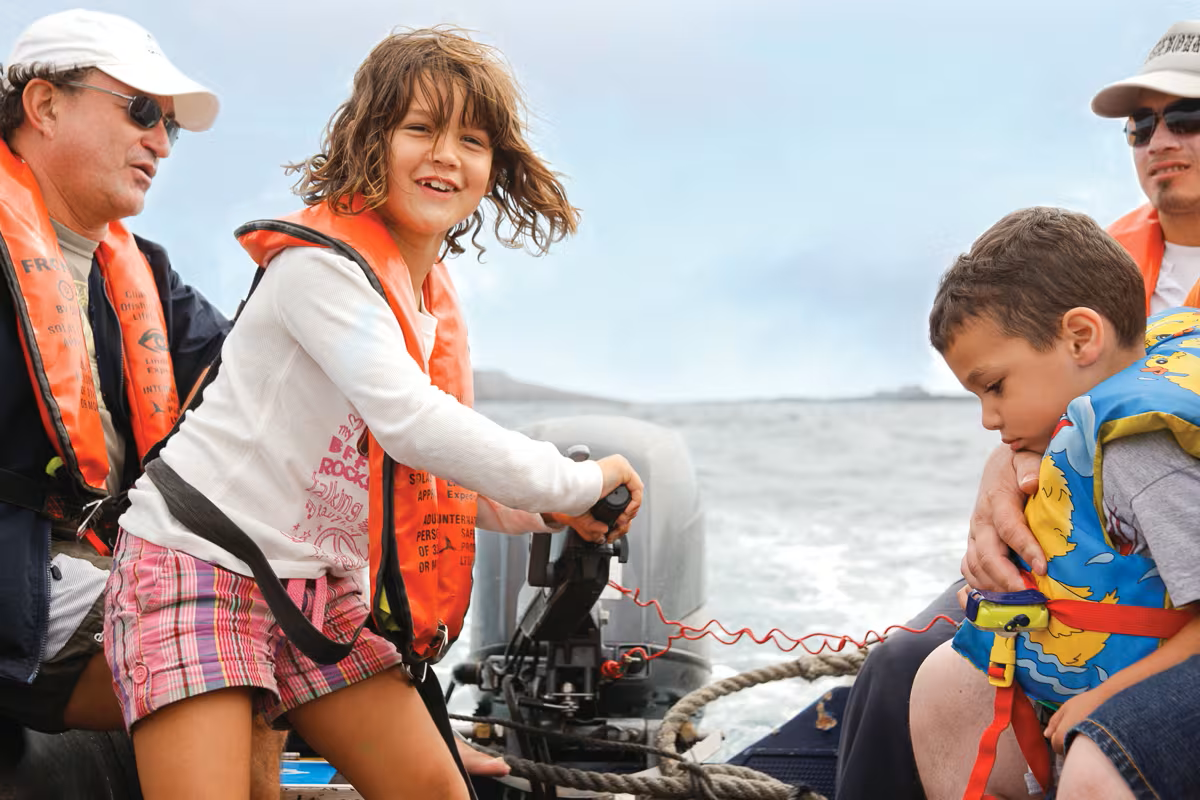
Lindblad is particularly appealing for travelers who place a high value on naturalists, interpretation, wildlife learning and photography.
Its Galápagos fleet provides a range of ship sizes, from very intimate vessels to larger expedition ships. That makes it possible to choose not only the itinerary, but also the scale and social feel of the experience. For travelers who want the expedition itself to be the focus rather than simply a luxurious way of reaching the islands, Lindblad is one of the operators I would look at carefully. Lindblad is also a great choice for families with children, with the National Geographic Explorers-in-Training program designed specially for children.
Natural Habitat Adventures
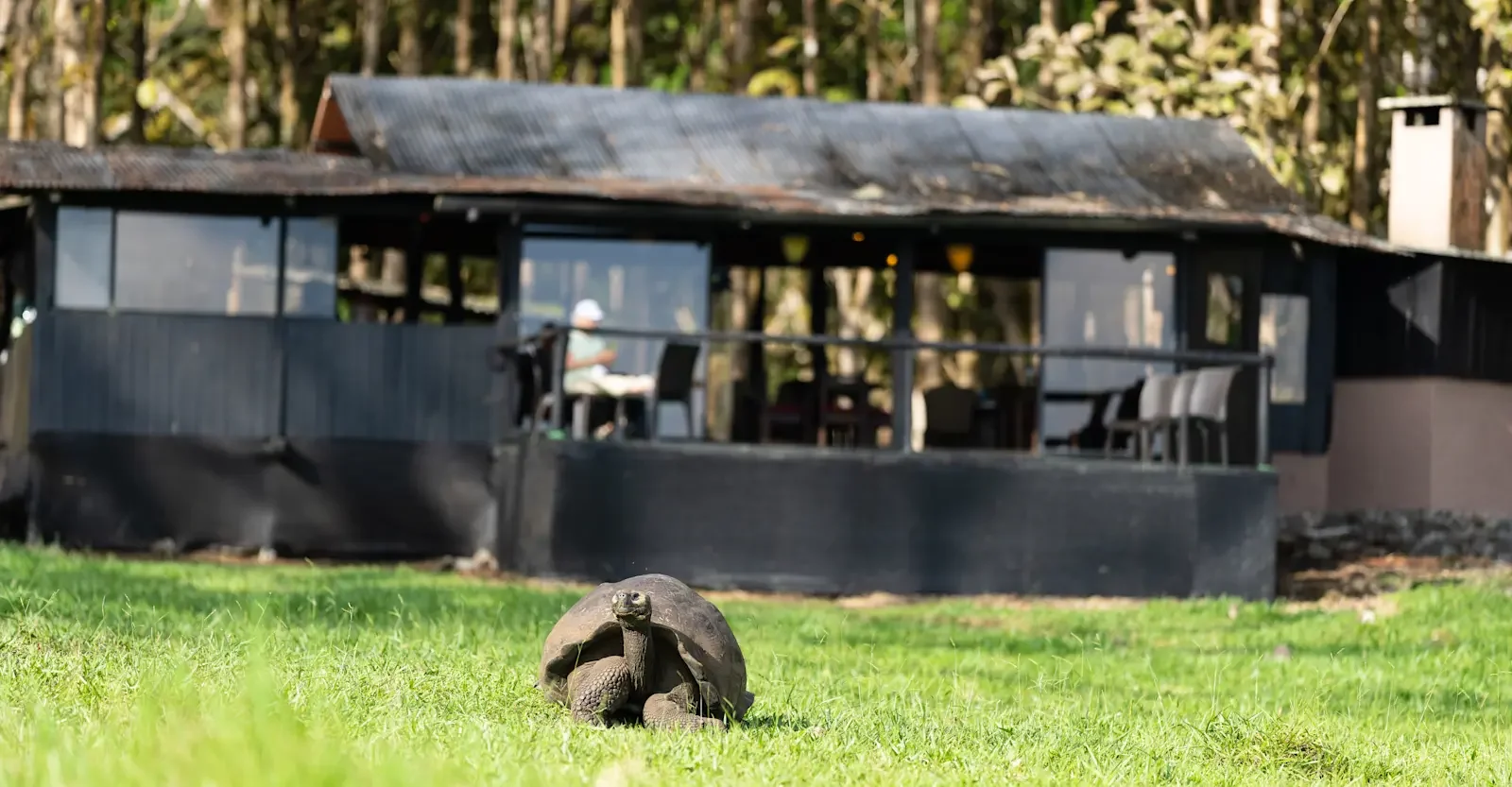
Natural Habitat Adventures approaches Galápagos a little differently.
Its flagship Galápagos program combines small private-ship exploration with time at its private Tortoise Camp in the Santa Cruz highlands. That means the trip is not purely cruise-based or purely land-based. For wildlife-focused travelers who like strong naturalist interpretation and the idea of combining marine exploration with a more unusual land experience, Nat Hab can be particularly compelling.
Is a Hybrid Galápagos Trip the Best of Both Worlds?
For some travelers, yes. A cruise followed by several nights on land can work beautifully because the two experiences solve different needs. The cruise gives you geographic reach and access to more remote visitor sites. The land portion gives you time to slow down, spend more time in one area and enjoy a hotel without an expedition schedule.
Natural Habitat Adventures builds this concept into its program with its private Tortoise Camp, but you can also create a custom hybrid trip by adding a land stay before or after a cruise. I particularly like this approach for travelers who have enough time and want to avoid feeling that the trip ended the moment they stepped off the ship.
For many travelers, the real decision isn't cruise or land. It is whether to do cruise only, or cruise plus land.
Ready to Narrow Down the Options?
There are dozens of Galápagos ships, different island routes and several ways to structure the trip. The most expensive option is not automatically the right one.
I look first at what you want to see, how active you want to be, how you feel about small ships, how much time you have and the level of comfort you want, then narrow down the ships and itineraries that actually fit.
HELP ME PLAN MY GALAPAGOS TRIPCruise, land or a combination of both, I can help you find the version of Galápagos that makes sense for you.
Is a Land-Based Galápagos Trip Cheaper?
It can be, particularly because land-based travel gives you a much wider range of hotel categories.
But comparing a hotel rate with a cruise fare can be misleading. An expedition cruise usually includes accommodation, meals, guided activities and transportation between islands and visitor sites. A land itinerary may require you to add guides, meals, speedboat trips, transfers and inter-island transportation separately.
So I would compare the total cost of the complete experience, not simply the nightly price.
At the luxury end, the price difference may be less important than the experience difference. If a cruise gives you significantly better access to the wildlife and islands you care about, choosing a land stay simply because the hotel looks cheaper can be false economy.
How Much Time Should You Spend in the Galápagos?
If the Galápagos itself is the main reason for the trip, I would avoid making it too short. For an expedition cruise, I particularly like itineraries around a week long because they provide enough time to experience several different environments without the trip feeling rushed.
Shorter cruises can work when Galápagos is part of a larger Ecuador or South America itinerary, but every shortened trip means making choices about what you will not see.
For land-based travel, I would also resist changing hotels every night or two. Island hopping sounds appealing, but too many transfers can eat into the very experience you traveled so far to have.
If you have more time, a week-long cruise plus a short land stay can be an excellent combination.
When Is the Best Time to Visit the Galápagos?
Galápagos is unusual because it is genuinely a year-round destination! There is no single month when the islands suddenly become “good” and another when they become “bad.” Instead, the conditions change throughout the year. Water temperatures vary. Ocean conditions change. The islands can look greener or drier. Different species may be nesting, breeding or displaying particular behaviors at different times.
If you have a very specific wildlife priority, I would consider that when choosing your dates. Otherwise, trip availability, preferred conditions and your broader travel calendar may matter more than chasing a theoretical perfect month.
This is a topic that deserves its own dedicated wildlife-season guide rather than turning this article into a month-by-month calendar.
So Which Should You Choose?
I would choose an expedition cruise if this is your first Galápagos trip, wildlife is the main reason you are going, you want to experience several different islands, and you are comfortable with a structured expedition schedule.
I would choose a land-based trip if independence is a major priority, you strongly prefer hotels and restaurants, you want more control over the pace of each day, or spending nights aboard a small ship is a significant concern.
And if you have the time and budget, I would seriously consider a cruise followed by a short land stay.
For most first-time travelers, though, my starting recommendation remains the cruise. Galápagos is an archipelago, and a ship allows you to experience the islands as an interconnected ecosystem rather than a series of day trips from one or two population centers. The ship is not simply where you sleep. It is part of how you experience the Galápagos.
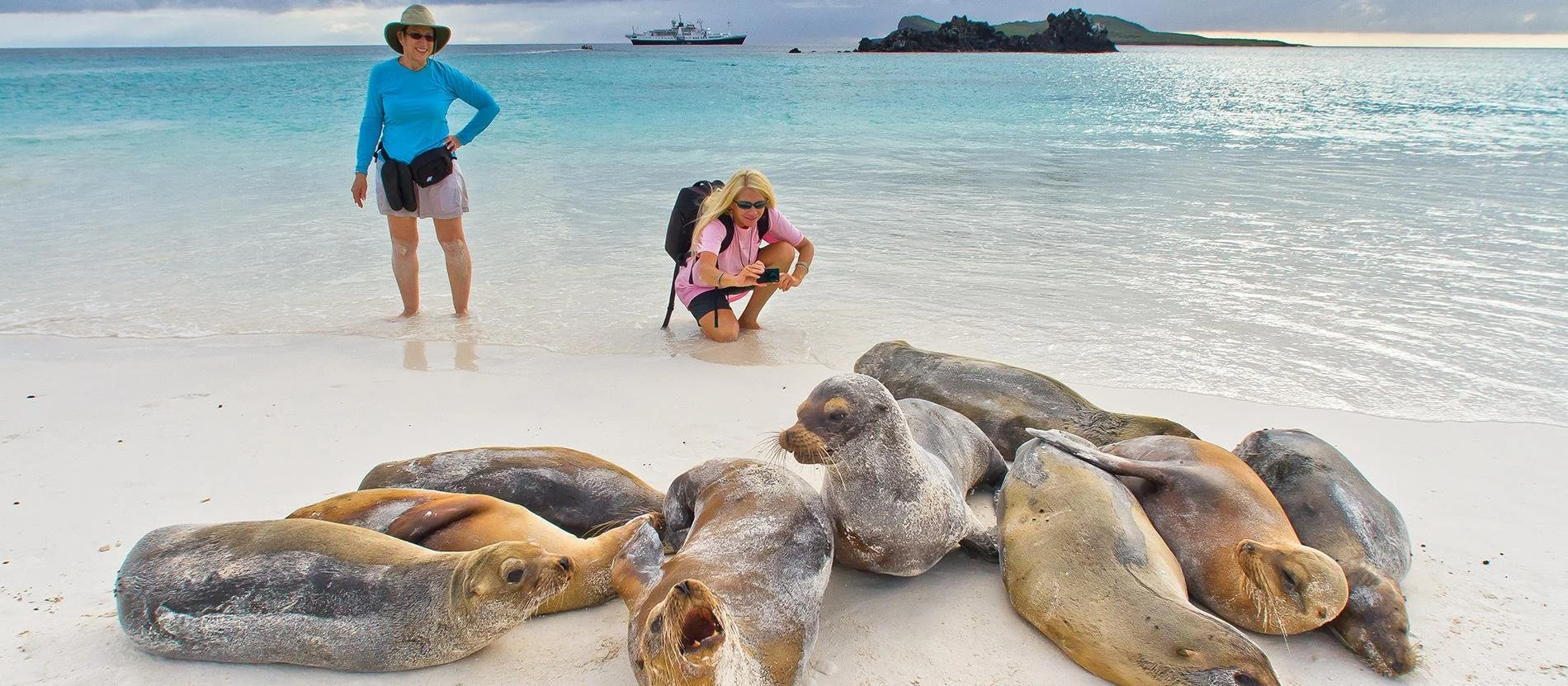
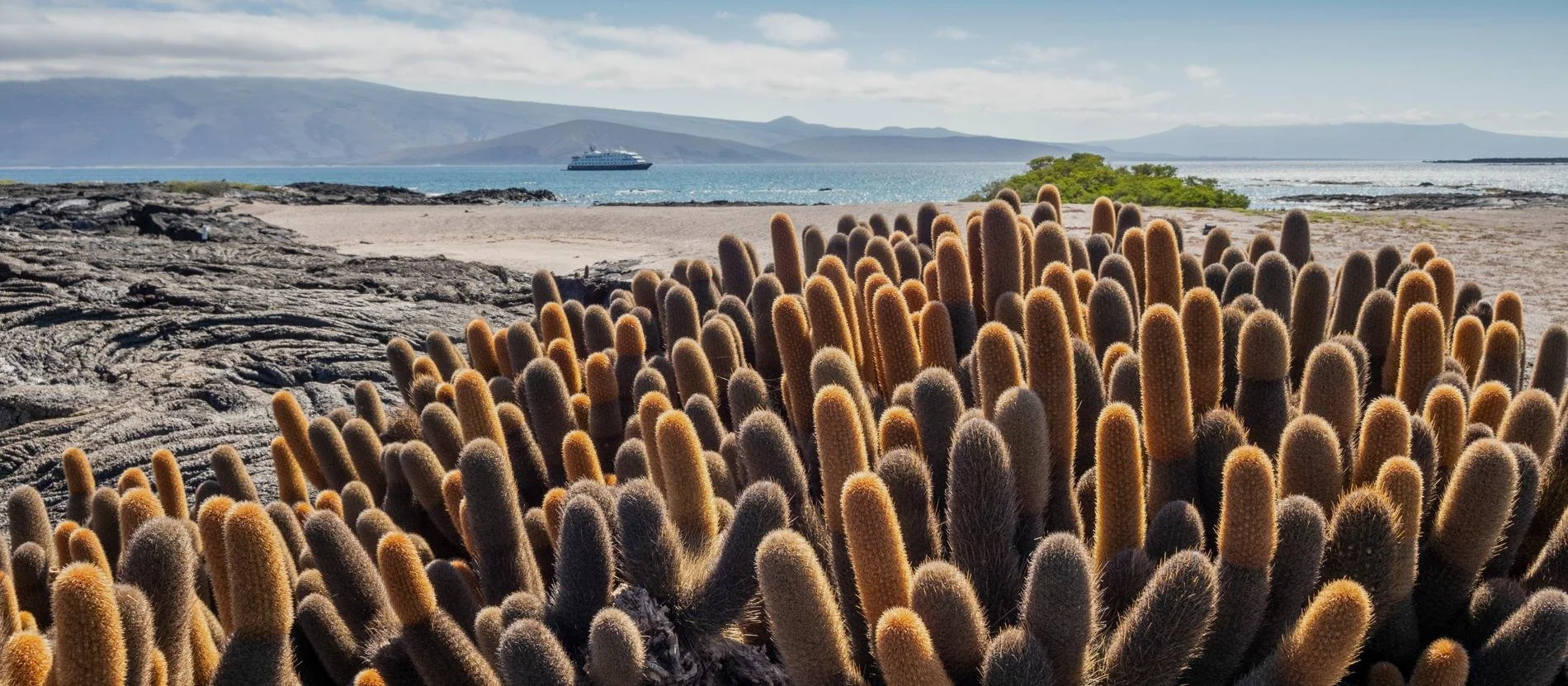
Pic credit: National Geographic
Ready to Plan Your Galápagos Expedition?
Choosing between cruise and land is only the beginning. The islands included in the itinerary, wildlife opportunities, ship size, naturalist program and pace of travel can make two Galápagos trips feel completely different.
I work with leading expedition operators and compare the options across different ships and travel styles rather than trying to fit every traveler into one product.
Whether your trip ultimately means an intimate Ecoventura yacht, a National Geographic-Lindblad expedition, a Natural Habitat Adventures journey, a land-based itinerary or a combination of sea and land, the goal is the same: to choose the trip that gives you the Galápagos experience you actually came for.
If wildlife and expedition travel are becoming a bigger part of your travel wish list, you can also explore my Polar Expeditions resources and my Arctic vs Antarcticacomparison.
Tell me what you want to see, how you like to travel and how much time you have, and I'll help you narrow down the right Galápagos experience.
Writer Bio
I'm Dee, a travel advisor with Fora Travel, specializing in adventure and polar expeditions. I'm certified with National Geographic Lindblad Expeditions (LEXpert) and recognized as a Polar Pro with Quark Expeditions, so my clients get firsthand expedition knowledge. I've traveled to all seven continents and bring two decades of corporate leadership experience to planning journeys that feel seamless, intentional, and unforgettable.